
Bag Dump Stations
A cleaner way to introduce bagged powders into your process.
Open and empty small bags at a dedicated unloading point, capture dust near its source, and move material into your next process step. Carolina Material Technologies helps match the station, filtration, and discharge equipment to your application.
Bulk material handling support for North & South Carolina.

What is a bag dump station?
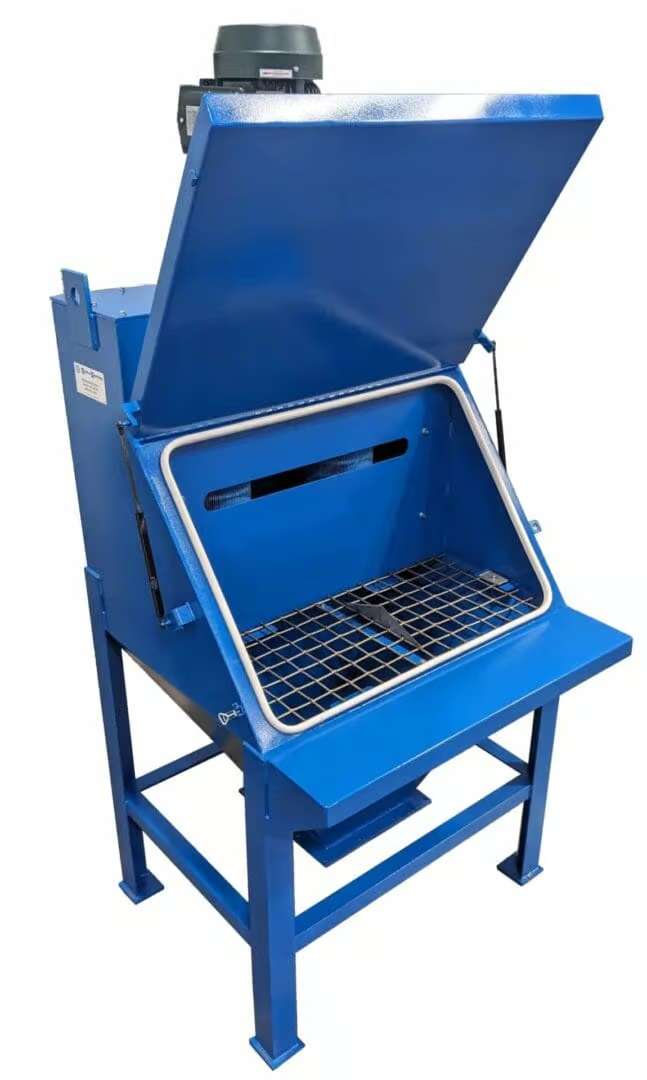
A bag dump station—also called a bag break station or sack tipping station—is a hopper-based workstation for manually opening bags and introducing dry bulk material into a process.
The station brings bag support, dust extraction, and a controlled discharge point together. It can serve a single ingredient addition point or connect to conveying and feeding equipment for a larger system.
A defined unloading point
A support shelf and grate provide a place to position and empty the bag. Working height and bag handling methods should suit the operator and package.
Collection at the source
Airflow draws airborne dust toward the collection system while material drops into the hopper. Choose integral filtration or connection to a remote collector.
Connect the next step
Discharge by gravity or through a selected feeder, valve, or conveyor. Match the outlet to the receiving equipment and required material flow.
Integral filtration or a central collector?
Start with the material, available utilities, and your existing collection system. Both approaches need airflow matched to the station and the surrounding process.
Integral collection keeps the fan and filters at the workstation. A dust extraction connection lets the station use a separate collector where that arrangement fits the facility.
| Consideration | Integral dust collection | Remote / central collection |
|---|---|---|
| Equipment arrangement | Fan and filters are part of the station assembly. | The station connects by ductwork to a separate collector. |
| Collected material | Reverse-air cleaning can return captured dust to the hopper where appropriate. | Dust is conveyed to the remote collector; recovery and disposal depend on the system. |
| What to verify | Headroom, filter access, electrical supply, and compressed air for filter cleaning. | Available airflow and static pressure, duct routing, and compatibility with other collected materials. |
| Maintenance planning | Plan access for local filter inspection and replacement. | Include the station in the central system's inspection and maintenance program. |
An open-front bag dump station is not a sealed containment system. Dust capture depends on the selected equipment, airflow, material, operating practices, and installation.
Explore dust collection systems →One unloading point. Several ways to integrate it.
Choose the arrangement that fits your packaging, downstream equipment, and available floor space.

Standalone bag dumping
A dedicated station for manual ingredient additions, with construction and cleaning access selected for your material.
Discuss: bag dimensions, work height, hopper capacity, and discharge connection.

Small bags + bulk bags
Bring small sacks and FIBCs into a shared process through a combined bag dump and bulk bag unloading arrangement.
Discuss: shared hopper capacity, operating sequence, and dust collection.
Bulk bag unloaders →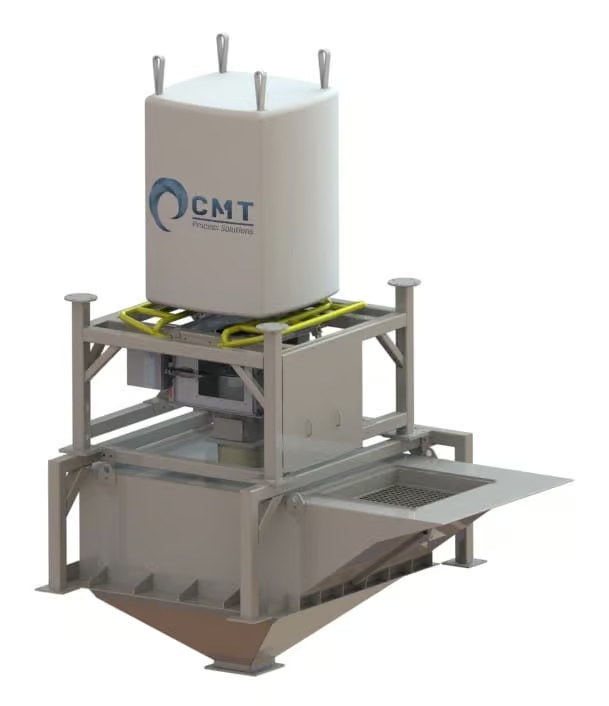
Custom receiving hopper
Adapt the receiving arrangement to an existing line or a new process layout.
Discuss: outlet elevation, footprint, surge volume, level sensing, and access for cleaning.
Screen bagged ingredients as you unload.
The Russell Compact 3in1 Sieve™ combines bag tipping, check screening, and magnetic separation at one ingredient addition point.
Evaluate this arrangement when bagged powders need oversize removal before mixing, blending, or conveying. The bag tipping platform feeds the screening stage, while an integrated magnetic trap captures ferrous contamination that may pass through the mesh.
The dust hood connects to a suitable extraction system. Size the extraction arrangement for the material and operating conditions as part of the complete installation.

Introduce bagged powders
Review platform height, bag size, operator reach, and dust extraction for the manual unloading task.
Remove oversize material
Choose the screen aperture around the ingredient and quality requirement. This is check screening; particle-size grading is a separate duty.
Capture ferrous particles
The magnetic trap provides an additional separation stage for ferrous material, including particles smaller than the selected mesh opening.
For equipment selection, provide the required aperture, bag rate, material flow characteristics, cleaning requirements, and discharge destination. Review access for screen changes and magnet inspection alongside the conveying connection.
Explore Russell Finex screening and filtration equipment →Move it, meter it, or feed a batch.

Convey to the next process
When the destination is above or away from the station, the transfer route becomes part of the equipment selection. Consider elevation, conveying distance, material behavior, and cleaning needs.
Explore aero-mechanical conveyors →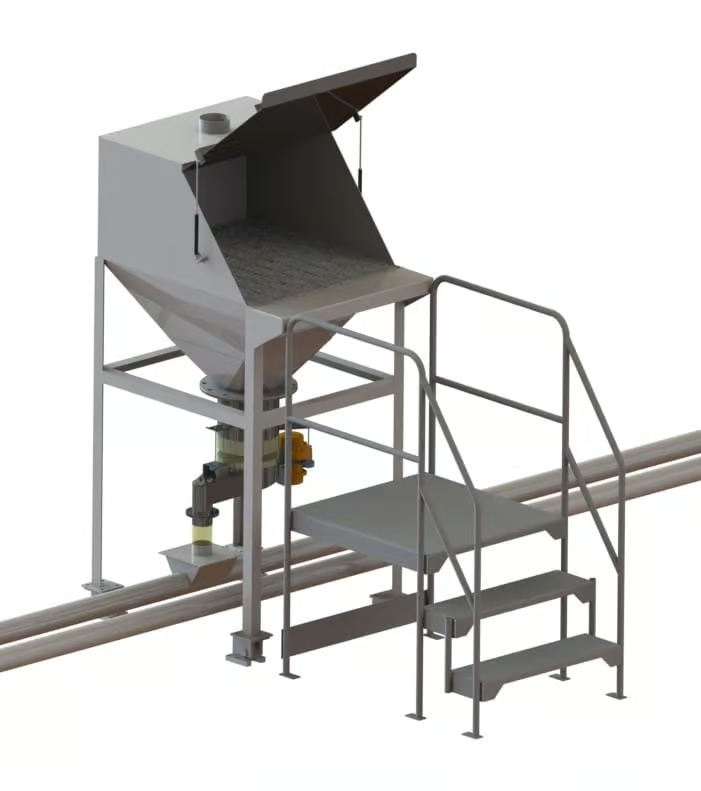
Control the discharge rate
A bag dump station receives material; a feeder controls delivery to the process. Specify whether you need continuous feeding, batch dosing, or simple transfer before selecting the discharge equipment.
Explore screw feeders →Specify for the material and the people handling it.
Food ingredients, chemical powders, minerals, and plastic additives can have very different handling requirements. The material name alone does not establish the right configuration.
Share how the powder flows, how often products change, and what happens after the bag is empty. These details help define a practical station.
Features and options vary by manufacturer and configuration; final availability is confirmed during quotation.
How many bags does your process need?
Translate your production target into a bag unloading rate, then bring the key application details to your quote request.
Bag-rate calculator
Enter the bag weight and hourly material requirement in the same unit system.
Bags per hour = required hourly throughput ÷ weight per bag. For example, 1,500 lb/hr ÷ 50 lb/bag = 30 bags/hr, or one bag every 2 minutes.
This is the required average rate—not a station capacity rating or a safe manual handling limit. Allow for opening, emptying, disposal, breaks, cleaning, and downstream interruptions. Burst dumping may require additional hopper capacity.
Have these details ready
- Material & behaviorProduct name, bulk density, flow characteristics, dust properties, and SDS if available.
- Bags & production targetBag weight, dimensions, construction, bags per batch, and peak unloading rate.
- Destination & layoutReceiving equipment, inlet elevation, floor space, headroom, and a sketch or photos.
- Dust collection & utilitiesExisting collector details, electrical supply, and available compressed air.
- Cleaning & operating needsProduct changeovers, sanitation requirements, operator access, and bag disposal.
See the unloading arrangement.
As you watch, consider the operator's working area, the hopper outlet, and the space required to integrate the station with your process.
The video illustrates an equipment arrangement; your quoted configuration may differ.
Watch on YouTube ↗Bag dump station FAQs
What is the difference between a bag dump station and a bulk bag unloader?
A bag dump station receives material from small bags that an operator opens and empties manually. A bulk bag unloader supports a large flexible bulk bag, or FIBC, and discharges through its outlet. A combined system can accommodate both packaging types.
Can I connect a station to my existing dust collector?
A station can be supplied with a dust extraction connection. The collector must have suitable available airflow and static pressure, and the ductwork and collected materials must be compatible. Share your collector information and proposed duct route for review.
Does a bag dump station weigh or meter the material?
Not by itself. The station provides the receiving point. Controlled dosing requires selected feeding or weighing equipment and controls suited to the required rate and accuracy.
What determines unloading capacity?
Bag size, opening and emptying time, material flow, operator workflow, hopper volume, and downstream discharge all affect capacity. Use the calculator to establish the required average bag rate, then evaluate the full operating cycle and peak demand.
What should I consider for food ingredients or frequent changeovers?
Define the required contact materials, surface finish, access for inspection, cleaning method, and management of residual powder. Stainless steel construction alone does not establish sanitary suitability. Review the complete configuration against your facility's requirements.
What affects the price of a bag dump station?
Major factors include construction materials, hopper size, filtration arrangement, cleaning requirements, controls, and integrated feeding or conveying equipment. A basic receiving station and a complete unloading and transfer system have different scopes. Share your application for a configuration-specific quote.
Build a better bag unloading point.
Send us your material, bag size, required rate, and a few photos or a layout. We can help identify a suitable station and the equipment needed to connect it to your process.
sales@carolina-mt.com
Serving North Carolina & South Carolina.