
Industrial Slide Gate & Knife Gate Valves
From simple gravity-flow slide gates to pressure-rated, bidirectional and heavy-duty process knife gates, Carolina Material Technologies helps select the right valve around your material, pressure, sealing requirements and process conditions.
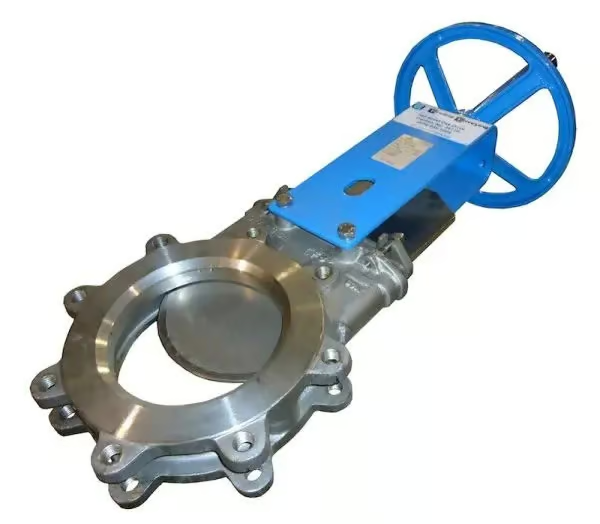


A “gate valve” can mean several very different things.
A fabricated slide gate below a gravity hopper, a sealed cast-body valve in a powder system and a process knife gate handling slurry may look similar from a distance—but they are designed for very different operating conditions. We start with the application before selecting the valve.
Slide Gate vs. Knife Gate Valve
The terms are often used interchangeably, especially in dry bulk processing. In practice, however, the construction and intended service can be very different.

Slide Gate Valve
A slide gate uses a flat plate that moves across an opening to start or stop material flow. Fabricated versions are especially common below bins, hoppers, silos, dust collectors and process equipment handling dry powders and granules by gravity.
- Excellent for gravity-fed powders and bulk solids
- Round, square, rectangular and custom openings
- Simple full-opening material path
- Manual, pneumatic or electric operation
- Economical solution for many hopper isolation duties

Knife Gate Valve
A knife gate normally uses a beveled gate together with a substantial valve body, packing system and application-specific seat arrangement. Depending on the design, knife gates can handle dry bulk materials, suspended solids, pressure, vacuum and demanding process service.
- Beveled gate can cut through accumulated or suspended solids
- Available with metal or resilient seating
- Body and packing provide greater process containment
- Unidirectional and bidirectional designs available
- Special designs for abrasive, corrosive or high-consistency media
Which type of gate should I use?
Start with the material and operating conditions. The examples below provide a practical starting point before final valve selection.
| Application | Typical Starting Point | Why | Important Considerations |
|---|---|---|---|
| Bin or hopper gravity isolation | Fabricated slide gate | Simple, economical full-opening isolation for dry bulk solids. | Opening size, material head load, abrasion and available actuator clearance. |
| Large square or rectangular opening | Custom fabricated slide gate | Fabrication allows the valve to match non-standard equipment connections and large openings. | Plate deflection, frame reinforcement, actuator force and material load. |
| Fine powder requiring enclosed valve construction | Enclosed cast-body slide valve | Fully enclosed construction provides a more controlled gate environment than an open fabricated slide. | Pressure differential, required seal, temperature and construction material. |
| Dry material under pressure or vacuum | Seated dry-material knife gate or sealed slide valve | Resilient or specialty sealing arrangements can provide containment beyond a basic gravity slide gate. | Maximum differential pressure, direction of pressure and leakage requirement. |
| Slurry or suspended solids | Process knife gate valve | Knife-gate designs are available specifically for solids-bearing industrial process streams. | Solids concentration, chemistry, abrasion, pressure and direction of flow. |
| Bidirectional high-consistency service | Through-conduit knife gate | Through-going gate and double-seat designs can provide shutoff in either flow direction. | Pressure, media consistency, seat selection and required full-port flow path. |
| Severe abrasion or unusual service | Engineered / custom knife gate | Gate, seat, body, liners and coatings can be selected around the specific wear mechanism. | Particle hardness, velocity, cycle frequency and expected maintenance interval. |
Slide Gate & Knife Gate Valve Options
Our valve access ranges from straightforward fabricated gravity gates to enclosed cast-body powder valves and highly engineered industrial knife gates.
Fabricated Slide Gates
Fabricated mild steel, stainless steel or abrasion-resistant gates for dry material gravity-flow applications. Round, square, rectangular and custom connections allow these gates to fit directly below bins, hoppers and process equipment.

Britton Cast-Body Slide Valves
Fully enclosed cast-body slide valves provide a compact, robust solution for gravity-fed powders and granules. Machined cast aluminum bodies are available along with stainless-steel configurations for applications where aluminum is not suitable.
Heavy-Duty Dry Material Knife Gates
Cast stainless-steel knife gates provide heavier-duty construction than a fabricated slide gate while remaining specifically designed around dry powder and bulk-solids service.

Industrial Process Knife Gates
For services beyond dry gravity flow, process knife gates are available with application-specific body, seat, packing and gate configurations for suspended solids, slurry, pressure, vacuum and industrial process streams.

Pneumatic Gate Valves
Pneumatic cylinders provide reliable, repeatable gate movement for automated production systems and can be combined with solenoids and valve-position feedback.

Custom & Special Gates
When a standard catalog valve does not fit the equipment or process, fabricated and engineered valves can address unusual openings, restricted layouts, large sizes, high wear and special process conditions.
Not all knife gate valves are interchangeable.
“Knife gate” describes a broad valve family rather than one universal design. Even valves with similar outside dimensions may have very different flow paths, seat arrangements and pressure capabilities.
Unidirectional Wafer Knife Gates
A compact wafer-style knife gate is a common starting point for general industrial services involving suspended solids. The valve is designed around a preferred pressure direction and can be configured with multiple seat and actuator options.
Full-Lug Knife Gates
Heavy-duty lug-style construction provides a more robust valve body for demanding service. Available options can include resilient or metal seating, purge or flush provisions, specialized alloys, abrasion protection and multiple actuator types.
Through-Conduit Knife Gates
A through-going gate and double-seat arrangement provides a full flow path and shutoff in either direction, making this design useful for high-consistency and challenging solids-bearing media.
Where are slide and knife gates used?
Gate selection changes according to both the material and the equipment immediately upstream and downstream.
Bins & Hoppers
Isolate stored material before feeders, conveyors, rotary valves or downstream process equipment.
Silos
Provide maintenance or process isolation between the silo outlet and discharge or conveying equipment.
Dust Collection
Isolate dust collector, cyclone, filter receiver or hopper discharge points.
Pneumatic Conveying
Pressure- or vacuum-rated gates can isolate equipment and material flow where appropriate for the conveying design.
Minerals & Abrasives
Wear-resistant materials, coatings, reinforced seats and application-specific geometry can extend valve life.
Chemical Processing
Body, gate, seat and packing materials can be selected around corrosion, temperature and process compatibility.
Food & Ingredients
Stainless construction and appropriate sealing materials can support clean powder and ingredient handling applications.
Slurry & Suspended Solids
Purpose-selected process knife gates can isolate media where conventional dry-bulk slide gates are not appropriate.


Sometimes the correct gate does not exist in a catalog.
Large openings, high head loads, abrasive products, unusual dimensions and restricted plant layouts can make a standard valve impractical. That is where fabricated or specially engineered gate construction becomes valuable.
Manual, pneumatic and electric actuation
The valve body is only part of the selection. Cycle frequency, available utilities, fail position, access and plant controls determine the best actuator and accessory package.
Need open / closed position feedback?
Automated valves can be supplied with appropriate position indication, including limit or proximity switches, solenoid valves and other control accessories depending on the valve and environment.
Why does a knife gate stop closing completely?
In bulk-solids service, valve geometry matters. Material can accumulate or compact in internal pockets, seat ledges or the bottom of the valve body. If the gate reaches packed material before completing its designed travel, the result can be incomplete shutoff, leakage or a gate that appears to be mechanically jammed.
What do we need to size your gate valve?
You do not need to know the manufacturer or exact valve model. Send us the information you have and we can help determine whether the application requires a fabricated slide gate, sealed powder valve, dry-material knife gate or industrial process knife gate.
Send Us Your Application →Replacing an existing gate?
A photo of the valve and nameplate can often save significant time. Include the manufacturer/model if available, opening size, bolt pattern, actuator type and what problem the existing valve is experiencing.
Slide Gate & Knife Gate Valve FAQ
What is the difference between a slide gate and a knife gate valve?
Slide gates are commonly used to start and stop gravity-fed dry bulk materials using a sliding plate. Knife gate valves typically incorporate a more substantial valve body, packing and seat system with a beveled gate, allowing certain designs to handle pressure, vacuum, suspended solids and other demanding process applications.
Can a slide gate be used in a pneumatic conveying line?
A basic fabricated gravity slide gate should not automatically be used in a pressurized conveying line. The valve must be selected specifically for the system pressure or vacuum and required leakage performance.
Can a knife gate valve handle dry powder?
Yes. Certain knife gates are designed specifically for dry bulk powders and granules. Other knife-gate designs are intended for slurry, suspended solids or broader industrial process service, so the valve should be matched to the actual material.
Are knife gate valves bidirectional?
Some are and some are not. Many common knife gates are unidirectional and have a preferred pressure direction. Bidirectional and through-conduit designs are available when shutoff is required from either direction.
Can you make a custom square or rectangular slide gate?
Yes. Fabricated slide gates can be supplied with round, square, rectangular and custom connections, and fabrication allows unusual dimensions and large openings to be accommodated.
What causes a knife gate valve to jam?
Potential causes include material accumulation in body cavities or seat areas, packed solids beneath the gate, insufficient actuator force, wear, misalignment or a valve design that is not well matched to the material being handled.
Can gate valves be supplied with position switches?
Yes. Depending on the valve and actuator, open and closed indication can be provided using limit switches, proximity sensors or other position-feedback devices.
Do you supply replacement valves outside the Carolinas?
Yes. Carolina Material Technologies provides local application support throughout North and South Carolina while many valves, components and replacement products can be supplied and shipped to customers throughout the United States.
Continue building the material handling system
Need a slide gate, knife gate or replacement valve?
Send us your material, opening size, operating conditions and any existing valve information. We will help determine the appropriate gate design, construction, seat, actuator and controls for the application—not simply force the application into one manufacturer's standard valve.