
Pneumatic Conveying Systems for Powders, Pellets & Bulk Solids
CMT designs and integrates pressure, vacuum, dilute phase, dense phase, and venturi-driven systems that move dry bulk materials reliably between unloading, storage, batching, mixing, and process equipment.
- ✓System selection based on the material, route, transfer rate, and process - not a one-size-fits-all package.
- ✓Complete integration of feeding devices, blowers, piping, receivers, filtration, valves, instruments, and controls.
- ✓Local application support and site visits throughout North Carolina and South Carolina.

Choose the conveying method around the material and process
Pneumatic conveying uses air or another gas to move dry bulk material through enclosed piping. The right approach depends on how the product behaves, how gently it must be handled, where it starts and ends, and what the rest of the process needs to accomplish.
Dilute Phase Pressure
Positive pressure pushes material from one feed point toward one or multiple destinations. It is frequently used for production-scale transfer, silo filling, and longer conveying routes.
Dilute Phase Vacuum
Negative pressure pulls material toward a receiver. It is useful for multiple pickup points, dust containment, ingredient handling, and processes where leaks should draw inward.
Dense Phase
Higher pressure and lower velocity move material in a strand, slug, or plug-like flow regime. This can reduce attrition and pipeline wear for suitable materials.
Venturi Eductor
A venturi eductor uses motive air to create suction at the solids inlet, feeding material into a positive-pressure line without a rotary valve at the feed point.
Reliable transfer at the required rate - without plugging, dusting, excessive wear, or unnecessary energy use.
A top-performing system is not defined by the blower alone. It is the result of correctly matching the feed device, air mover, conveying line, receiver, filtration, discharge equipment, instrumentation, and control sequence.
Dilute Phase Pneumatic Conveying
In dilute phase conveying, particles are suspended in a moving air stream and transported above the material's saltation velocity. Systems can operate under positive pressure, vacuum, or a combination of both.

How dilute phase conveying works
Material enters the conveying line through a rotary airlock, venturi eductor, pickup wand, screw feeder, or another controlled feed device. A blower or vacuum producer creates the airflow needed to transport the material to a filter receiver, cyclone, silo, day tank, mixer, or process vessel.
- Flexible routing with vertical and horizontal pipe runs, elbows, diverters, and multiple destinations.
- Compatible with bulk bag unloaders, bag dump stations, silos, feeders, mixers, screeners, and packaging processes.
- Suitable for many powders, pellets, granules, ingredients, minerals, and dry bulk solids when properly engineered.
- Can be configured for continuous transfer, batch transfer, refill, loading, unloading, or process recirculation.
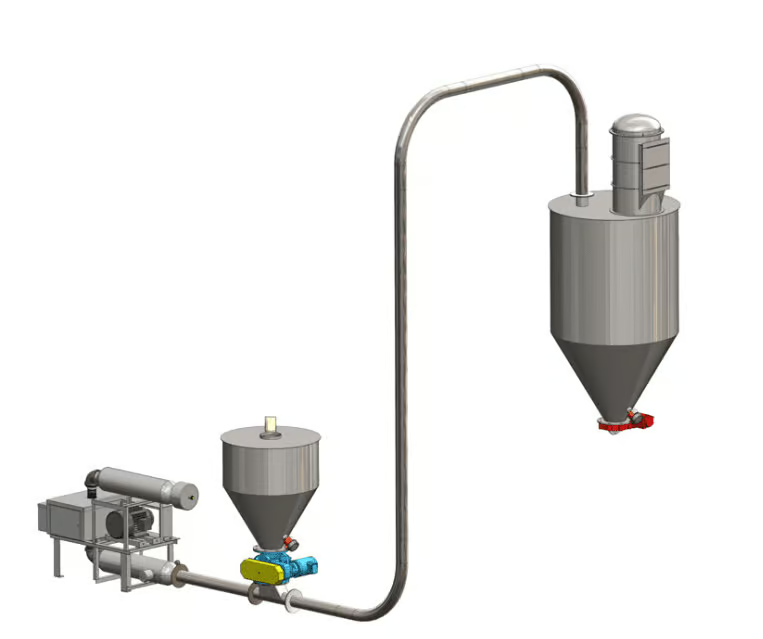
Pressure Conveying Systems
A pressure system pushes material from a feed point toward the destination. This arrangement is often selected for higher-capacity transfer, longer routes, silo filling, and one-source-to-multiple-destination layouts.
- Commonly uses positive displacement blowers.
- Can feed through rotary airlocks, screw feeders, or venturi eductors.
- Diverter valves can route material to multiple bins or receivers.

Vacuum Conveying Systems
A vacuum system pulls material through the conveying line toward a receiver. Because leakage tends to draw air into the system, vacuum conveying can support cleaner pickup points and improved dust containment.
- Well suited to multiple pickup points feeding one receiver.
- Useful for ingredient transfer, hopper loading, refill, and sanitary processes.
- Can use sequencing receivers for multiple destinations or process machines.


Venturi Eductor Conveying Systems
Fox venturi eductors convert blower air into suction at the product inlet, allowing powders, pellets, flakes, dust, and other dry bulk materials to enter a positive-pressure conveying line with no moving parts in the eductor.
- Useful where rotary valve blowback, leakage, wear, shearing, or maintenance is a recurring concern.
- Can be installed below bulk bag unloaders, bins, dust collectors, screw feeders, screeners, and process equipment.
- The eductor, blower, piping, receiver, and feed arrangement must be sized together for the required duty.
Dense Phase Pneumatic Conveying
Dense phase systems use higher pressure and lower gas velocity to move material in a strand, slug, or plug-like flow regime. The method is often considered when material degradation, segregation, pipeline wear, or high air consumption makes conventional dilute phase less attractive.

How dense phase conveying works
Material is typically introduced through a pressure vessel, blow tank, or specialized feeding arrangement. Controls regulate pressure, airflow, and the release of material so the product moves through the line at a controlled velocity.
- Gentler transport can reduce breakage, fines, declassification, and product degradation.
- Lower material velocity can reduce wear in straight pipe and at elbows.
- Can be advantageous for abrasive, friable, fragile, or high-value products.
- Requires careful evaluation of material permeability, fluidization behavior, route geometry, and pressure capability.


Swipe horizontally to view the full comparison table.
| Selection Factor | Dilute Phase | Dense Phase |
|---|---|---|
| Material Movement | Particles are primarily suspended in the gas stream. | Material moves in a strand, slug, or plug-like regime. |
| Relative Velocity | Higher gas and material velocity. | Lower material velocity. |
| Relative Pressure | Usually low to moderate pressure or vacuum; many dilute systems operate below 15 psig. | Generally higher pressure and application-dependent. |
| Common Fit | Broad range of powders, pellets, granules, and general transfer duties. | Abrasive, friable, fragile, or high-value materials that benefit from gentler conveying. |
| Advantages | Flexible layouts, broad application range, simpler equipment, and often lower capital cost. | Lower product velocity, reduced attrition potential, and reduced pipeline wear potential. |
| Important Considerations | Excess velocity can increase wear, fines, heat, and energy use. | Material must be suitable for dense phase flow; controls and pressure-rated equipment are more complex. |
Important: These are conceptual differences, not universal sizing values. Final velocity, pressure, pipe diameter, solids loading, and air volume must be calculated for the actual material and conveying route.
Where pneumatic conveying fits in a bulk material handling process
CMT can integrate pneumatic transfer with unloading, storage, weighing, batching, mixing, and downstream process equipment. The examples below show common system architectures rather than fixed packages.

Bulk Bag Unloading Systems
Transfer material from super sacks into silos, day tanks, mixers, feeders, or process equipment. Rotary airlocks, screw feeders, or venturi eductors can be used depending on the product and rate.


Silo Systems
Fill silos from bulk delivery or convey from silo discharge to day bins and production equipment. Systems can include bin vents, pressure-vacuum protection, level controls, flow aids, feeders, diverters, and destination receivers.

Railcar Unloading Systems
High-capacity transfer from railcars to storage silos or process systems for pellets, grains, minerals, chemicals, and other bulk materials. Layout, line routing, filtration, and unloading time are evaluated together.
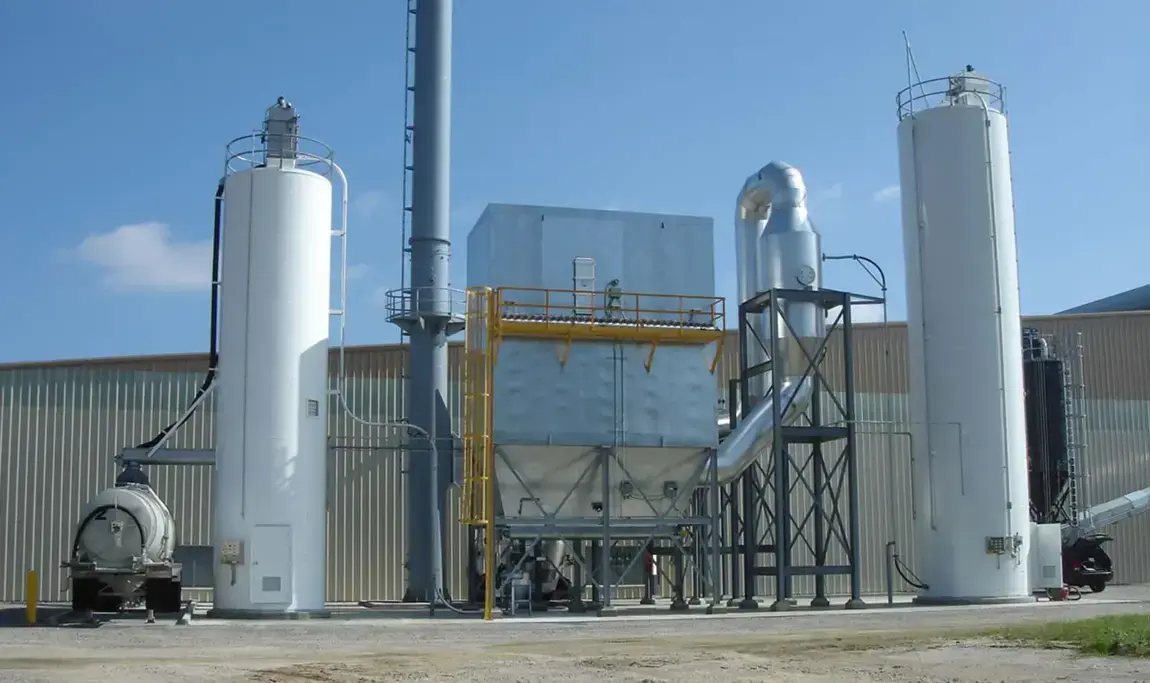
Truck Unloading Systems
Unload pneumatic trailers or dry bulk tankers into storage silos with coordinated piping, bin vent filtration, level indication, fill-line routing, and overfill protection strategies.


Day Tank Systems
Refill day bins or process tanks from silos, bulk bags, feeders, or mixers. Vacuum sequencing receivers and pressure transfer systems can support multiple production lines and automated refill logic.

Batching Systems
Move major and minor ingredients between storage, weigh hoppers, feeders, mixers, and process vessels. Controls can coordinate recipes, source selection, weighing, line clearing, and destination confirmation.
Related pneumatic conveying equipment
A conveying line only performs as well as its feed point, air source, elbows, filtration, discharge equipment, and controls. CMT can help select individual components or integrate the complete system.

Wear-Resistant Elbows
Reduce elbow wear, plugging, streamers, fines, and product impact with application-specific deflection or abrasion-resistant elbows.
Explore conveying elbows →Fox Venturi Eductors
Feed material into positive-pressure conveying lines with no moving parts at the solids inlet and no rotary airlock blowback.
Explore venturi eductors →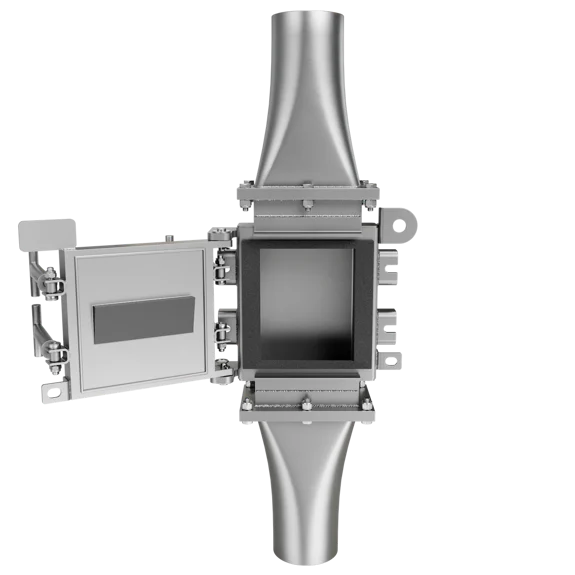
Pneumatic Inline Magnets
Capture ferrous contamination in pressure or vacuum conveying lines while protecting downstream equipment and product quality.
View inline magnets →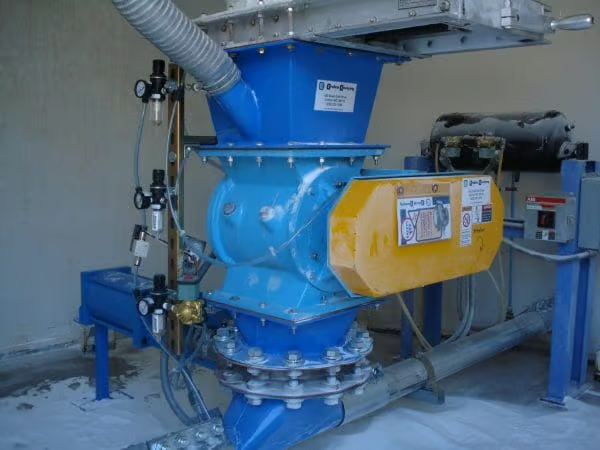
Rotary Airlock Valves
Meter solids into pressure or vacuum systems while maintaining an air seal between the feed equipment and conveying line.
Explore rotary valves →
Bin Vents & Filter Receivers
Separate product from conveying air, control dust, and allow silos, hoppers, and receivers to breathe during filling and transfer.
Explore dust collection →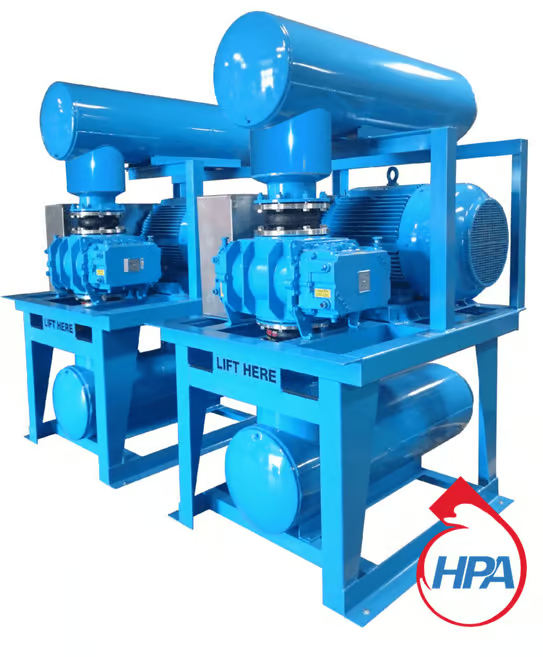
Industrial Blower Packages
Application-specific pressure and vacuum packages with blowers, filters, silencers, valves, gauges, controls, and enclosures.
View Hardy Pro-Air packages →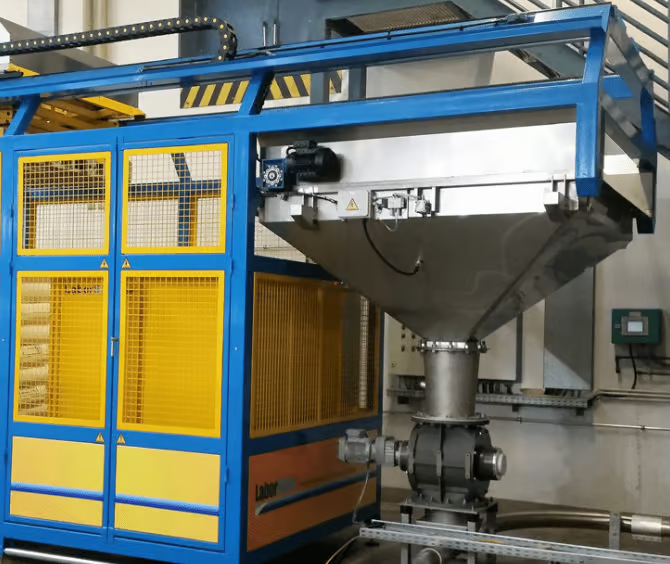
Laborsave® Sack Emptying
Automate bag opening, emptying, product recovery, and downstream pneumatic transfer for higher-volume bagged ingredients.
Discuss sack emptying →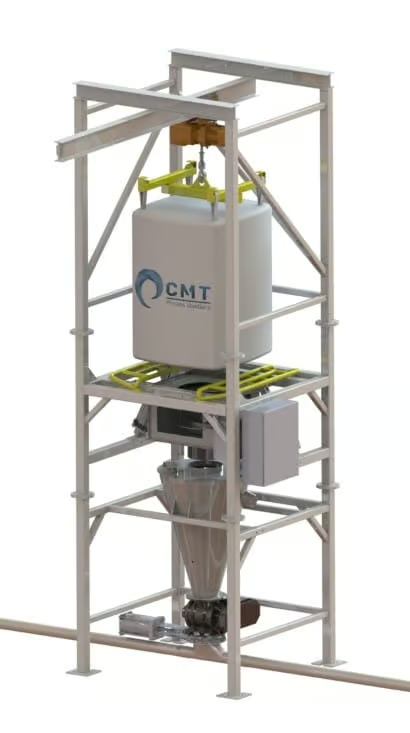
Bulk Bag Unloader Systems
Discharge super sacks into pressure or vacuum conveying systems with dust containment, flow promotion, and controlled feeding options.
Explore bulk bag unloaders →Five parts of a reliable pneumatic conveying system
Every component affects the others. Changing a feeder, blower speed, filter condition, pipe route, or destination pressure can change the performance of the complete line.
Material Feed
Rotary valve, screw feeder, eductor, pickup wand, pressure vessel, or other device introduces solids at a controlled rate.
Air Mover
Blower, exhauster, vacuum producer, or compressed gas source provides the required air volume and pressure differential.
Conveying Line
Pipe diameter, length, vertical lift, elbows, diverters, and fittings determine velocity and pressure loss.
Receiver & Filtration
Cyclones, filter receivers, bin vents, and discharge valves separate material from air and protect the destination.
Controls & Safety
Level devices, pressure switches, VFDs, valve feedback, interlocks, alarms, and line-clearing sequences coordinate operation.
What should you provide for a pneumatic conveying quote?
The more complete the application data, the more accurately the equipment can be sized and the fewer assumptions must be built into the proposal.
Send Your Application Details- Material name and safety data sheet
- Loose and settled bulk density
- Particle size and shape
- Flowability, moisture, and temperature
- Abrasiveness and friability
- Required transfer rate or batch size
- Source and destination equipment
- Total horizontal distance
- Total vertical lift
- Number and type of bends
- Available utilities and voltage
- Indoor or outdoor installation
- Sanitation and cleanout requirements
- Area classification and dust hazards
- Existing drawings or site photos
- Control and automation requirements
New System Design
Develop the conveying concept, equipment arrangement, routing, air system, receiver, filtration, instrumentation, and control philosophy around the complete process.
Existing System Troubleshooting
Review low throughput, plugging, excessive blower load, filter pressure drop, feed-point blowback, unstable transfer, excessive wear, and product degradation.
Retrofit & Expansion
Add destinations, improve unloading time, replace aging blowers, upgrade elbows or valves, modify controls, or connect new process equipment to an existing line.
Pneumatic conveying systems in North Carolina & South Carolina
Carolina Material Technologies supports manufacturers throughout the Carolinas with site visits, application reviews, equipment selection, system integration, and retrofit consultation for pneumatic conveying and complete bulk material handling systems.
Our role is to evaluate the whole process - not force every application into the same technology. CMT can coordinate specialists for blowers, rotary valves, eductors, filtration, silos, feeders, magnetic separation, level controls, and system controls.
- Onsite application review: material, route, space constraints, existing equipment, and maintenance concerns.
- Complete system integration: unloading, storage, conveying, batching, mixing, dust control, and controls.
- Equipment upgrades: blowers, rotary airlocks, eductors, elbows, filters, receivers, magnets, and instrumentation.
- Regional responsiveness: a local resource for North Carolina and South Carolina plants.
Pneumatic conveying system FAQs
These answers provide general guidance. Final system selection and sizing should be based on the actual material, process conditions, and conveying route.
Should I use a pressure or vacuum conveying system?
Pressure systems are often selected for longer routes, higher rates, and one-source-to-multiple-destination layouts. Vacuum systems are often useful for multiple pickup points, ingredient loading, and applications where inward leakage supports dust containment. Some processes use both vacuum and pressure stages.
When is dense phase better than dilute phase?
Dense phase may be advantageous when the product is abrasive, friable, fragile, or sensitive to high conveying velocity. It is not automatically the best choice for every material; permeability, fluidization behavior, required rate, route, and pressure capability must be evaluated.
What causes a pneumatic conveying line to plug?
Common causes include insufficient transport velocity, overfeeding, unstable material flow, excessive pressure loss, poor line routing, worn or restricted components, filter loading, air leakage, moisture, or a control sequence that stops the air mover before the line is cleared.
Can pneumatic conveying handle abrasive powders?
Yes, but the system must be designed around wear. Lower velocity where practical, suitable pipe and elbow materials, deflection elbows, replaceable wear components, proper feed equipment, and dense phase conveying may all be considered depending on the material.
How far can a pneumatic conveying system move material?
There is no single distance limit. Achievable distance depends on the material, rate, line diameter, vertical lift, bend count, air source, pressure or vacuum level, feed method, and destination pressure. Properly engineered systems can cover short in-plant transfers or routes extending hundreds of feet.
Can CMT integrate pneumatic conveying with silos, bulk bags, feeders, or mixers?
Yes. CMT can integrate pneumatic conveying with bulk bag unloaders, bag dump stations, silos, day tanks, screw or vibratory feeders, rotary valves, venturi eductors, weigh hoppers, mixers, dust collectors, magnetic separators, level controls, and complete batching systems.
Can you troubleshoot or upgrade an existing system?
Yes. CMT can review existing systems experiencing low rate, plugging, dust leakage, product damage, excessive wear, high blower load, filter limitations, rotary valve blowback, or control-sequence problems, then recommend targeted equipment or system-level upgrades.
What information is needed to size a system?
Key information includes material characteristics, bulk density, particle size, moisture, temperature, abrasiveness, fragility, required rate, source and destination equipment, horizontal distance, vertical lift, bend count, utilities, controls, sanitation needs, and any combustible-dust or area-classification requirements.
Let’s design or improve your pneumatic conveying system
Share your material, transfer rate, distance, vertical lift, source equipment, destination, and current challenges. CMT will help evaluate the right conveying method and the equipment needed to build a reliable system.