
Vibratory Feeders for Accurate Batching & Metering
CMT SmartFeeder™ systems combine true mass-flow hopper geometry, high-frequency vibratory feeding and fast/dribble control for repeatable loss-in-weight, gain-in-weight and volumetric feeding of powders, granules, fragile ingredients and abrasive materials.


Why SmartFeeder™ vibratory feeders improve batching performance
The feeder is not just a discharge device. It must activate the hopper outlet, maintain consistent bulk density and respond predictably to the weighing controls.
True Mass Flow
The GeoTray™ shears the full hopper outlet cross section so material is drawn more uniformly instead of creating stagnant zones.
Pulseless Dribble Feed
High-frequency feeding provides a more consistent final approach to target weight than intermittent “plopping” or surging.
Instant-Off Control
The vibratory drive stops without screw wind-down, helping the controller limit free-fall variation and final batch overshoot.
Low-Maintenance Feed Path
The one-piece feed tray has no internal bearings, bushings, shafts or seals exposed to abrasive or fine material.

Hopper geometry and feeder geometry must work together
A properly designed hopper can still funnel-flow when the outlet is only partially activated. SmartFeeder™ technology is configured to draw from the complete outlet and preserve the intended flow pattern.
Material-specific hopper design
Wall angle, outlet size, arching tendency, wall friction and angle of repose are considered during application review.
Full cross-sectional activation
The tray overlaps and shears the outlet so material is not pulled from only one side or one narrow point.
Controlled energy input
Vibration overcomes the material’s angle of slump and provides a stable, controllable discharge rate.
Loss-in-weight, gain-in-weight or volumetric feeding
The best configuration depends on recipe structure, refill method, batch size, required accuracy and whether the feeder must run continuously or by batch.
Weigh the feeder and material inventory
The controller measures weight loss over time and adjusts feeder output to maintain the target rate or deliver a defined batch.
- Continuous gravimetric feeding
- Minor and micro ingredients
- Direct-to-process dosing
- Refill sequencing can be automated
Feed into a weighed receiving vessel
One or multiple ingredients discharge into a weigh hopper, tote, mixer or container until the programmed setpoint is reached.
- Recipe batching
- Major and minor ingredients
- Multiple feeders to one scale
- Bag dump, bulk bag, silo or IBC supply
Meter by calibrated feeder output
Where gravimetric verification is not required, feeder amplitude or speed can be calibrated to provide a repeatable volumetric rate.
- Simple standalone applications
- Coating and spreading
- Process trimming and addition
- Lower control-system complexity
Designed for difficult dry bulk materials
The absence of a rotating screw in the feed path can reduce compaction, wear, seal failures and product damage in applications where conventional feeders struggle.
Abrasive
Minerals, sand, clay, oxides and other wear-prone solids.
Fragile
Granules or ingredients that can be damaged by screw compression.
Fine Powders
Materials that can migrate through shafts and seals in auger feeders.
Cohesive
Products prone to packing, binding, bridging or variable discharge.
Fibrous
Special tray configurations can address wrapping and plugging risks.
From continuous loss-in-weight feeding to recipe batching
SmartFeeder™ systems can be sized and configured for minerals, additives, coatings, pigments and other dry bulk ingredients.

Calcium Carbonate
Loss-in-weight feeding of a fine industrial powder.
Sand & Surface Coatings
Uniform spreading with adjustable feed width and rate.

Titanium Dioxide
Compact gain-in-weight or volumetric feeder arrangement.

Bentonite
Controlled dosing of a cohesive mineral ingredient.

Dry Additives
Repeatable minor-ingredient addition into a continuous process.
Manganese & Abrasive Minerals
Feed-path design avoids the rotating wear components used in screws.
Vibratory feeders integrated into complete material handling systems
CMT can combine feeders with bulk bag unloaders, bag dumps, IBCs, storage hoppers, weigh systems, conveying, mixers, dust collection and PLC controls.
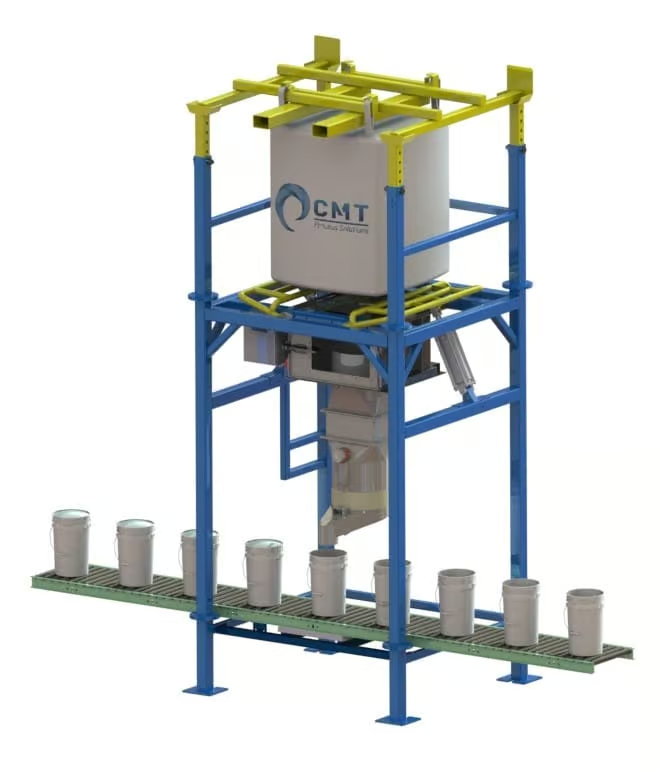
Bulk Bag to Container Batching
Unload, meter and fill individual containers from one integrated frame.
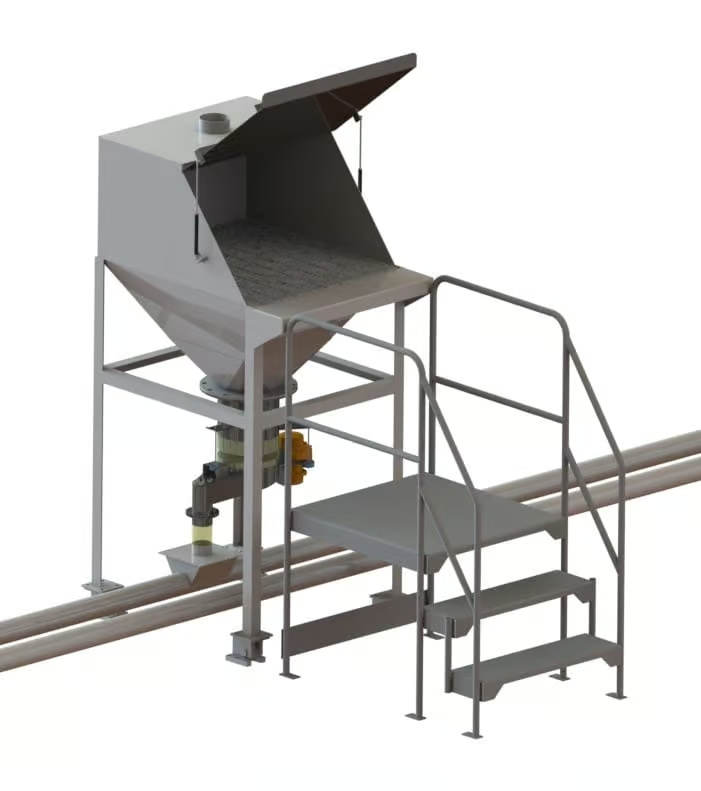
Bag Dump to Process
Convert manual sack addition into controlled automatic feeding.
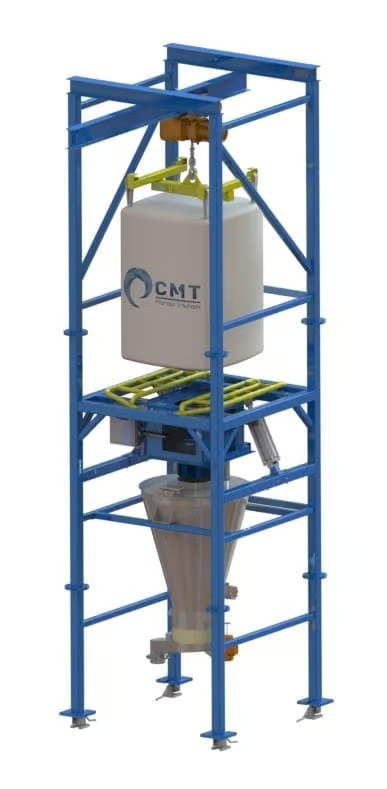
Bulk Bag Loss-in-Weight System
Bulk supply, controlled discharge and gravimetric feeding in one structure.
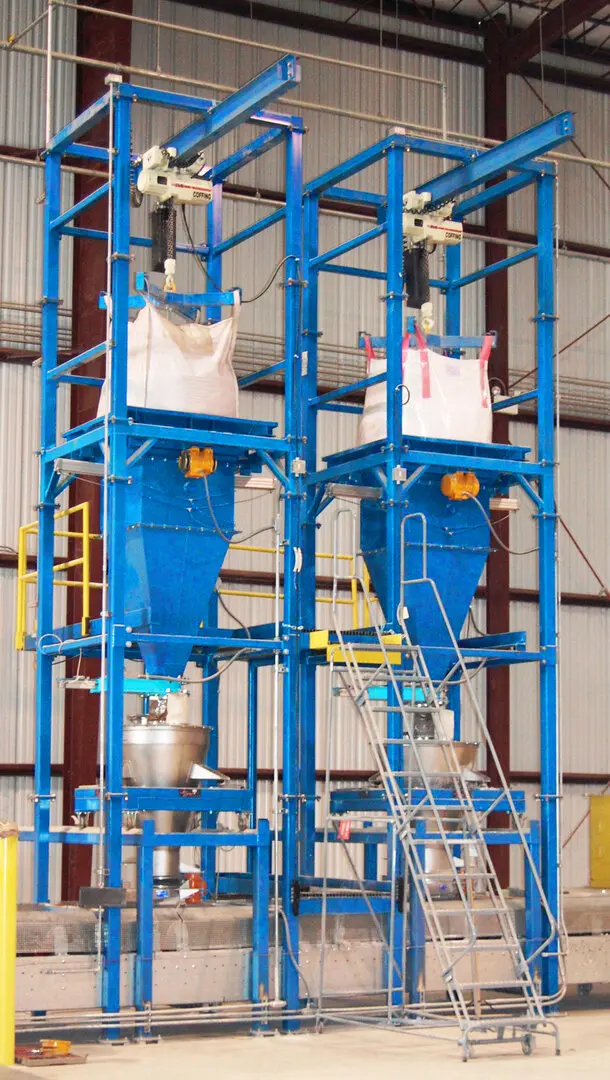
Multi-Ingredient LIW Feeding
Independent ingredient streams supplied from bulk bags.
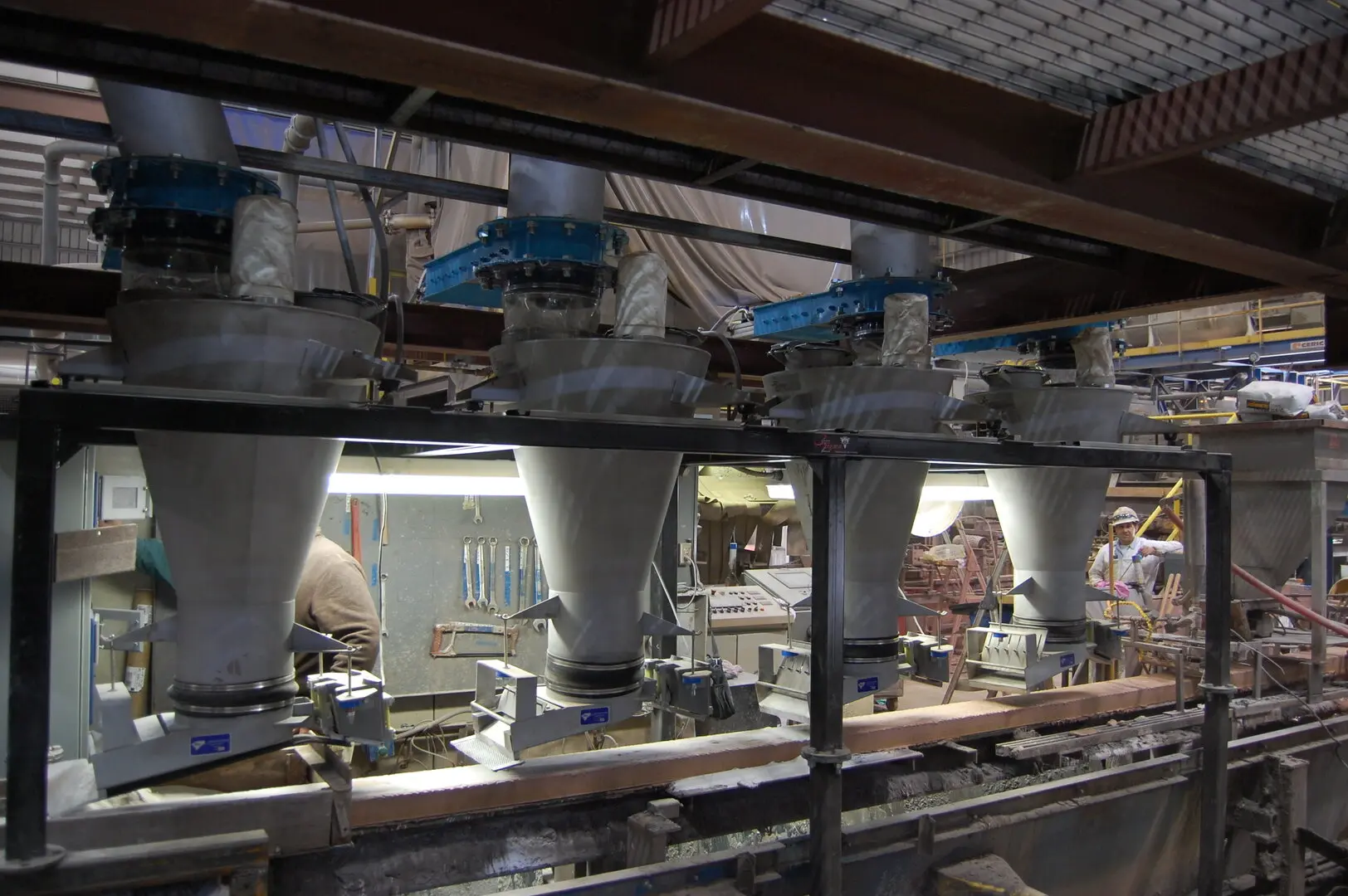
Multi-Feeder Coating Line
Multiple recipes or colors feeding a common production line.
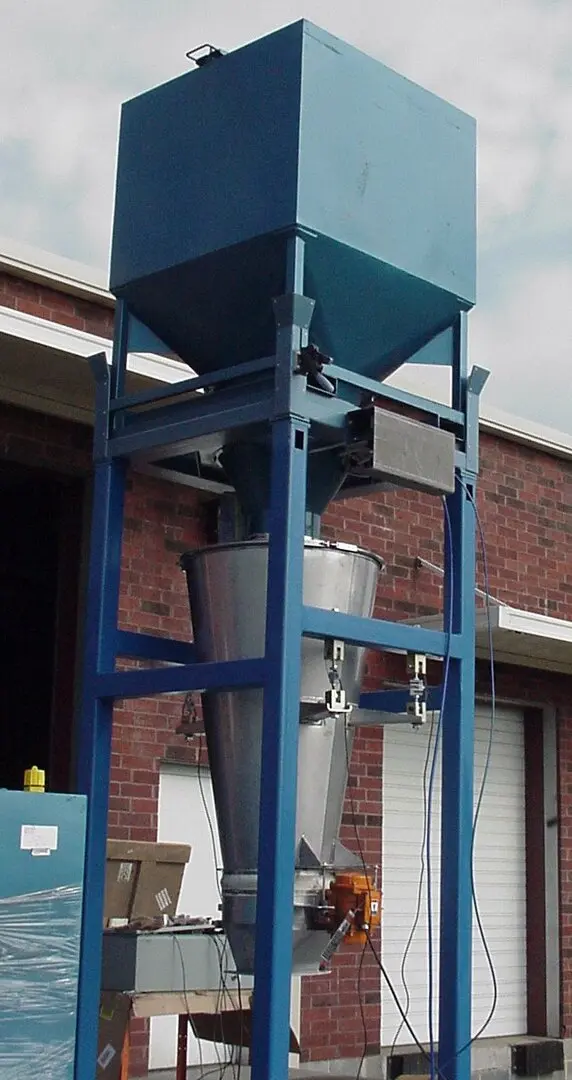
IBC-Supplied Batch Feeder
Portable material storage paired with a weighed batching station.
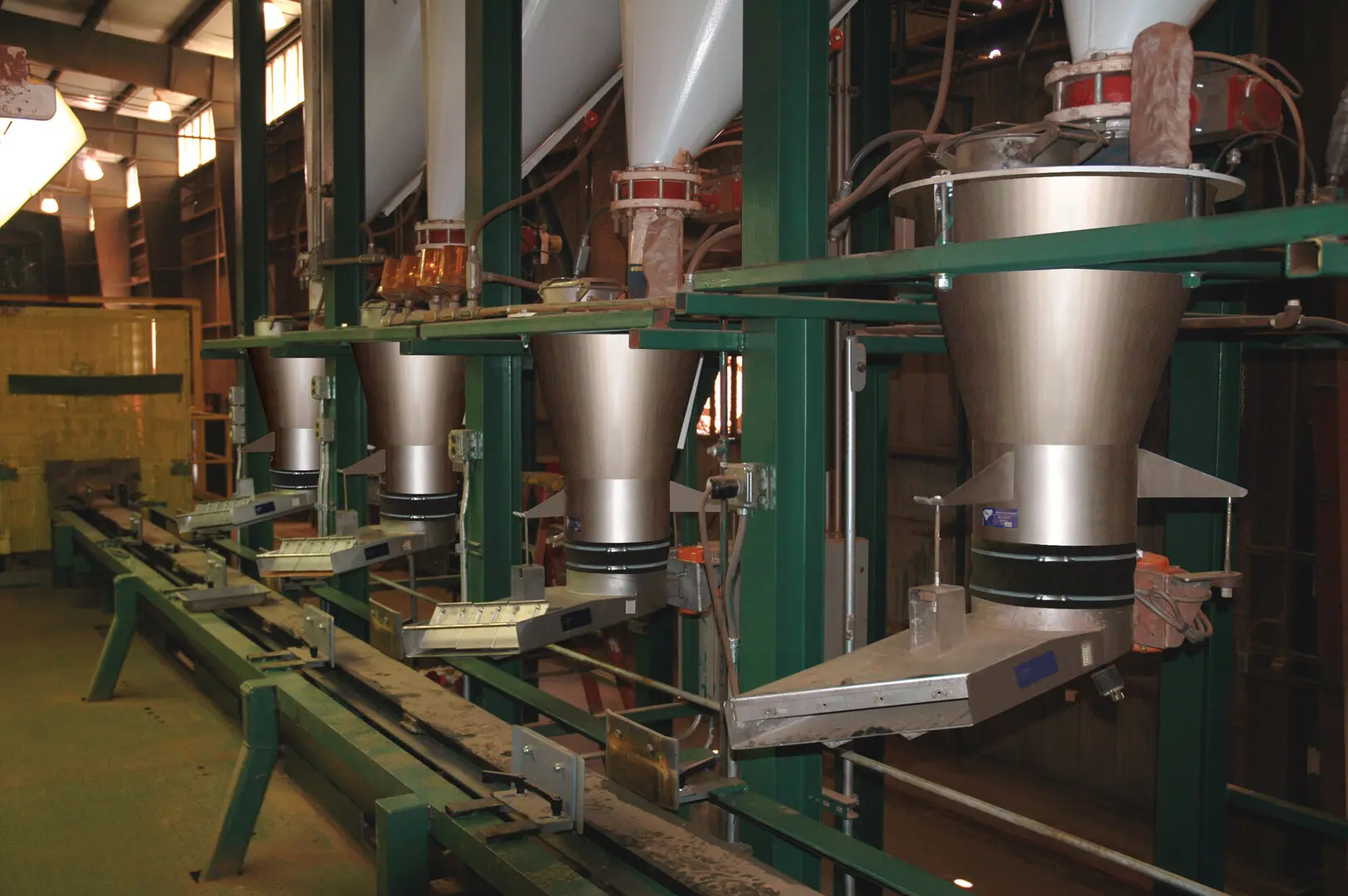
Direct-to-Line Feeding
Low-profile feeders positioned directly over the point of use.
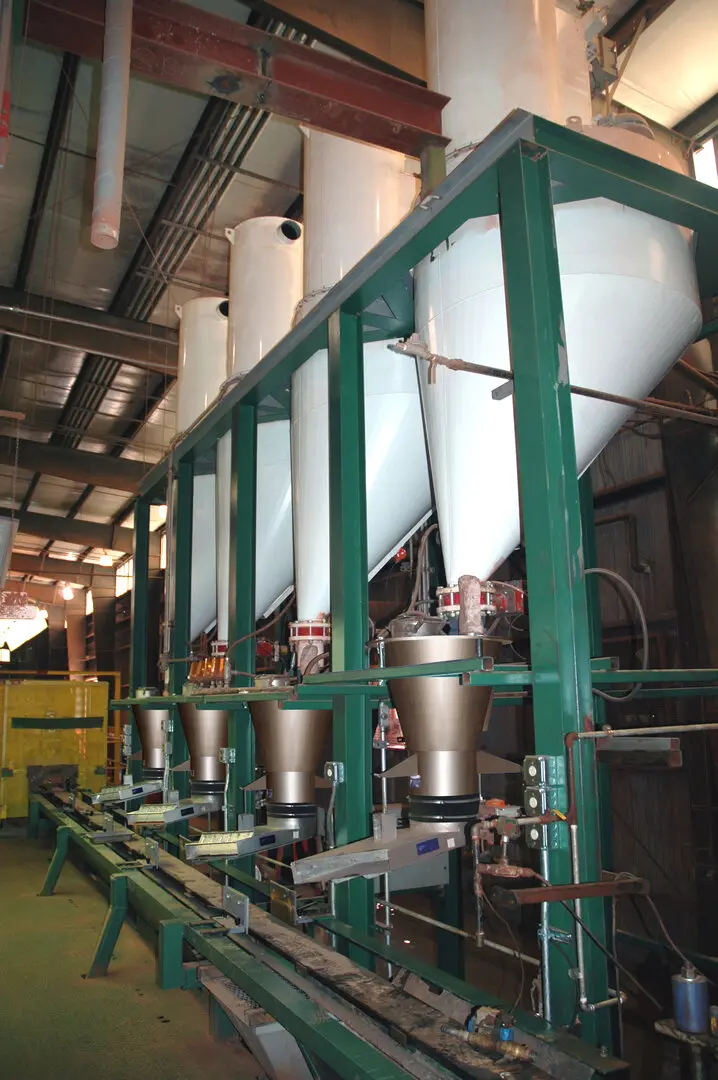
Storage, Feeding & Process Integration
Day bins, refill devices, feeders and line controls engineered as one system.
Mechanical consistency is only half of batch accuracy
The feeder, scale and controller must work together to manage fast feed, dribble feed and the amount of product still in flight when the feeder stops.
Available control functions
Standalone controllers or complete PLC systems
Controls can range from a single-scale batch controller to an Allen-Bradley® PLC and PanelView™ HMI coordinating multiple ingredients and the surrounding process.
- Single or multiple feeder / scale arrangements
- Loss-in-weight and gain-in-weight logic
- Automated refill, interlocks and permissives
- Integration with conveying, mixing and dust collection
- Control narratives, commissioning and troubleshooting
SmartFeeder™ sizes, capacity and drive requirements
These values are starting points for fine powders. Actual capacity depends on bulk density, particle size, flowability, tray geometry, head load and the required turndown ratio.
| Offset Feeder Size | Theoretical Maximum Flow | Approximate Weight | Drive HP | Voltage | Startup Current |
|---|---|---|---|---|---|
| 6 in. | 18 ft³/hr | 50 lb | 0.17 HP | 230/460 V, 60 Hz, 3 ph | 1.8/0.9 A |
| 12 in. | 68 ft³/hr | 90 lb | 0.17 HP | 230/460 V, 60 Hz, 3 ph | 1.8/0.9 A |
| 18 in. | 134 ft³/hr | 130 lb | 0.52 HP | 230/460 V, 60 Hz, 3 ph | 7.2/3.6 A |
| 24 in. | 273 ft³/hr | 250 lb | 0.52 HP | 230/460 V, 60 Hz, 3 ph | 7.2/3.6 A |
Test your material before finalizing the feeder
Material testing can confirm flow behavior, achievable rate, refill response and batch repeatability using the equipment configuration being considered for your plant.
Related equipment for batching and feeding systems
Vibratory feeder selection and application
What is the difference between a vibratory feeder and a screw feeder?
What makes a vibratory feeder accurate for batching?
Should I use loss-in-weight or gain-in-weight feeding?
Can SmartFeeder™ handle abrasive powders?
Can it feed cohesive or bridging materials?
What capacity is available?
What warranty is included with the SmartFeeder™?
What information is needed to size a vibratory feeder?
Let us review your feeder application
Send your material data, target feed rate, batch size and process layout. Carolina Material Technologies can help select the feeding mode, feeder size, hopper geometry, weighing equipment and controls—with SmartFeeder™ equipment backed by a five-year warranty.