
Bulk Bag Unloaders Proven to Reduce Dust — Not Just Claim It
An intelligently designed unloader built to improve upon the most common bulk bag unloader issues seen in the field.
Most bulk bag unloaders focus on discharging material. These systems are engineered to contain it — protecting operators, reducing cleanup, and supporting real EHS performance.

Most unloaders discharge material. These systems are engineered to contain it — from bag spout access to downstream equipment.
Dust control claims are easy. Measured results are different.
For very fine, hazardous, or nuisance dusts, the bulk bag unloader becomes more than a discharger — it becomes an engineering control. In documented graphite testing, CMT equipment reduced respirable emissions from current in-plant conditions by 98.7%, with an emissions increase during unloading of only 0.0048 mg/m³.
- Designed to help protect operators from respirable dust exposure.
- Supports EHS initiatives and OSHA-focused engineering controls.
- Reduces reliance on PPE as the first line of defense.

Why most bulk bag unloaders fail at dust control
Dust problems usually begin at the bag interface. If the access chamber is too small, part of the hopper, externally clamped, or constantly disturbed by agitation, dust and product spills become nearly impossible to control.

Contain-It™: the heart of the dust-tight design
The Contain-It™ access chamber gives operators a safe, spacious place to access and manipulate the bulk bag spout while protected from the weight of the bag and its dust. The chamber is not used as material storage — it is a true access and containment point.
- Dust is pulled away from the operator when the door is open.
- Spills are contained inside the chamber, not on the floor.
- Standard chamber outlets match pneumatic conveying, feeding, weighing, and downstream equipment.
- XL and XXL access chambers are available for larger discharge requirements.
7 layers of dust control built around the bag interface
True dust containment is not one feature. It is a sequence of mechanical design choices that keep dust and product inside the system before dust collection is ever added.
Dust containment and discharge options
Select the right level of containment based on the material, bag style, operator exposure risk, and required cleaning or EHS standard.

Positive spout sealing
Pneumatically clamps the bag spout to the discharge tube inside the Contain-It™ chamber to create a positive seal before material flows downstream.

Bag spout closure and flow control
Allows the operator to close the bag spout during unloading, stop material flow, and re-tie partially discharged bulk bags more safely.

Dust collection only when needed
Opens and closes with door position so dust collection pulls across the Contain-It™ chamber during operator access without wasting airflow when closed.

Bag evacuation before removal
Uses dust collection and special valving to collapse the empty bulk bag before removal, helping reduce dust exposure during bag handling.
Bag agitation matched to your product
Proper agitation is critical to discharging difficult products. The goal is to promote flow without breaking the dust-control seal. CMT recommends the proper agitation system for the product and can validate discharge during testing.

Vertical vibration that shapes the bag before opening
Shape-It™ uses vertical vibration to form the bulk bag to the steep-sloped platform prior to opening the spout. Because the bag is not continuously moved by bottom-mounted paddles, the platform seal is maintained for stronger dust control.

Heavy-duty paddle agitation for difficult products
Massage-It™ uses dual mechanical paddles to push material from the outer edges of the bag toward the center discharge point, helping break apart compacted material and promote complete discharge.
Vac-It™ dust collection: designed for operator protection
This video shows a dust cloud purposely created inside the Contain-It™ chamber to demonstrate the power of the Vac-It™ dust collection system. When the access door is opened, dust is pulled away from the operator instead of escaping into the work area.
Bulk bag unloader models
Choose the frame style around how bags will be loaded, plant height, operator workflow, and downstream equipment.
Self-contained bag lifting
Integrated hoist and trolley allows operators to load bags without a fork truck at the unloader location.


Simple, rugged frame
Designed for facilities that already use fork trucks to place bulk bags into the unloader frame.


Low-headroom applications
Compact frame design for areas with height limitations or applications where downstream equipment sits close to floor level.


Need a Quote Quickly?
Complete this one-page bulk bag unloader data sheet and email it to sales@carolina-mt.com for a faster, more accurate quotation.
Microsoft Word document · Complete electronically or print and fill out by hand
Complete bulk bag unloading systems
Because CMT is both a manufacturer and system integrator, the unloader can be supplied as part of a complete process system with feeding, conveying, weighing, dust collection, controls, and downstream equipment.

Bulk bag unloader + bag dump station
Flexible ingredient loading with one integrated system for bags, minor additions, and super sacks.
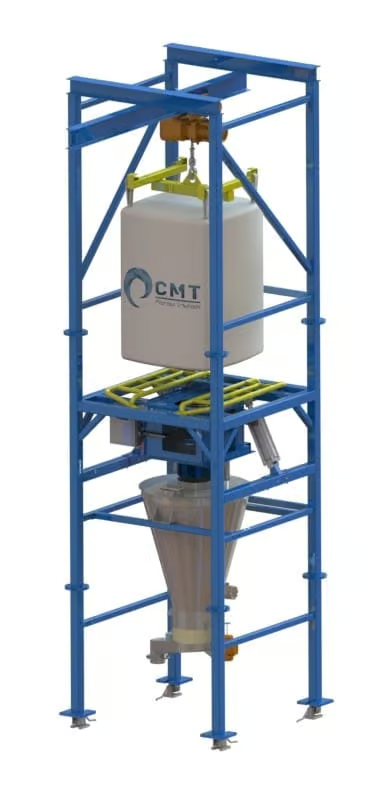
BBU with vibratory feeder
Controlled discharge into downstream process equipment, weighing, batching, or conveying systems.
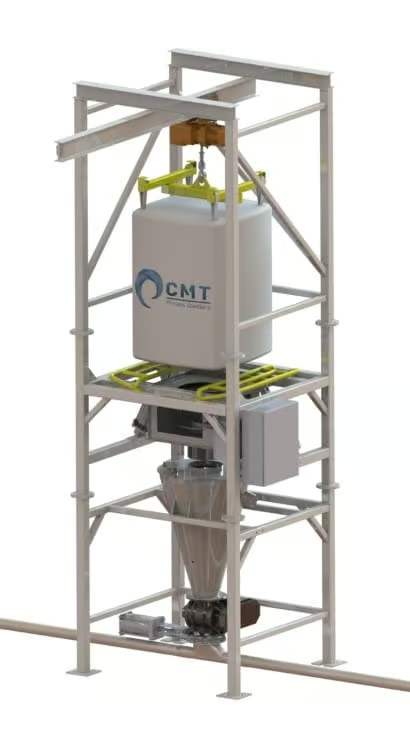
BBU with rotary valve
Meter material from the unloader into pressure or vacuum conveying lines while maintaining a controlled feed point.
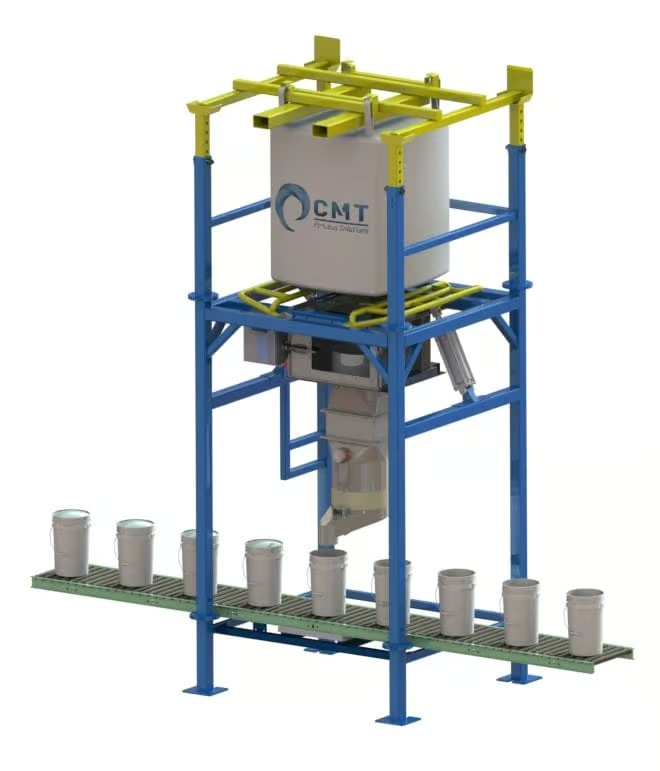
Integrated batching systems
Combine bulk bag unloading with weigh hoppers, feeders, controls, and automated batch transfer.
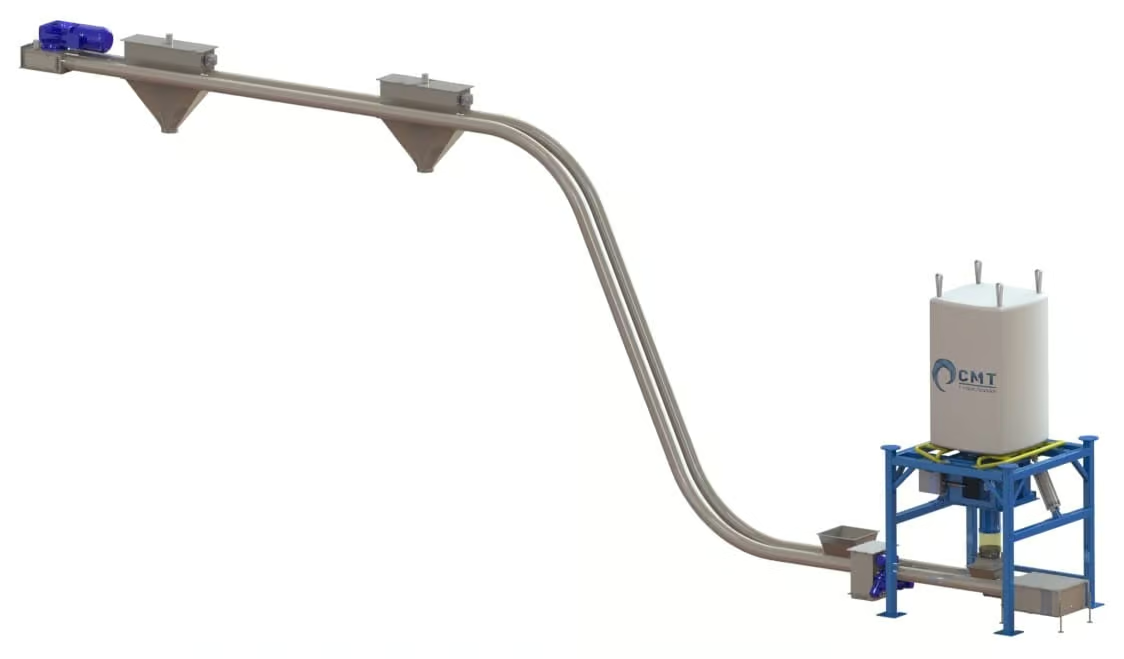
BBU with Chain-Vey conveyor
Gentle, enclosed transfer from bulk bag unloading into storage, batching, or downstream processing.
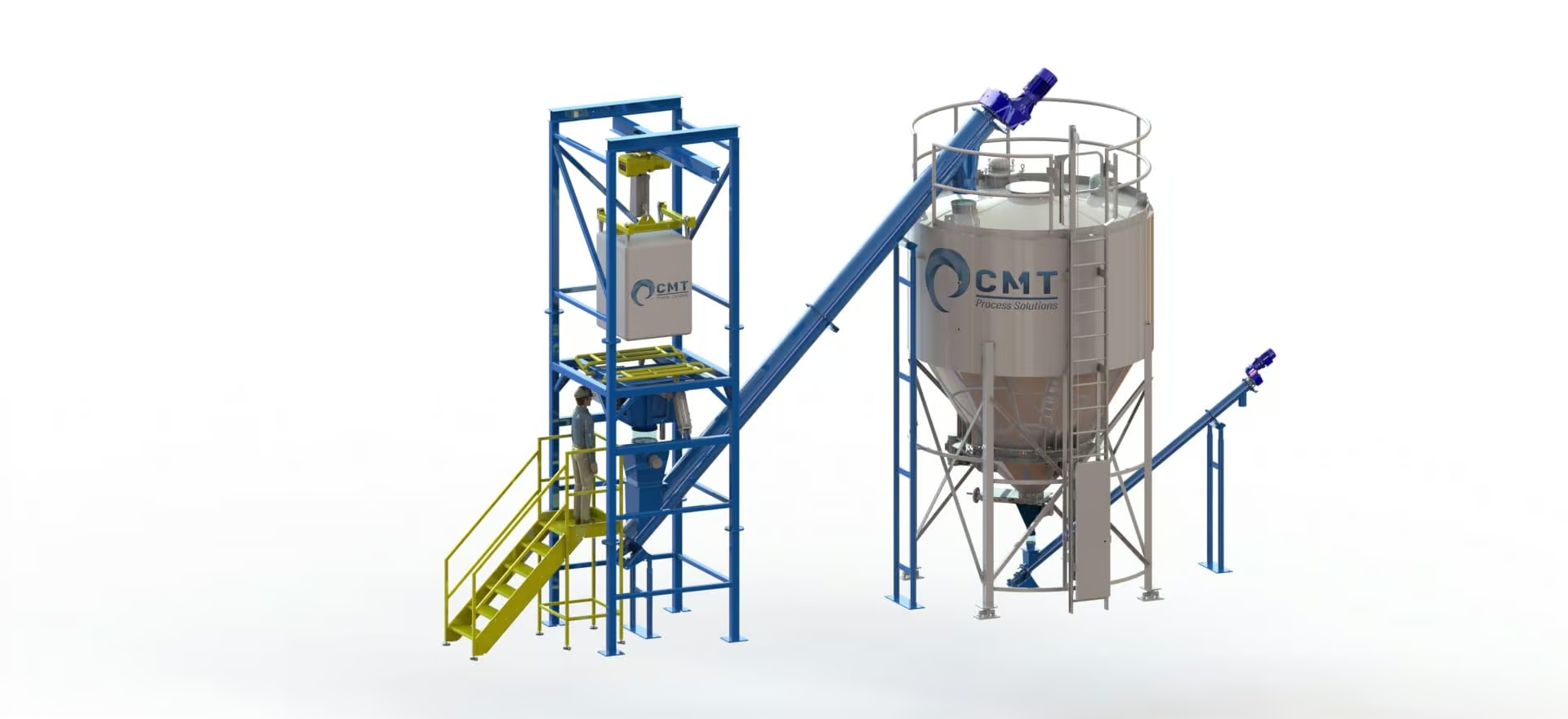
BBU to silo or day bin
Unload super sacks into larger storage, day tanks, or downstream feed systems with dust-tight transfer.

Controls, pre-wiring, and field-ready systems
Bulk bag unloaders can be supplied with pre-wiring, pneumatic plumbing, Allen-Bradley PLCs, Rockwell HMI touchscreens, and custom panels for complete system control.
- Allen-Bradley PLC and Rockwell HMI available as standard system controls.
- CompactLogix and ControlLogix options available for plant standardization.
- NEMA 4, 4X, 7, 9, and purged control panels can be provided.
- Features can be added in the field without requiring a full control panel upgrade.
Test your material before you commit
The best way to know whether a bulk bag unloader will control dust, discharge fully, and satisfy your operators is to test your actual material on the actual equipment style being considered.
- In-person demonstrations, live-stream demonstrations, and video recordings available.
- Written feedback and recommendations can be provided after testing.
- Process warranties are integrated into the purchase of a CMT system.


Empty bag handling: don’t let used bulk bags become the next mess
Dust control does not stop when the bag is empty. Empty bulk bags can carry residual powder, clutter work areas, increase forklift traffic, and create unnecessary disposal labor. Pairing your unloader with a multi-purpose bulk bag compactor helps keep the unloading area cleaner and more organized.
- Compact used bulk bags near the unloading station instead of letting them pile up.
- Reduce waste handling, fork truck movement, and housekeeping around the work area.
- Support recycling workflows by creating tighter, cleaner rolls or bundles of used bags.
- Improve the complete unloading workflow from full bag handling through empty bag disposal.
Which bulk bag unloader design is right for your application?
The right system depends on your material, dust hazard, bag construction, flow behavior, operator workflow, and downstream process.
| Application Need | Recommended Design Direction | Why It Matters |
|---|---|---|
| Very dusty or hazardous powders | Contain-It™ chamber + Clamp-It™ + Vac-It™ + dust collector | Creates mechanical containment before applying dust collection. |
| Poor-flowing or compacted materials | Shape-It™, Massage-It™, or Push-It™ agitation | Promotes full discharge without unsafe operator intervention. |
| Frequent partial bag removal | Close-It™ or Pinch-It™ flow control | Allows the bag spout to be closed and re-tied more safely. |
| Empty bag dust exposure | Collapse-It™ evacuation + bag compaction | Reduces dust released when removing or handling empty bags. |
| Turnkey process automation | BBU + feeder/conveyor/weighing/PLC controls | Integrates unloading into the whole material handling process. |
Planning a Bulk Bag Unloading System?
Download the 10-question specification guide to identify the material, bag, dust-control, loading, discharge, and integration details that should be reviewed before requesting proposals.
Frequently asked questions
What makes a bulk bag unloader dust-tight?
A dust-tight bulk bag unloader uses mechanical containment at the bag interface, a sealed access chamber, a sealed discharge path, proper bag spout sealing, and dust collection when required. The key is containing product and dust before it reaches the plant environment.
Do I always need a dust collector on a bulk bag unloader?
Not always. Mechanical containment should be addressed first. For very dusty, hazardous, or EHS-sensitive products, dust collection is often added to pull dust away from the operator and out of the containment chamber.
What is the difference between Shape-It™ and Massage-It™ agitation?
Shape-It™ uses vertical vibration to shape the bag to a steep-sloped platform before opening. Massage-It™ uses mechanical paddles to push difficult material from the outer edges of the bag toward the center discharge area.
Can these unloaders handle poor-flowing products?
Yes. Agitation options such as Shape-It™, Massage-It™, and Push-It™ can be selected based on the material’s flow behavior and tested before purchase.
Can I test my material before buying?
Yes. CMT offers testing to demonstrate dust containment, agitation, discharge performance, feeding, and downstream integration using your actual product when possible.
Can a bulk bag unloader be integrated into a full system?
Yes. Bulk bag unloaders can be integrated with dust collectors, feeders, screw conveyors, pneumatic conveying, tubular drag conveyors, weigh hoppers, mixers, silos, and complete PLC-based control systems.
Ready to stop fighting dust at the bulk bag station?
Send us your material, bulk density, bag size, throughput, and dust-control goals. We’ll help select the right unloader model, containment features, agitation method, dust collection strategy, and downstream integration.