
From individual equipment to integrated systems
Bulk Material Handling SystemsConnect Your Equipment. Improve Your Process.
Build a coordinated path for powders, pellets, and bulk solids—from receiving and storage through feeding, mixing, and packaging.
Carolina Material Technologies helps match equipment and system partners to your material, production goals, and plant layout. Whether you are improving one process step or planning a complete line, we help define how the pieces work together.
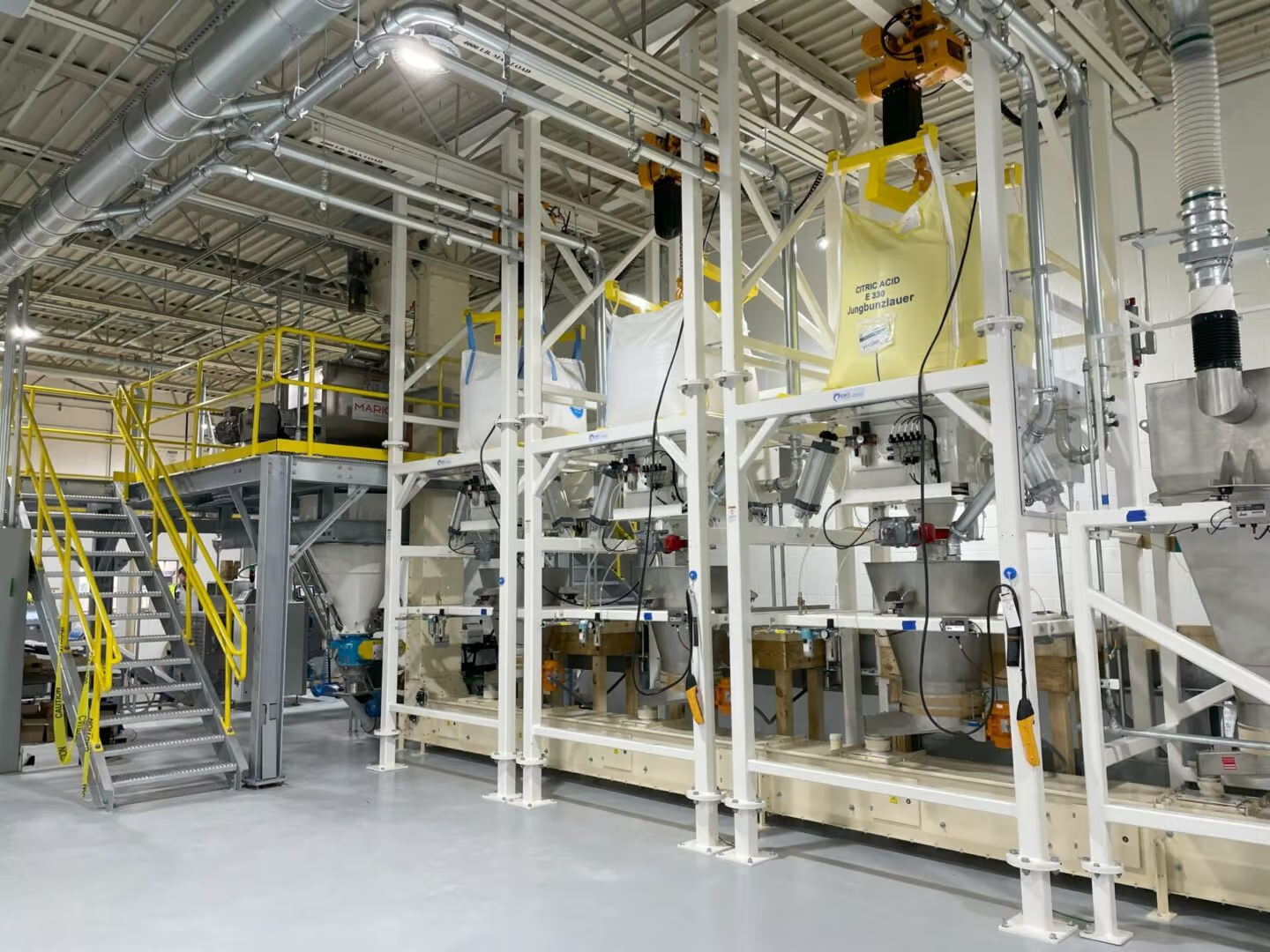
Improve material flow
Coordinate storage, discharge, and transfer to address bottlenecks between process steps.
Support consistent production
Match feeding, weighing, and mixing to your capacity and process requirements.
Simplify material handling
Plan containment, operator access, and equipment connections into the overall layout.
Explore Systems by Application
Select a category to jump to system examples. Click any image to enlarge it.
System 01 / Silos & Day Tanks
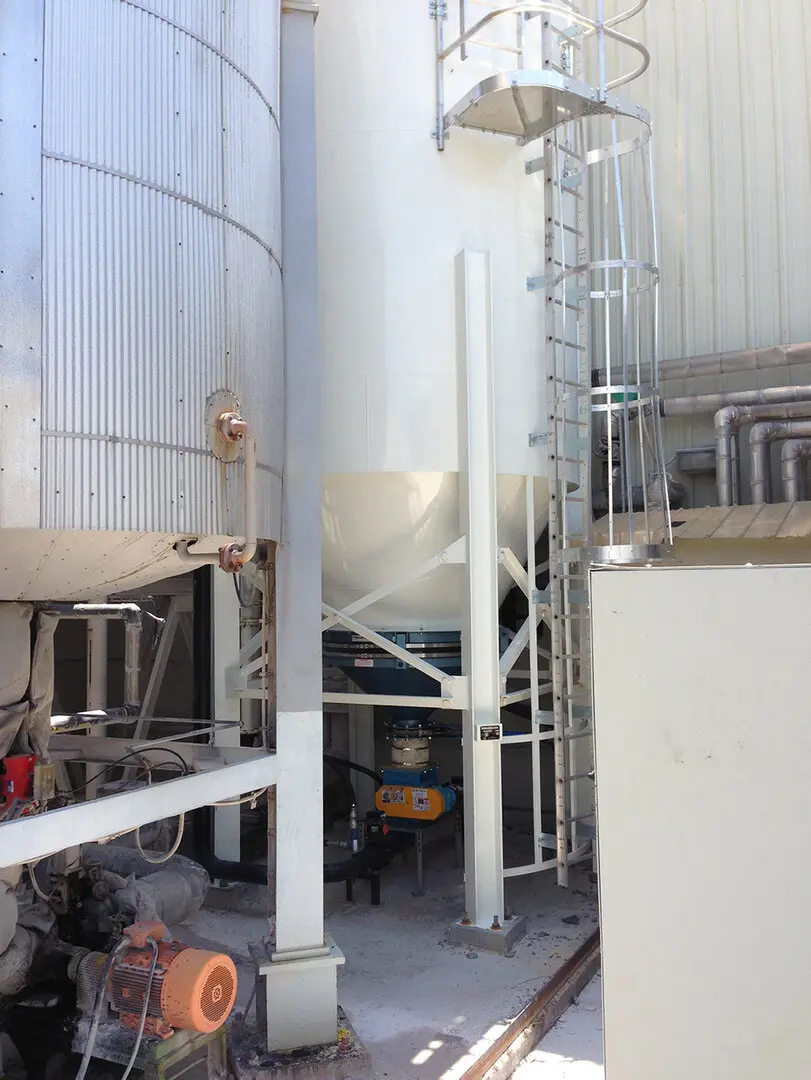
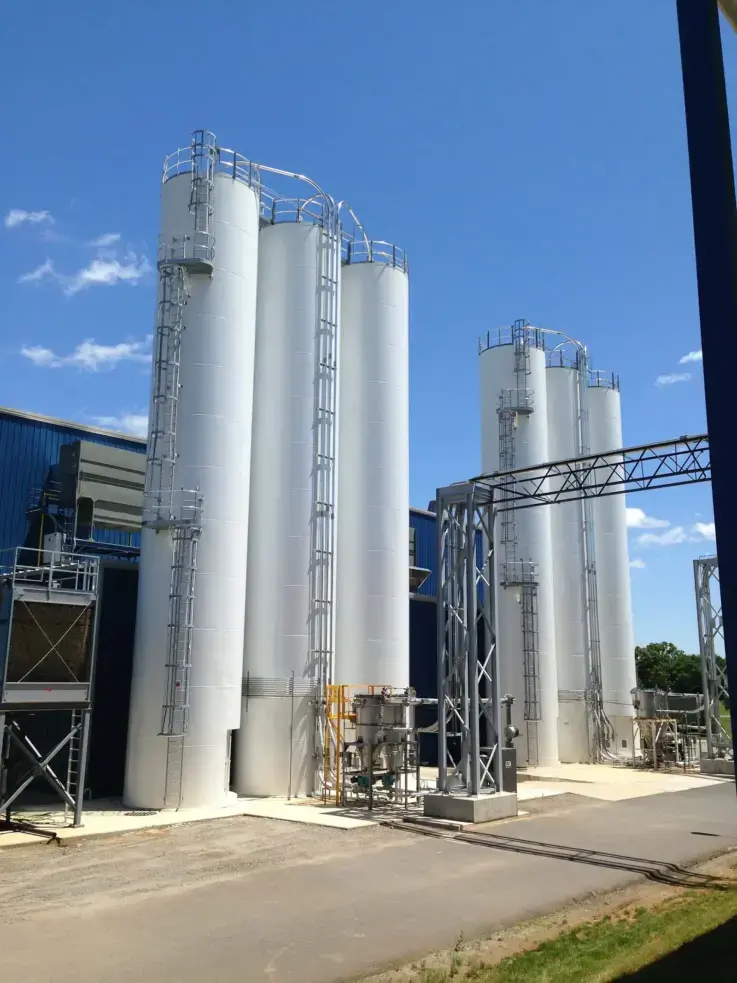
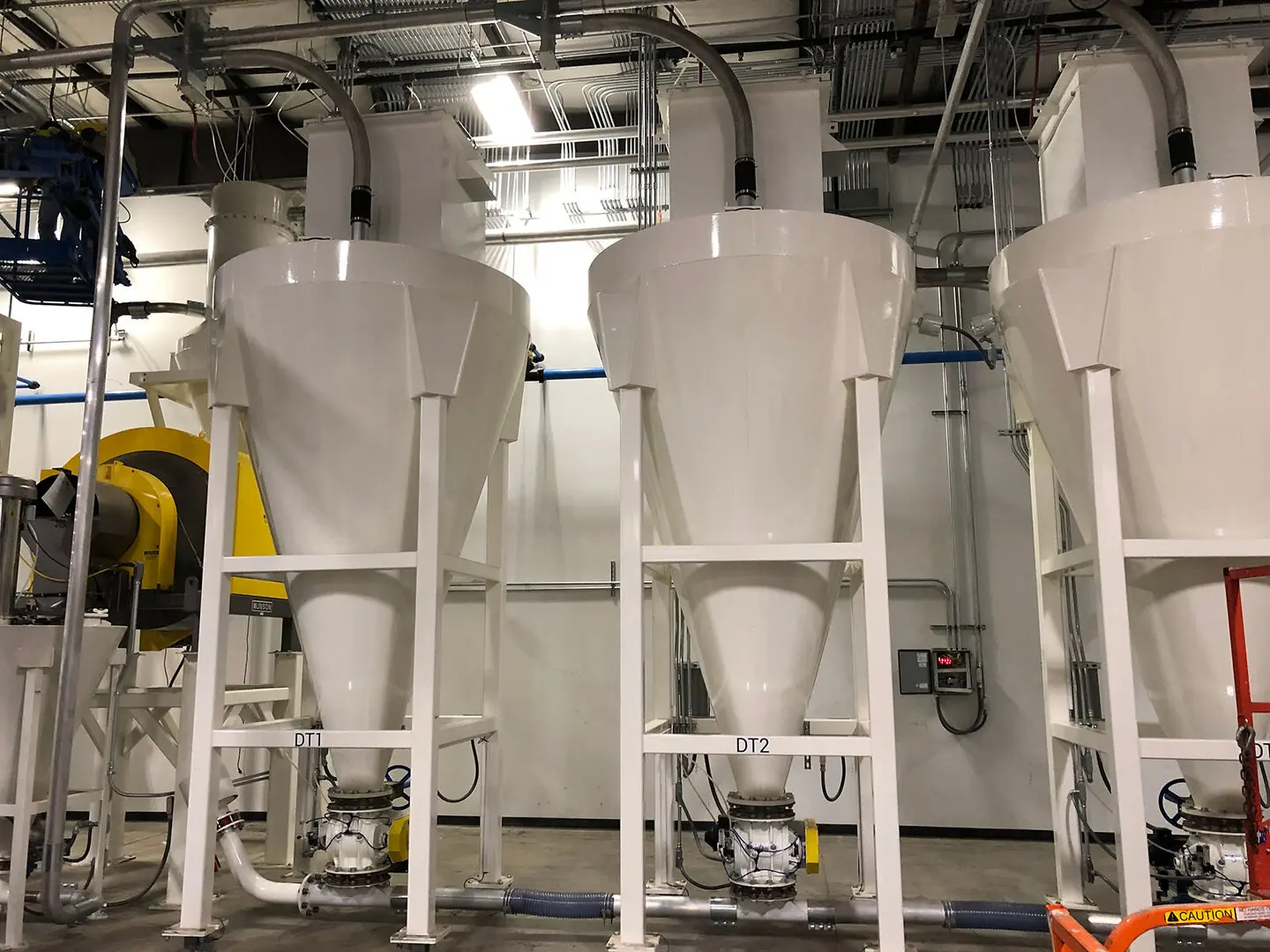
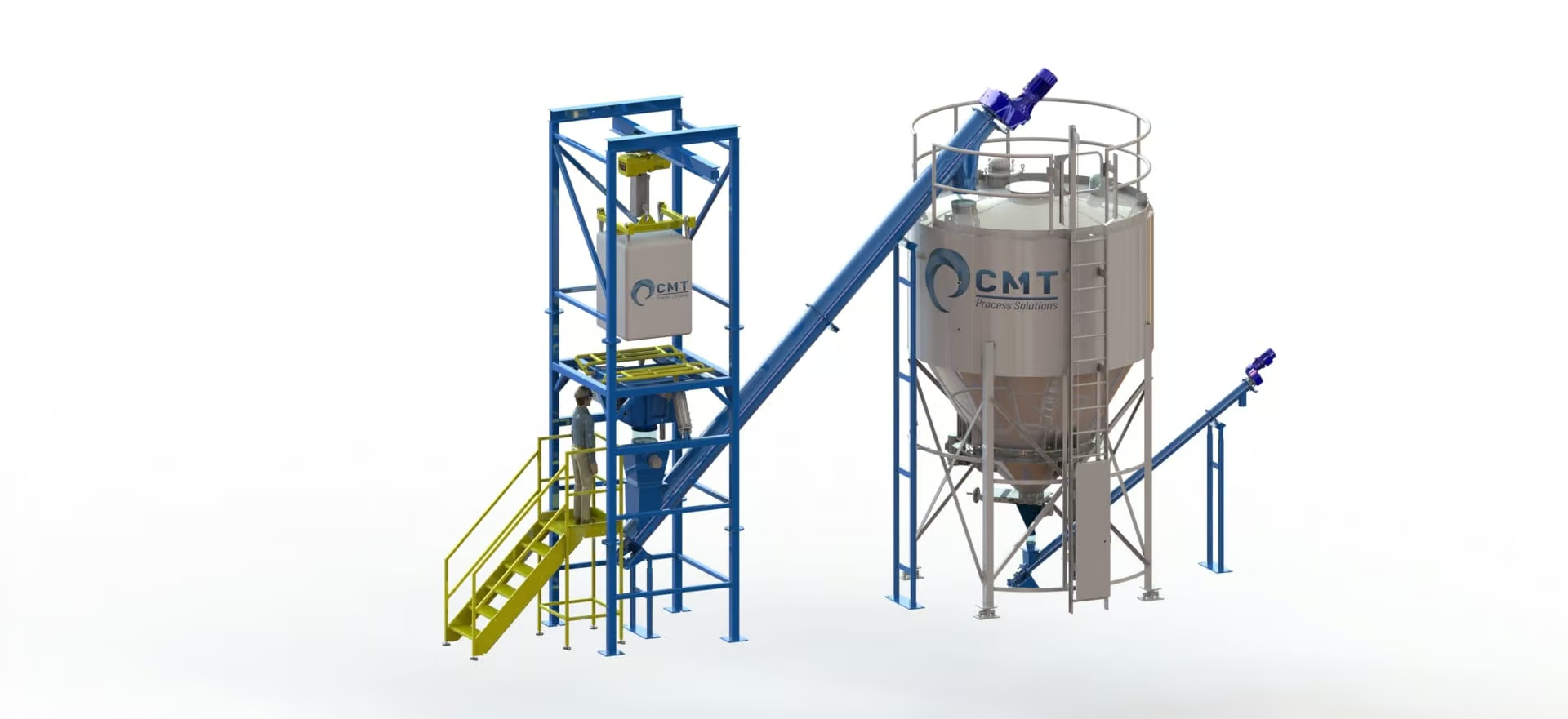
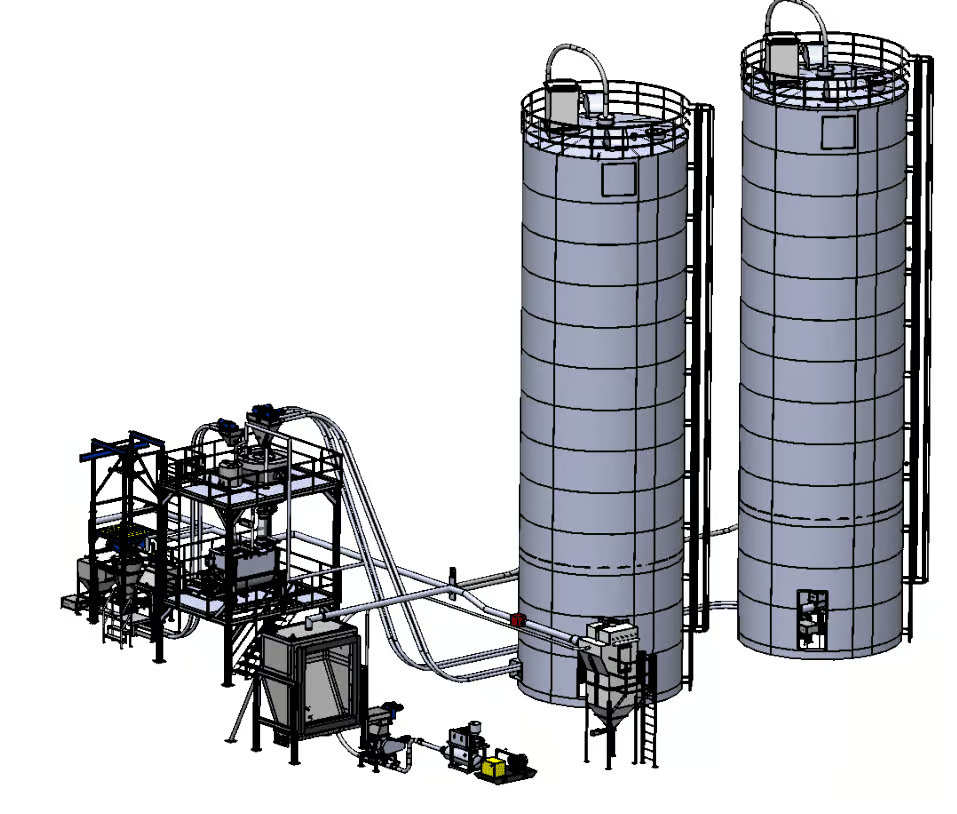
Silo & Day Tank Systems
Connect bulk storage to your production process.
Coordinate receiving, storage, inventory monitoring, and discharge so material reaches the process when it is needed. Silo and day tank arrangements can combine truck or rail unloading with pneumatic or mechanical transfer.
- Bolted or welded storage selected around material and site requirements
- Level measurement, bin vents, discharge aids, and downstream feeding
- Day tanks and surge capacity coordinated with production demand

System 02 / Bulk Bag Unloading
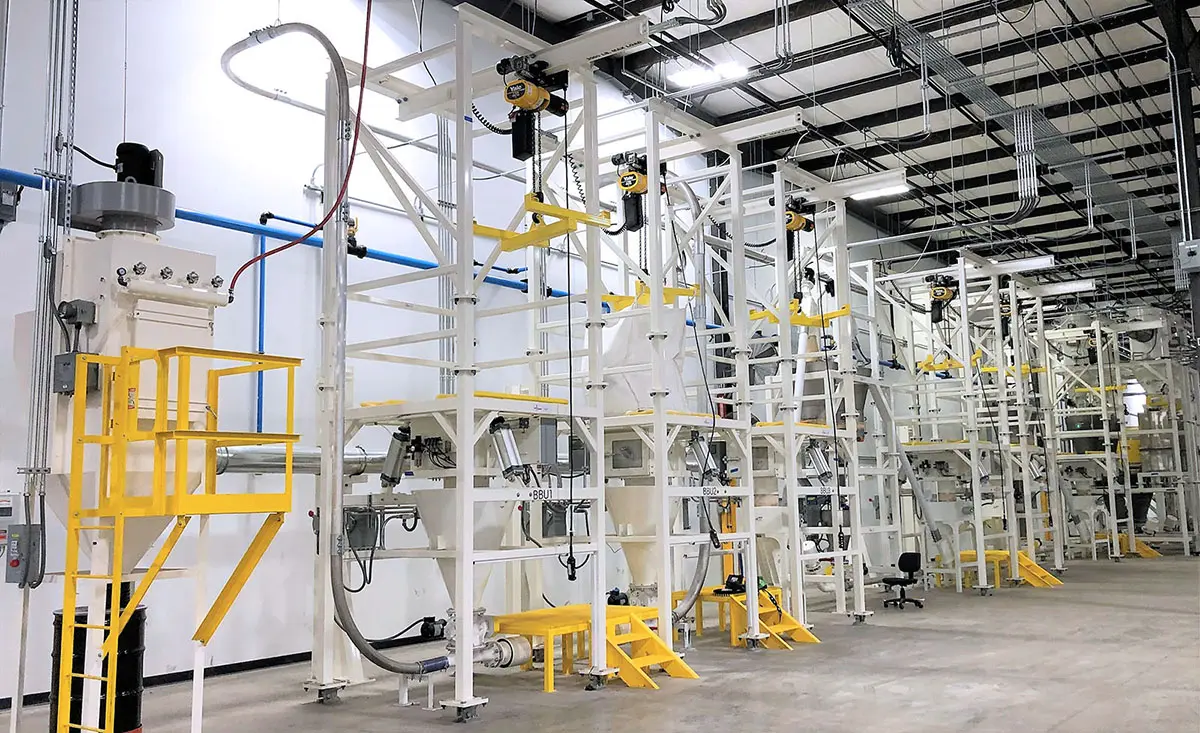
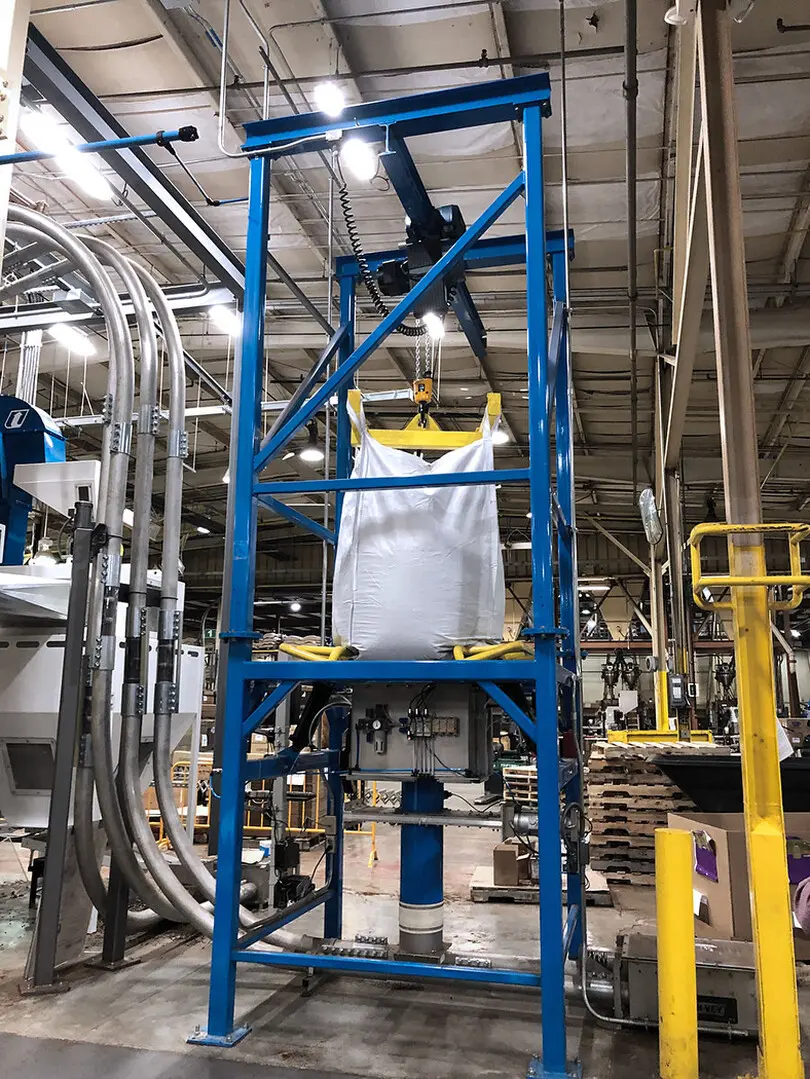
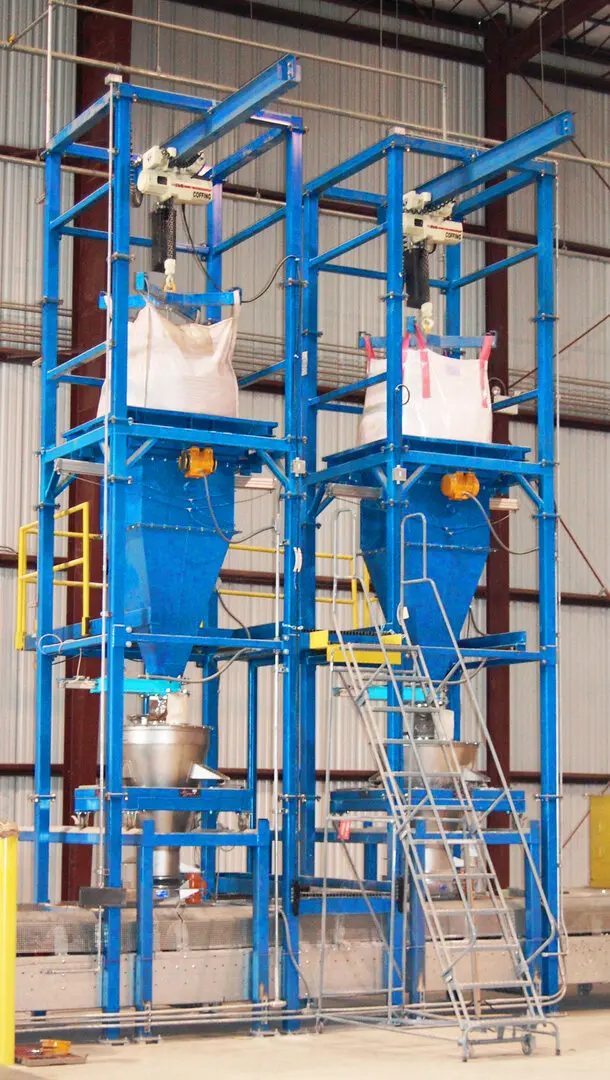
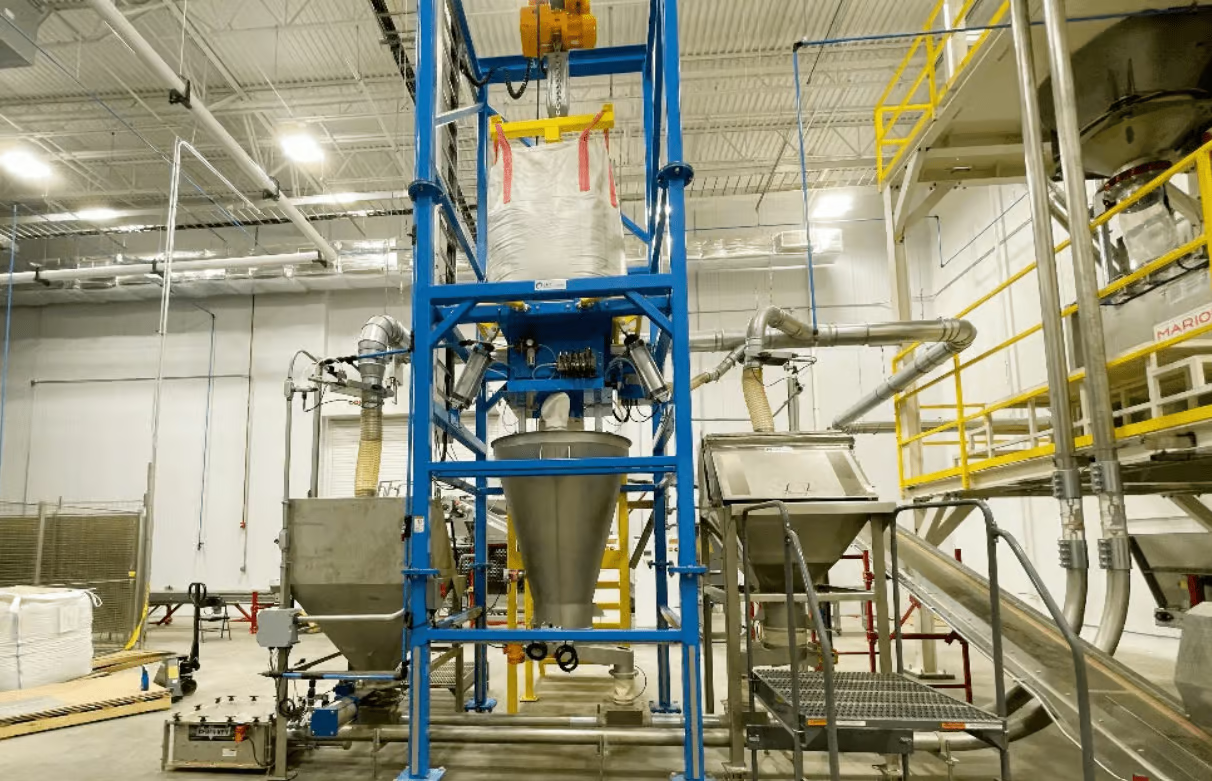
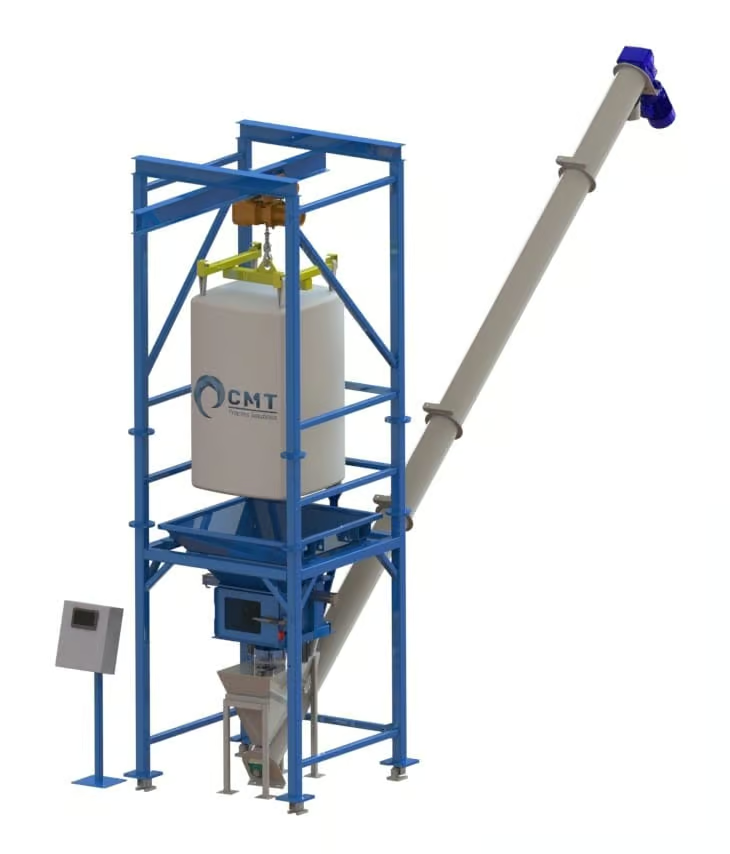
Bulk Bag Unloading Systems
Turn bulk bag discharge into a controlled process step.
Combine super sack unloading with the equipment that follows it: a feeder, conveyor, weigh hopper, or mixer. The arrangement starts with how your material flows and how operators will load, connect, and empty each bag.
- Bag support, access, and flow aids matched to the application
- Dust containment and collection at the discharge connection
- Integrated feeding, weighing, lump reduction, or magnetic separation

System 03 / Feeding & Batching
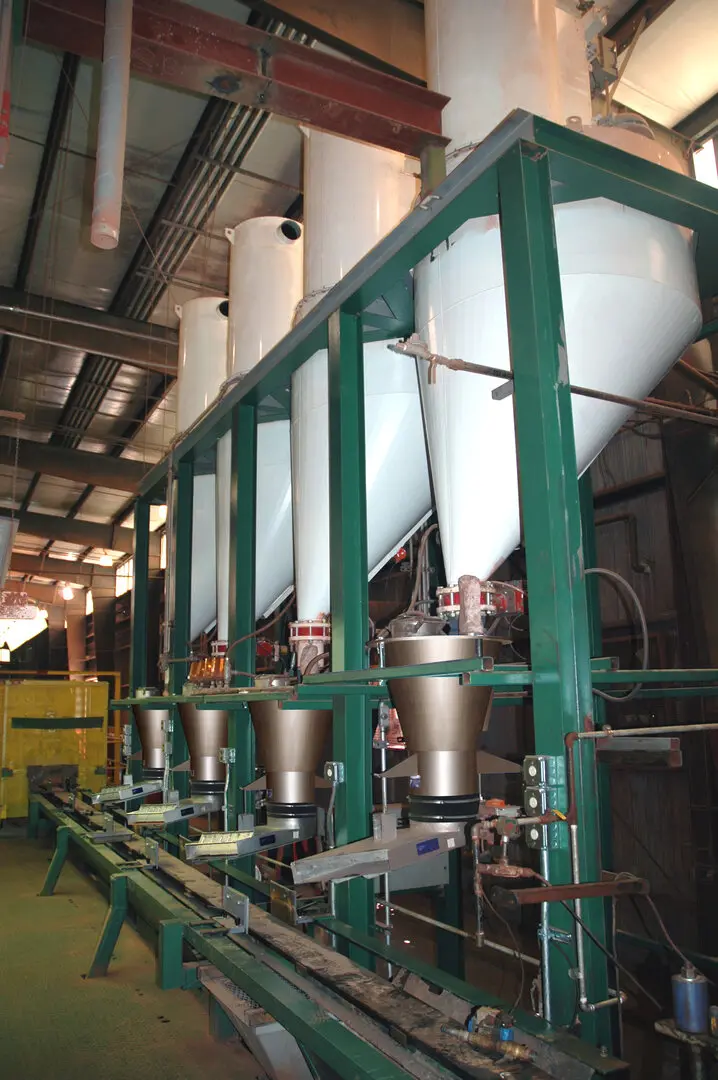
Feeding & Batching Systems
Deliver ingredients in the right quantity and sequence.
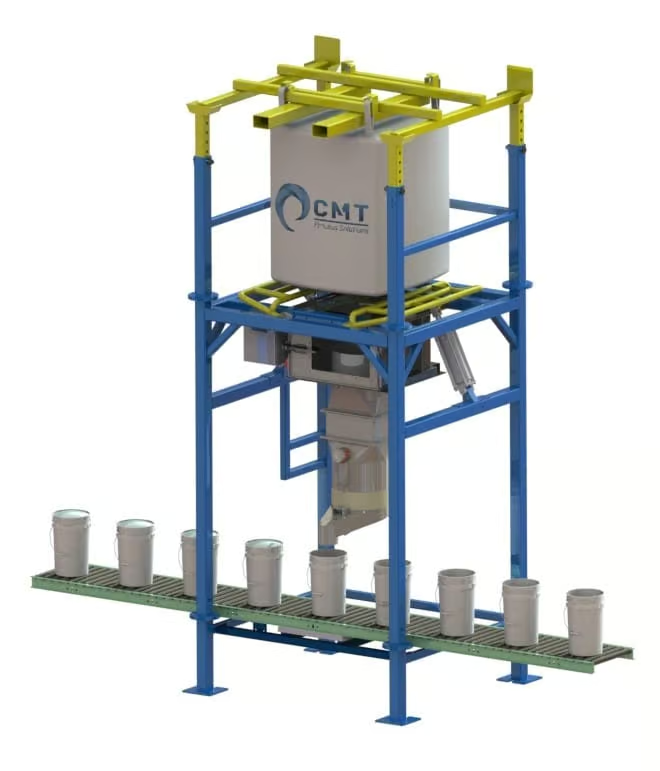
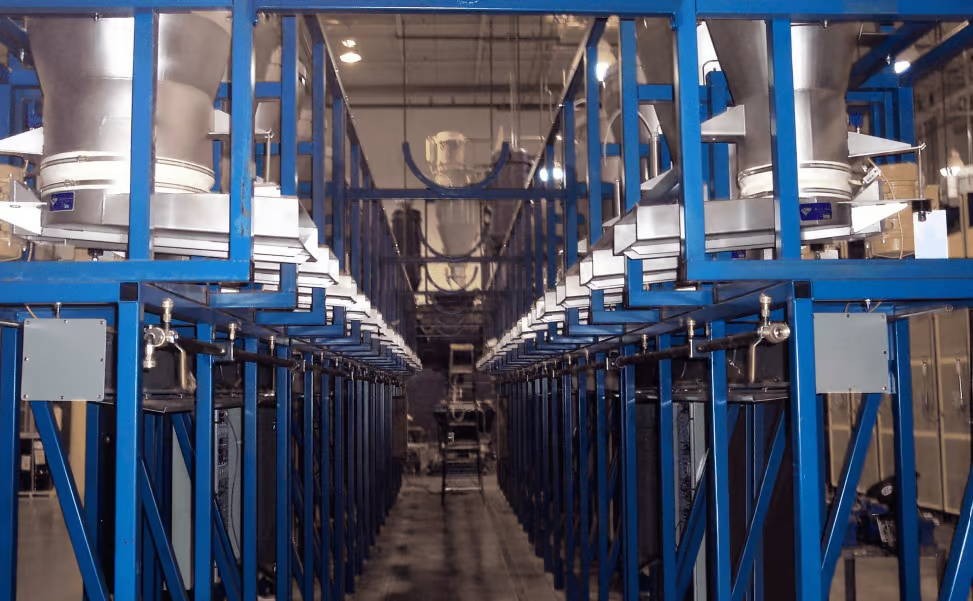
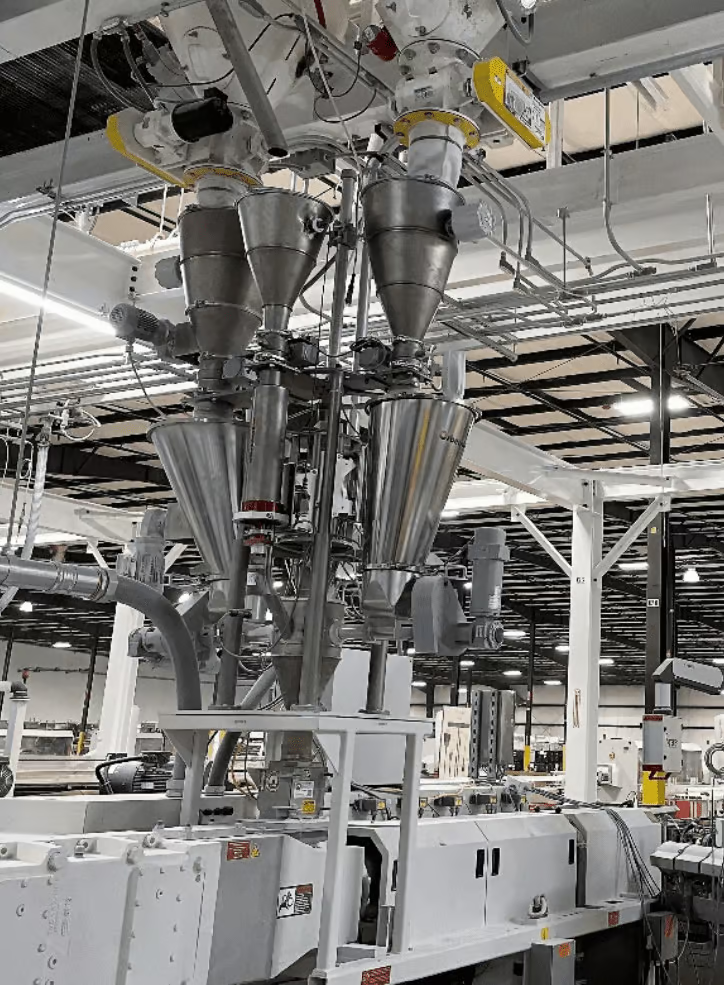
Coordinate ingredient storage, metering, and weighing for batch or continuous production. Gain-in-weight and loss-in-weight approaches are evaluated around your recipe, feed rate, accuracy target, and refill cycle.
- Screw, vibratory, or other feeder technologies selected for the material
- Weigh hoppers, load cells, and coarse/fine feed sequences
- Recipe handling and upstream/downstream equipment coordination
View 3 more feeding & batching examples
System 04 / Mixing
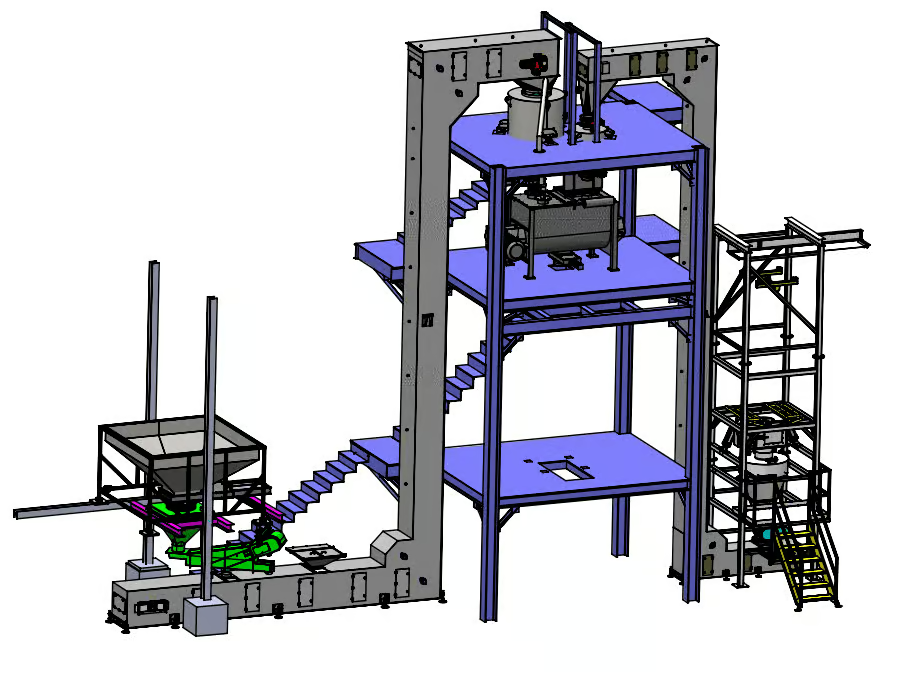
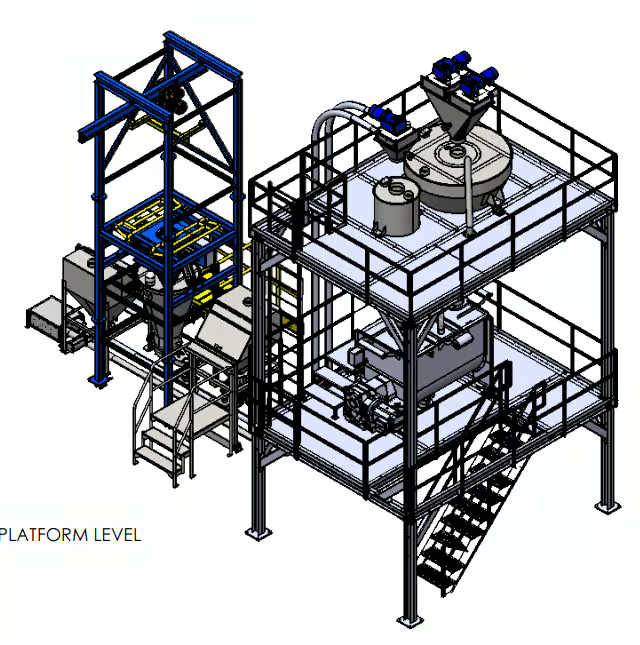
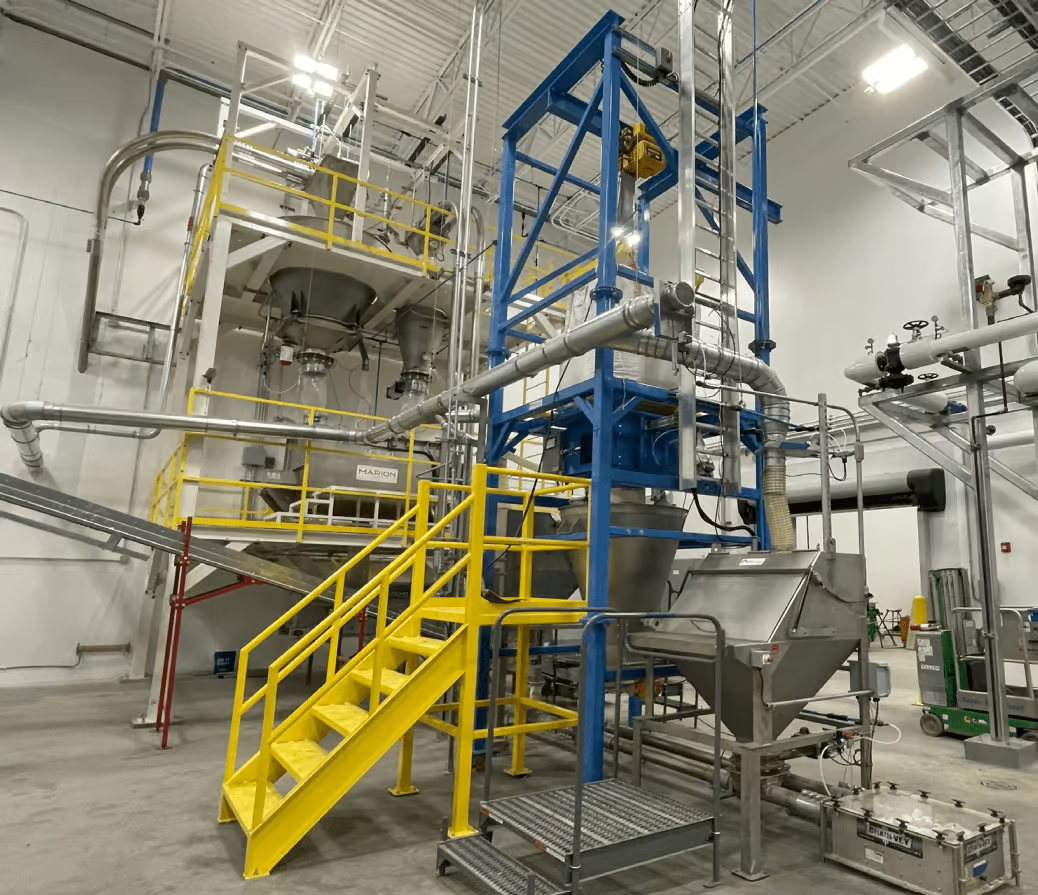
Mixing & Ingredient Addition Systems
Build a more consistent path from ingredients to finished blend.
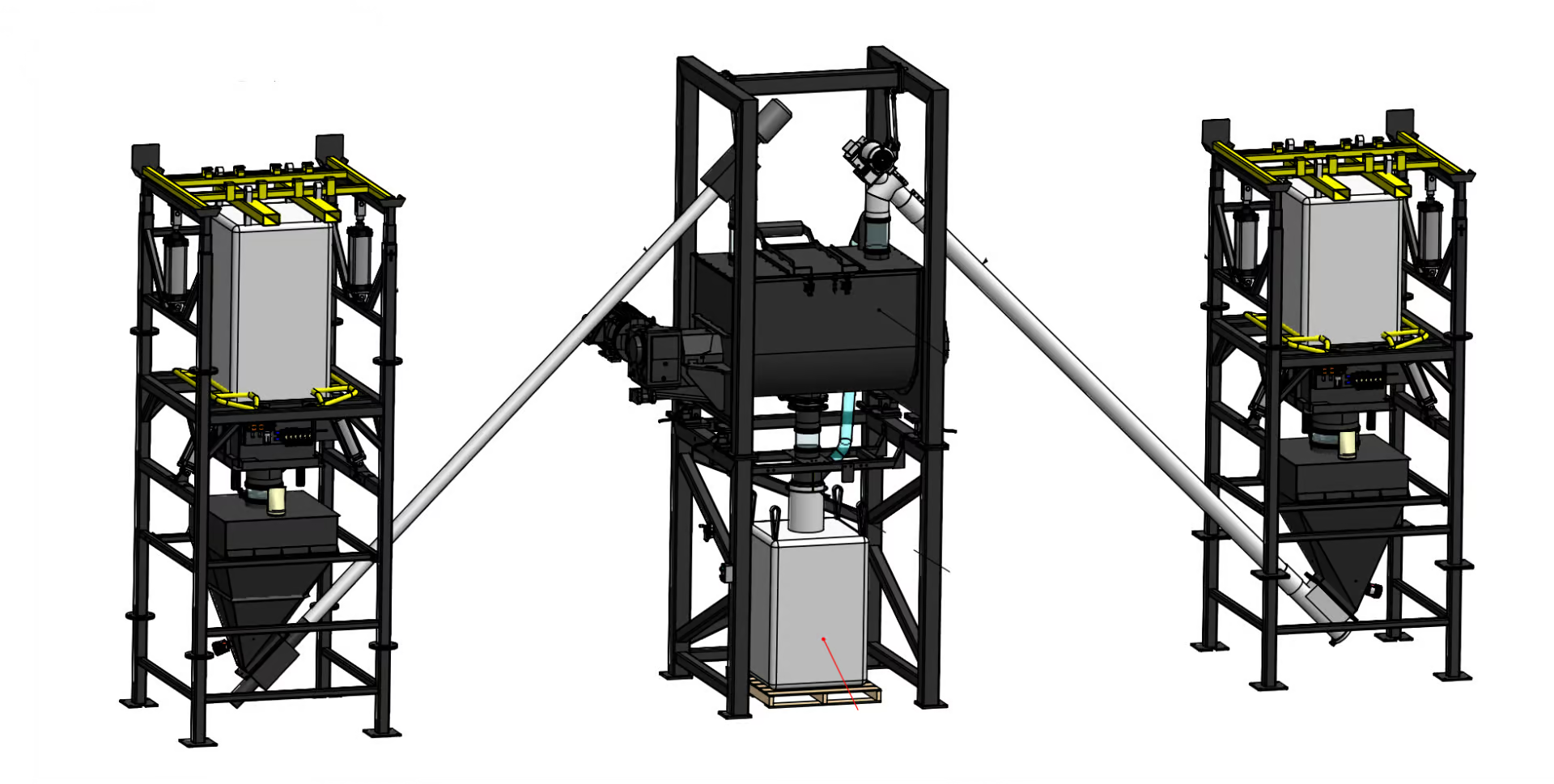
Connect bulk bag unloading, minor ingredient addition, weighing, and conveying to the mixing stage. Review the entire batch cycle—including loading and discharge—to identify constraints beyond the mixer itself.
- Mixer selection based on material, batch size, and blending goals
- Ingredient addition, access, dust collection, and cleaning requirements
- Discharge to surge storage, conveying, or packaging
System 05 / Pneumatic Conveying
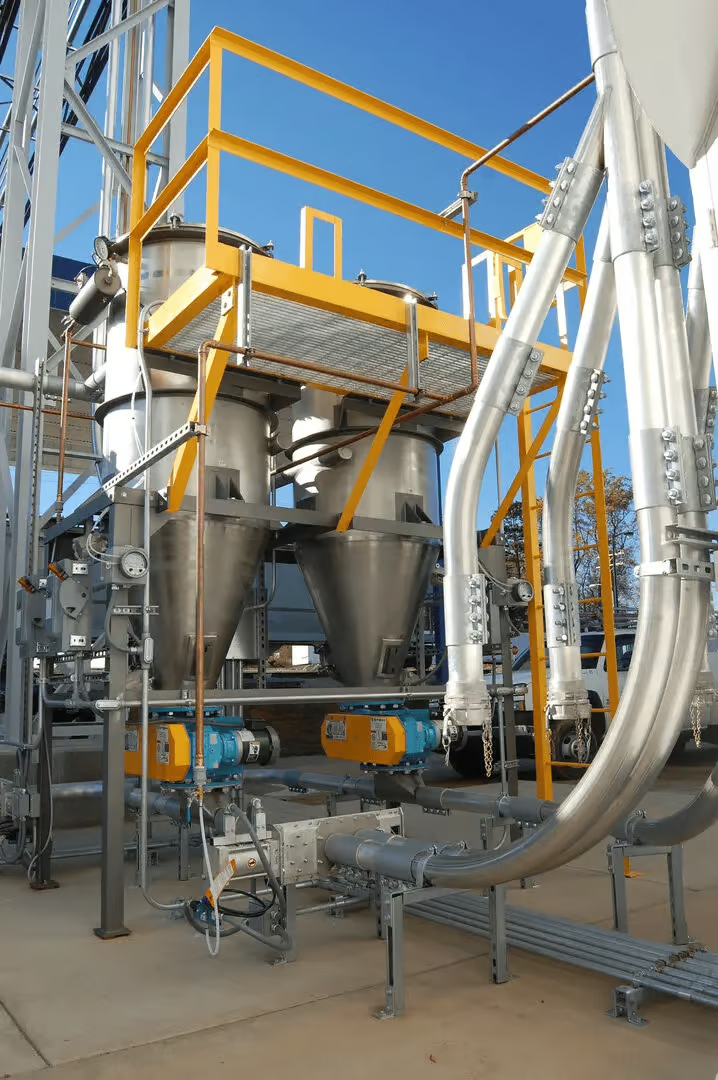
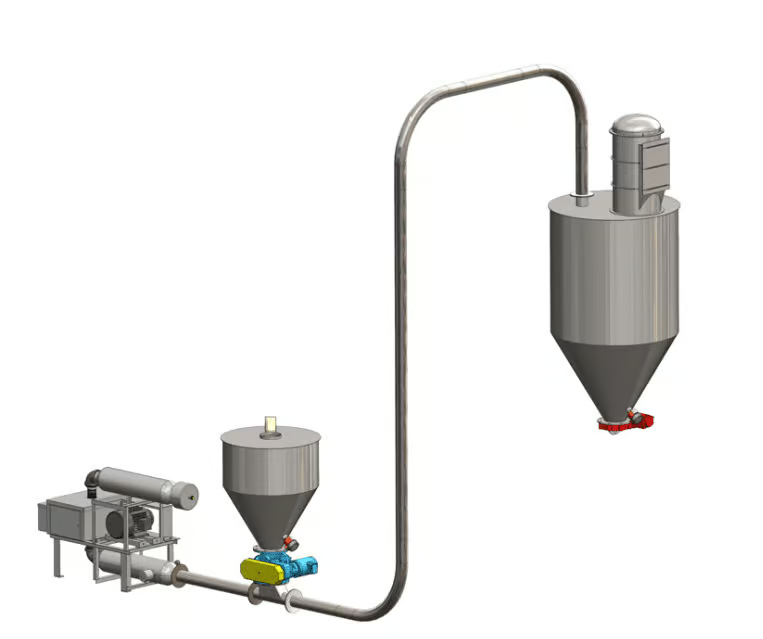
Pneumatic Conveying Systems
Move material through enclosed piping between process areas.
Evaluate pressure or vacuum conveying around material behavior, capacity, route, and destination. Blowers, feed devices, piping, receivers, and filtration need to work together as a complete transfer system.
- Material characteristics, conveying distance, elevation, and rate
- Receiver filtration, discharge valves, and available utilities
- Wear, product degradation, and changeover requirements


System 06 / Mechanical Conveying
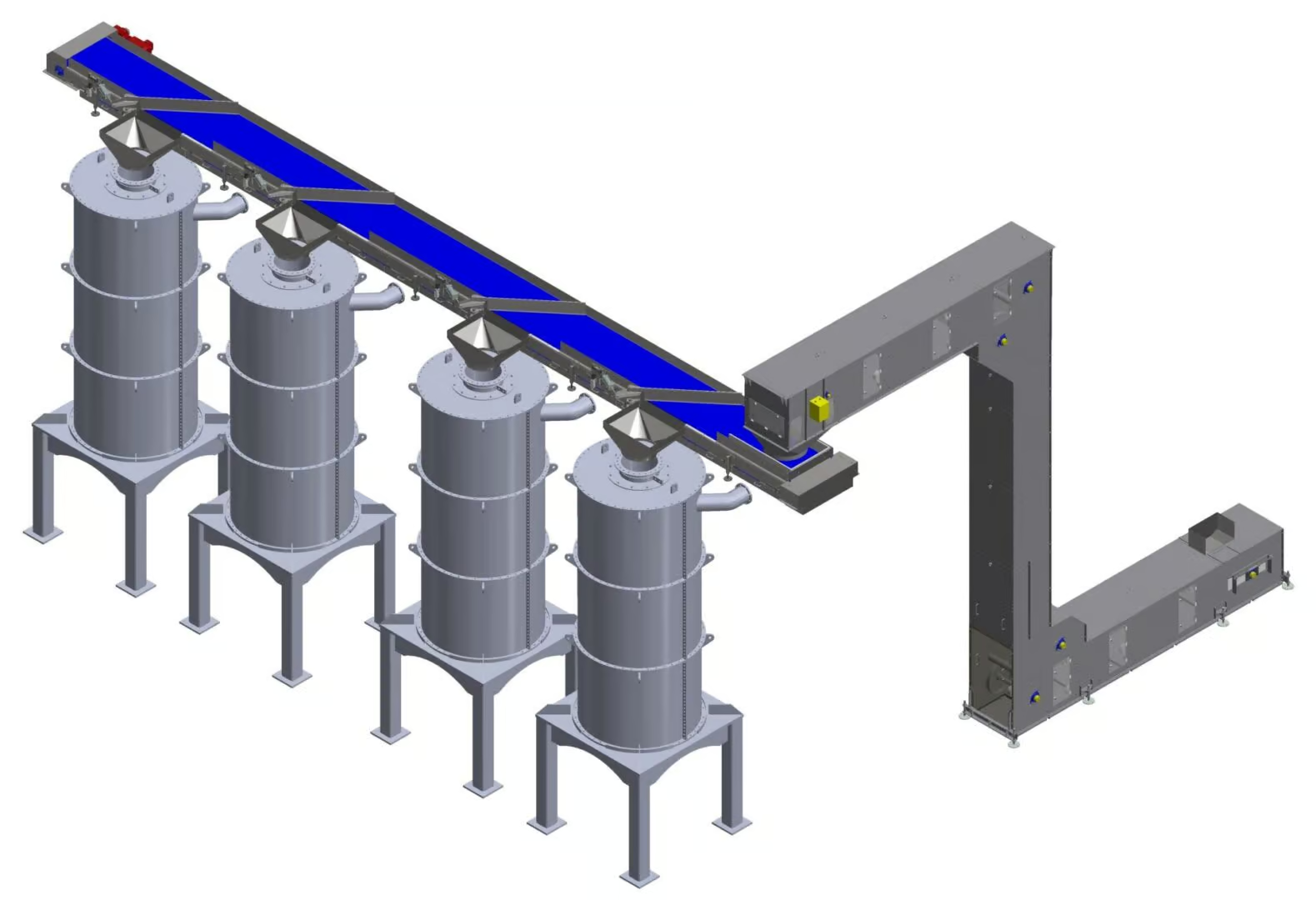
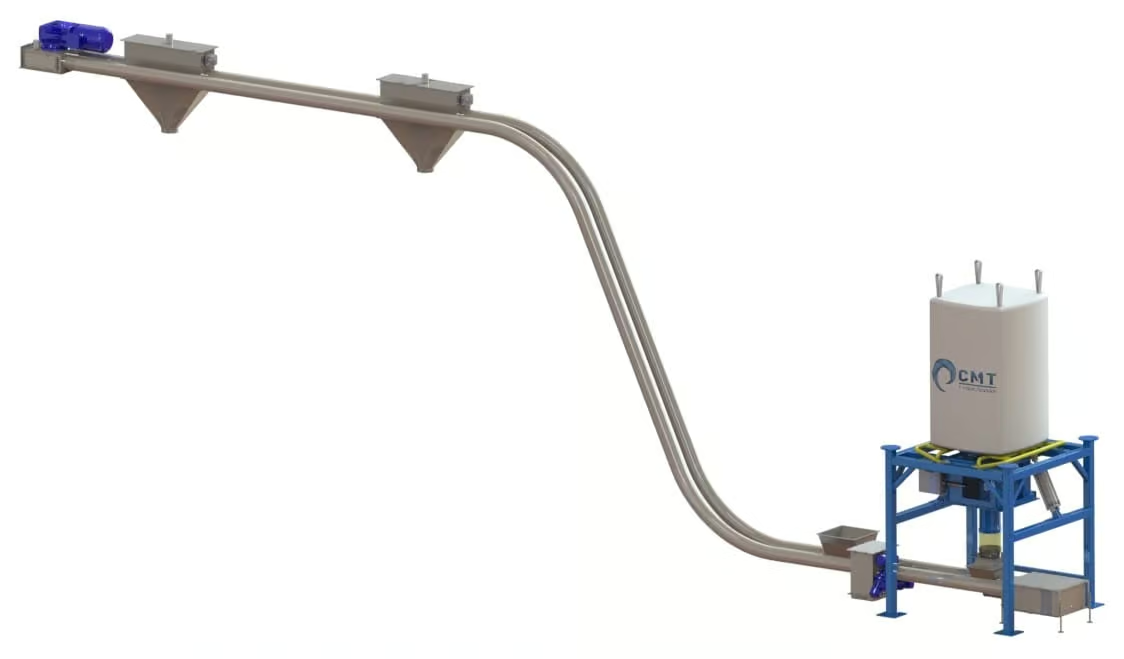
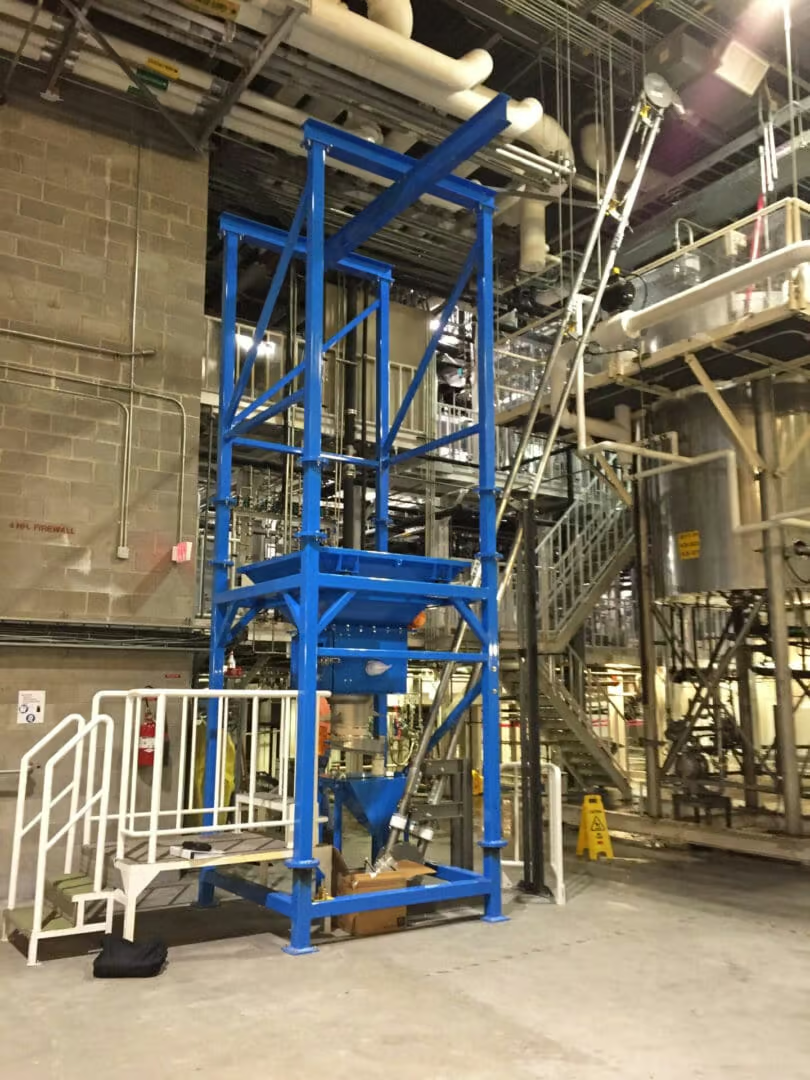
Mechanical Conveying Systems
Fit the conveying route to your plant and your product.
Connect unloading, storage, mixing, and packaging with bucket, belt, screw, aero-mechanical, or tubular drag conveying. Selection considers the complete route, transfer points, access, and material handling requirements.
- Horizontal, inclined, and vertical transfer arrangements
- Product handling, cleanability, and maintenance access
- Interfaces with bag dump stations, unloaders, feeders, and mixers

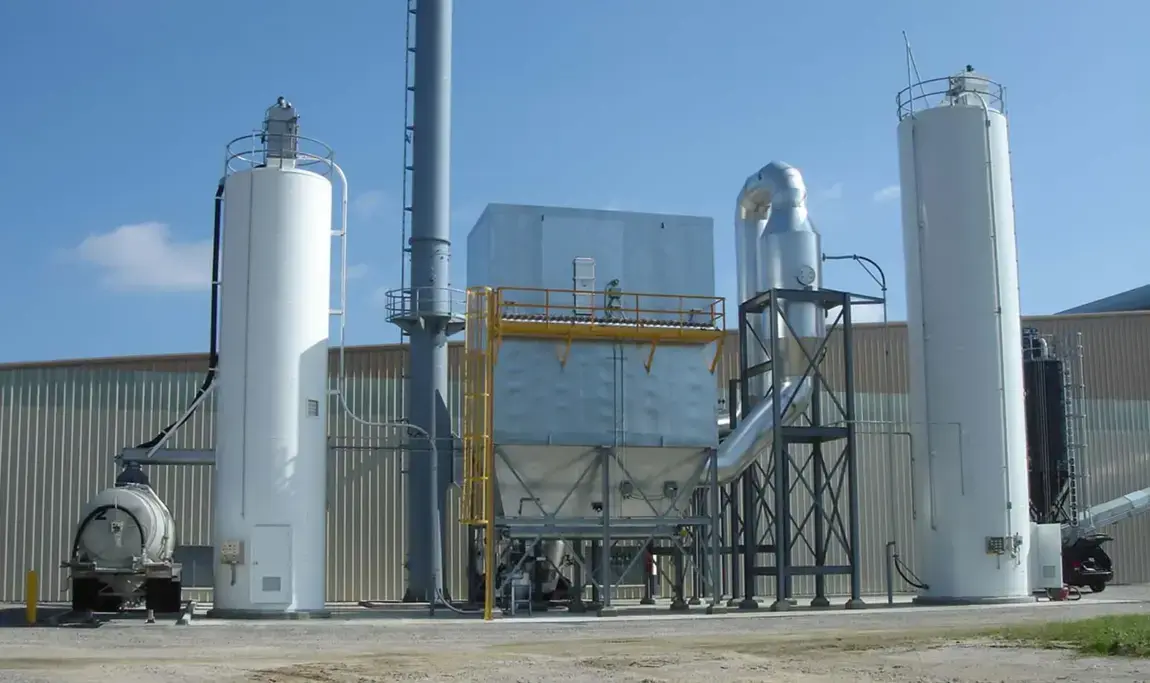
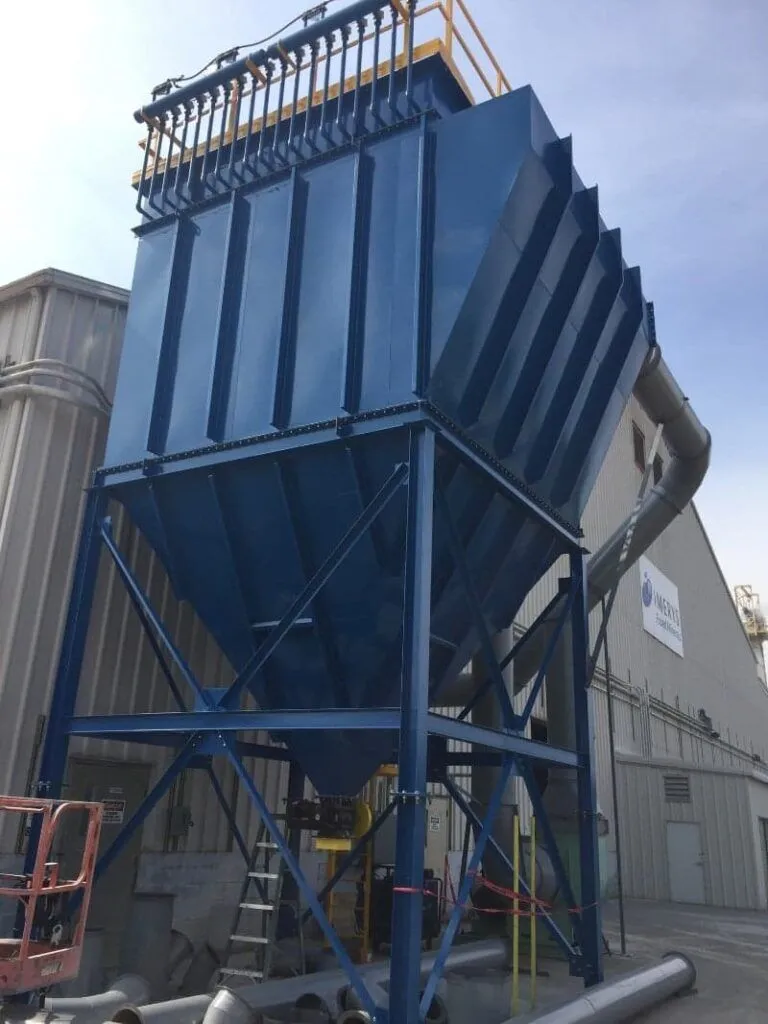
System 07 / Dust Collection
Dust Collection Systems
Plan dust capture into the equipment connections.
Address dust at unloading, filling, and transfer points with collection and filtration selected for the process. Local collectors, central collection, bin vents, and filter receivers serve different duties within a system.
- Capture points, airflow requirements, duct routing, and filter access
- Collected material discharge and potential product recovery
- Dust properties and application-specific protection requirements
System 08 / IBC Systems
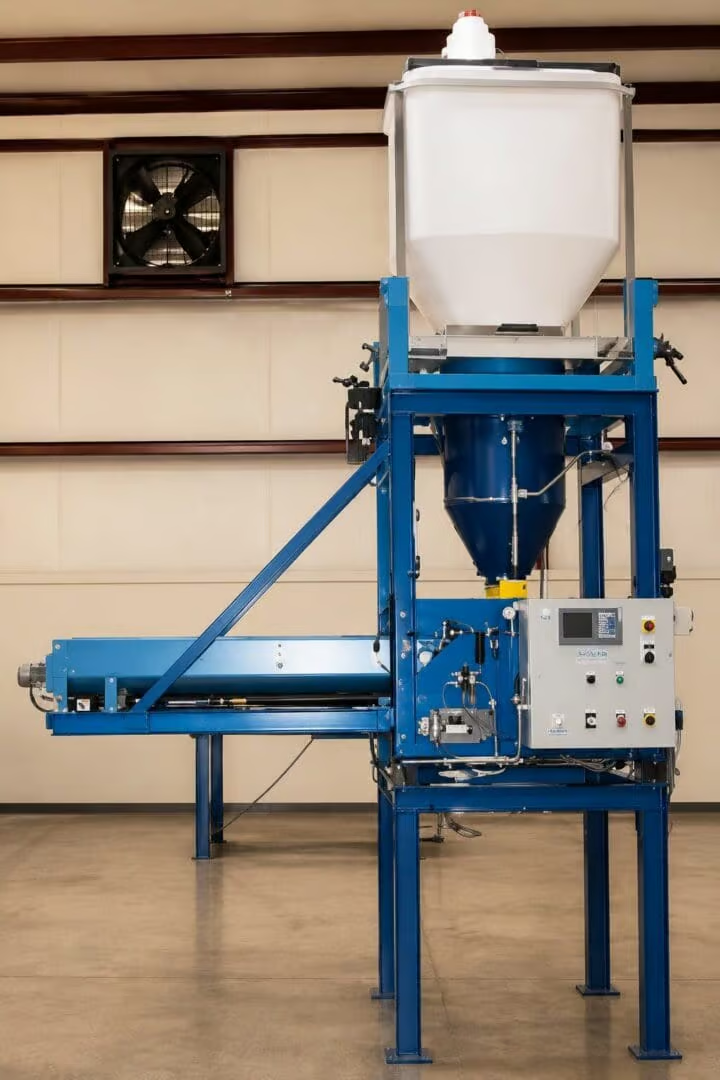
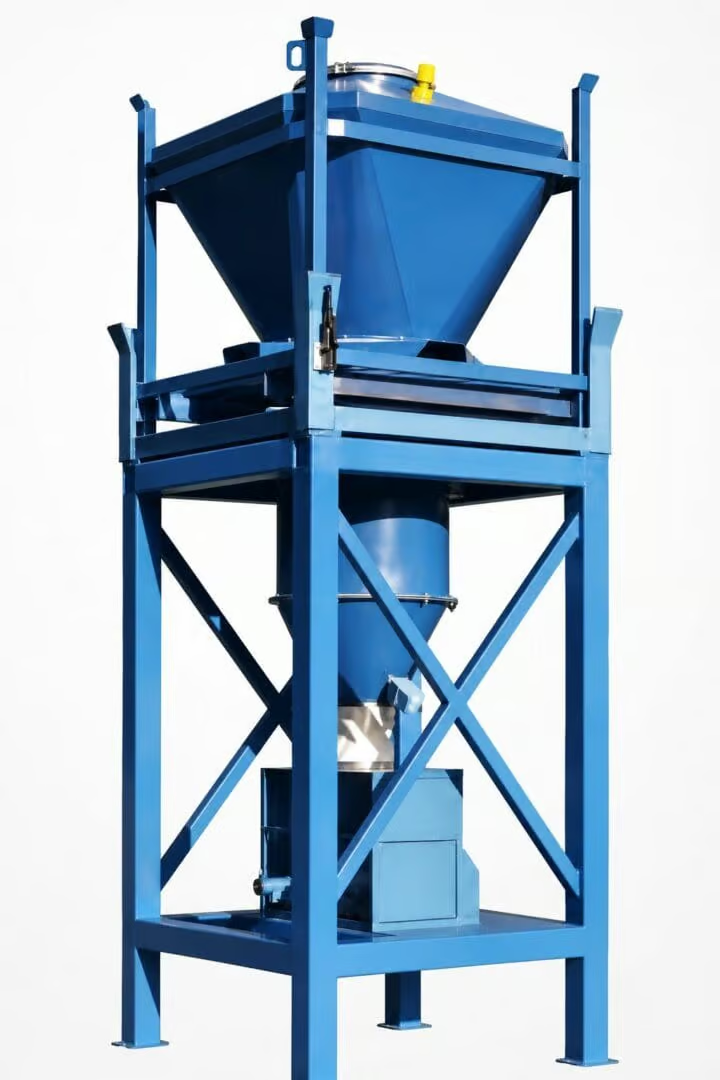
IBC Tote & Discharge Systems
Bring portable ingredient storage into a repeatable workflow.
Pair intermediate bulk containers with discharge stations and feeding equipment for material staging and transfer. The layout should account for tote movement, docking, flow control, and the receiving process.
- Tote loading, lifting, docking, and operator access
- Discharge interfaces with feeders or downstream equipment
- Changeover, containment, cleaning, and material identification
System 09 / Bulk Bag Filling
Bulk Bag Filling Systems
Connect the end of your process to controlled bag filling.
Integrate bulk bag filling with upstream mixers, silos, day tanks, or conveyors. Filling arrangements can include weighing, dust collection, bag support, and densification according to the product and production requirements.
- Target bag weight, fill rate, and material bulk density
- Bag connection, inflation or densification where appropriate
- Filled bag removal and downstream handling


System 10 / Custom Solutions
Custom Hoppers & Process Solutions
Solve the connection that standard equipment does not cover.
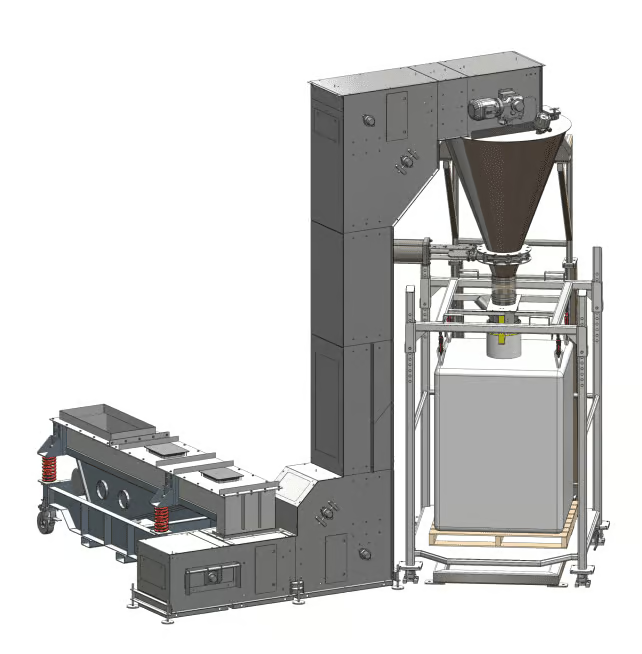
Adapt the arrangement around your available space, material, and operating sequence. Custom hoppers, bag dump interfaces, and equipment transitions can help connect new equipment to an existing production line.
- Inlet and outlet geometry, working height, and available headroom
- Flow behavior, access, cleanability, and dust containment
- Interfaces with conveyors, feeders, weighing, and existing equipment
Make the equipment work together
Automation & Controls
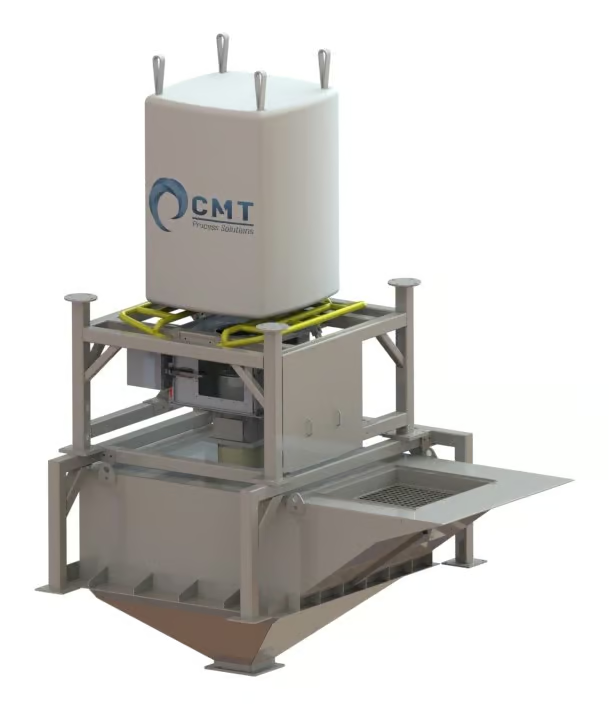
Define how the system starts, runs, refills, and stops—not just which machines it includes. CMT can coordinate controls requirements with the equipment suppliers and integration partners involved in your project.
- Equipment sequencing, permissives, alarms, and interlocks
- Recipe management, batch control, and operator interfaces
- Plant PLC/HMI standards and integration responsibilities
- Documentation, testing, and startup support defined by project scope
Start with your application
What Helps Us Size Up Your Project?
Send the details you have. An initial conversation can help identify what still needs to be measured or confirmed.
- Material: name, bulk density, particle size, and flow behavior
- Production: required rate, batch size, and operating schedule
- Layout: pickup and discharge points, distance, and headroom
- Process: current bottlenecks, cleaning needs, and dust characteristics
- Scope: existing equipment, utilities, controls, and timing
Bulk Material Handling System Questions
What is a bulk material handling system?
A bulk material handling system combines equipment to receive, store, transfer, meter, process, or package loose material. The design coordinates the individual machines and the connections between them around the material and production requirements.
Can a system be built around our existing equipment?
Existing silos, mixers, conveyors, and controls can be evaluated as part of the project. Share equipment information, connection points, available space, and the changes you need so the proposed scope can account for what is already installed.
How do we choose between pneumatic and mechanical conveying?
Selection depends on material behavior, capacity, route, headroom, product handling, cleanability, and utility requirements. Comparing both approaches at the system level helps identify the tradeoffs for your application.
What information is needed to start a system review?
Start with the material, required rate or batch size, source and destination, and a layout or photos. Bulk density, particle size, temperature, flow behavior, dust characteristics, available utilities, and existing equipment details help refine the scope.
Can material testing be included?
Testing can be discussed with the relevant equipment manufacturer when flow behavior, feeding accuracy, conveying performance, or blending results need validation. Test scope and availability depend on the equipment and application.
Can controls and dust collection be included in the project?
Controls, dust collection, and equipment interlocks can be coordinated as part of the defined system scope. Responsibilities, plant standards, installation requirements, and startup support should be agreed on during project development.
Plan your next process improvement
Let’s Connect the Right Equipment for Your Application.
Share your material, production target, and the part of the process you want to improve. We’ll help identify equipment options and the next steps toward a coordinated system.