

Industrial air pollution control equipment
Engineered Dust Collection Systems for Cleaner, Safer Plants
Baghouse dust collectors, filter receivers, top-load bin vent filters, cyclones, replacement media, remote monitoring and field service—engineered by Cleanova | Micronics and integrated locally by Carolina Material Technologies.
More than a dust collector
The collector is one component of the air-handling system
Effective dust control depends on how the pickup points, duct velocities, airflow, pressure losses, filter media, cleaning system, fan and collected-material discharge work together. CMT helps define the process and integration details before equipment is selected.
What is an industrial dust collection system?
It is an engineered air pollution control system that captures dust at the source, transports dust-laden air through ductwork, separates particulate from the air stream, discharges the collected material and controls the fan, cleaning cycle and safety devices. The correct collector type is selected only after the complete process is understood.
Dust collector types
Match the separator to the dust, airflow and process duty
Each equipment style solves a different problem. These four categories cover many industrial dust collection, pneumatic conveying and dry bulk storage applications.

Pulse-Jet Baghouses
Custom collectors for process ventilation, nuisance dust and demanding air pollution control duties.
- Filter bags, pleated elements or cartridges
- Top or side removal designs
- Wide media and material choices
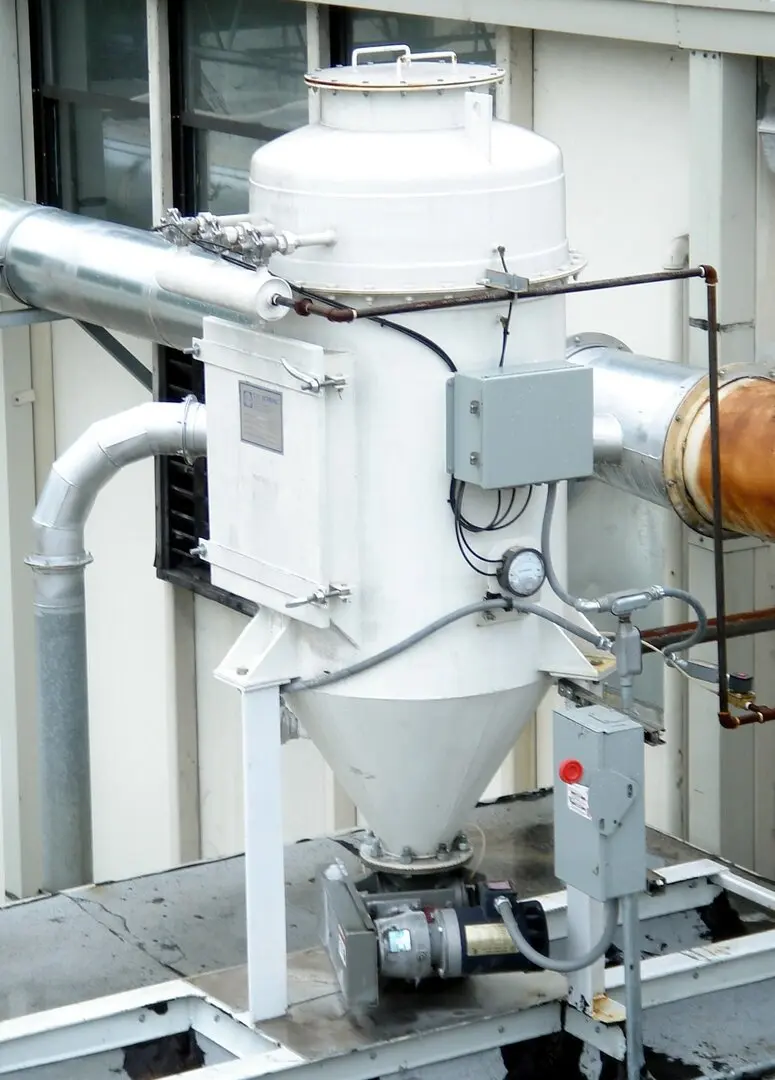
Filter Receivers
Cylindrical pulse-jet receivers for pressure conveying, vacuum conveying and high-vacuum collection.
- Pressure or vacuum system duty
- Sanitary and specialty configurations
- Bags/cages or pleated filters

Top-Load Bin Vents
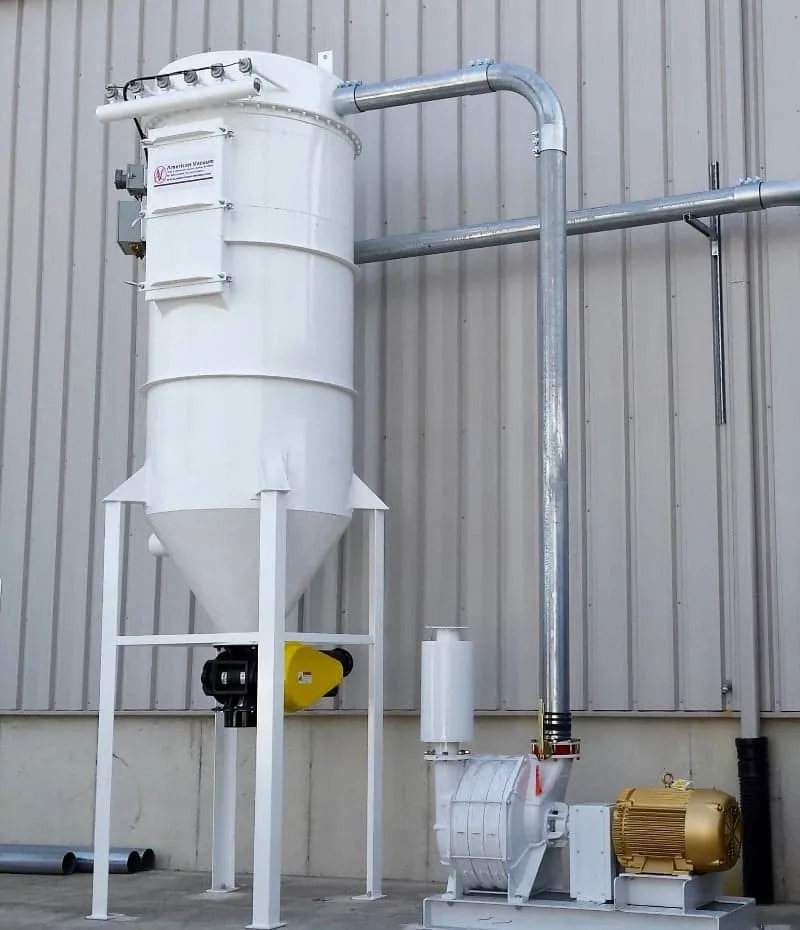
Compact pulse-cleaned filters that vent displaced air at silos, day bins, hoppers and receivers.
- Clean-side top removal
- Compact height above the vessel
- Fast, accessible filter changes
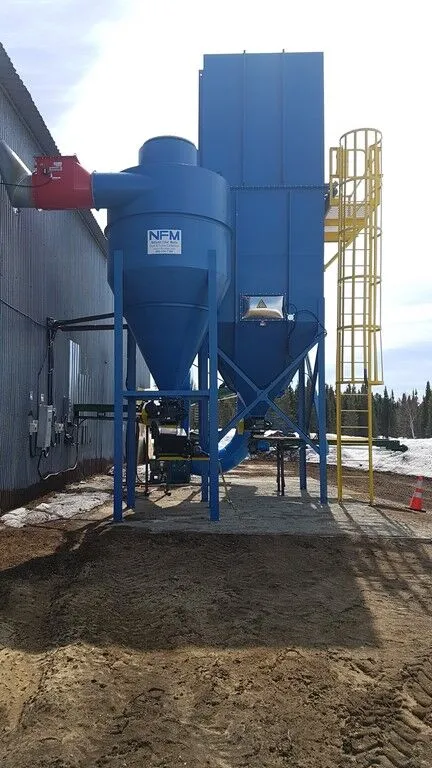
Cyclones & Mechanical Separators
Rugged separation for coarse particulate, product recovery and unloading the downstream filter.
- No moving or replaceable internals
- Low pressure-drop configurations
- Standalone or pre-cleaner duty
Planning or Troubleshooting a Dust Collection System?
Download the Industrial Dust Collection Sizing Worksheet to organize the airflow, pickup points, duct sizes, conveying velocities, filter area, dust characteristics, and operating details needed to evaluate a new or existing system.
Pulse-jet dust collectors
Custom baghouses built around the application—not a catalog footprint
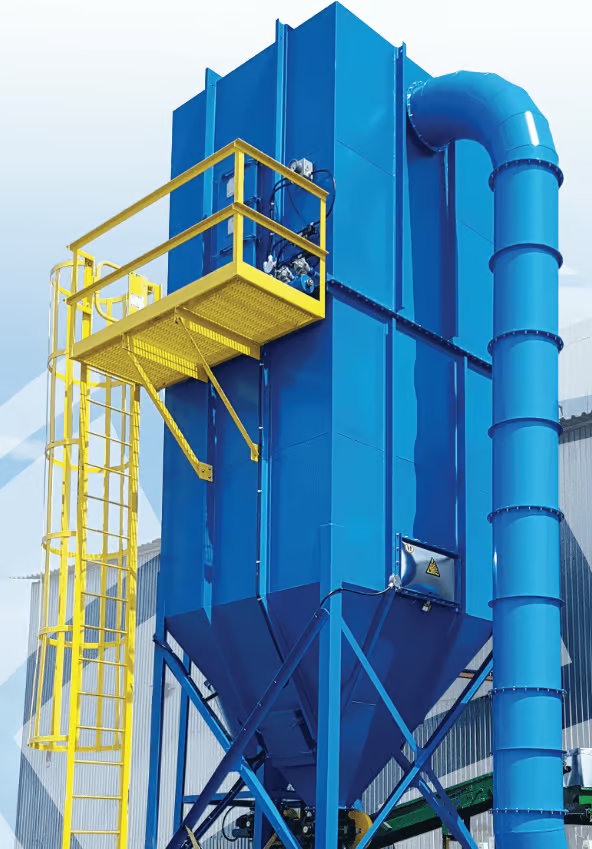
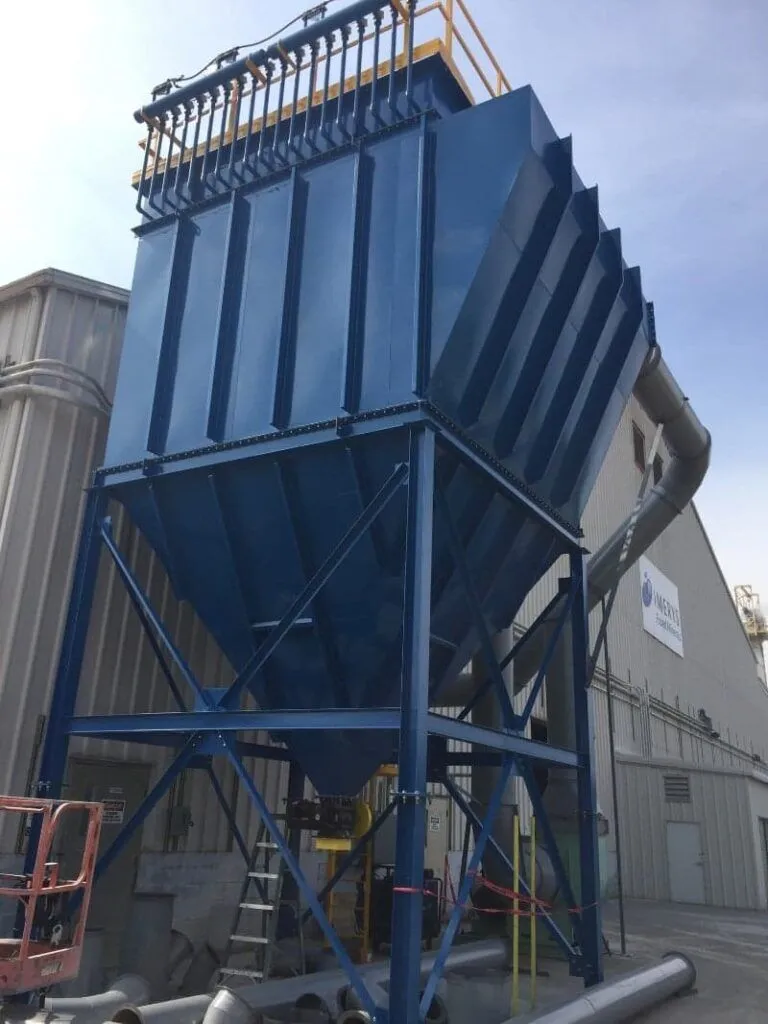
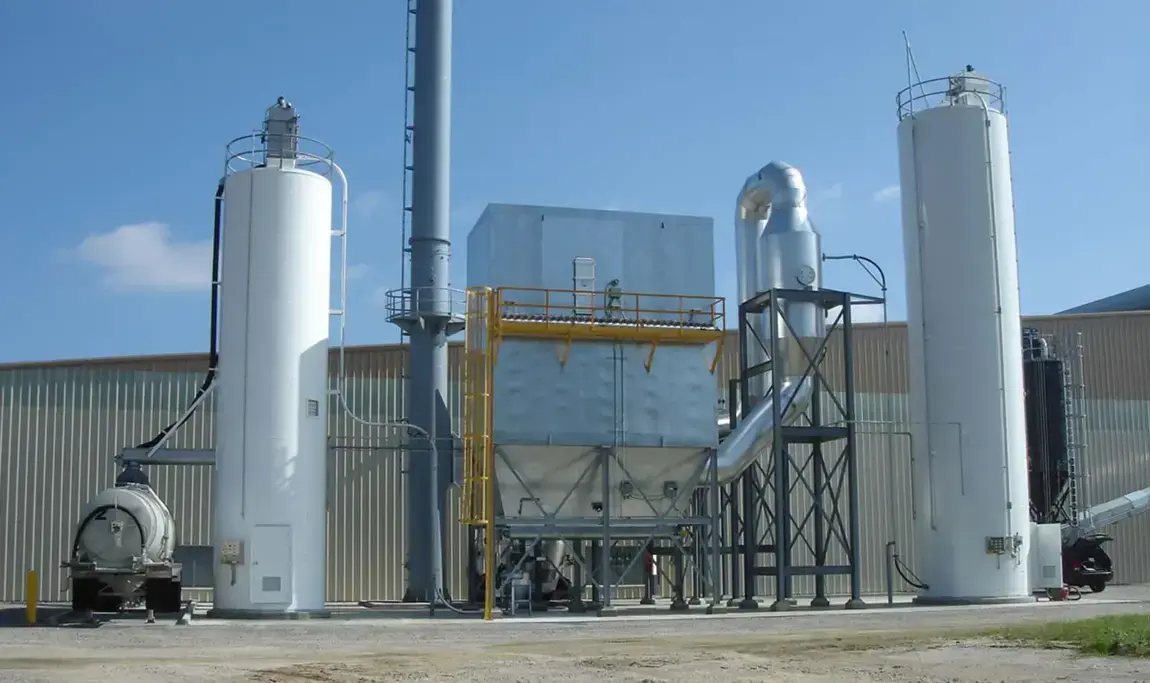
Cleanova | Micronics offers CPE®, NFM® and AeroPulse®-style pulse-jet equipment for a broad range of gas volumes, temperatures, dust types and site constraints. Top-entry collectors may use lift-off doors or a walk-in clean-air plenum, while snap-band bags provide a dust-tight tube-sheet seal and tool-free removal.
- Square and rectangular collectors for many standard industrial duties
- Cylindrical receivers for elevated pressure or vacuum requirements
- Carbon steel, stainless steel, aluminum and specialty-alloy construction
- Fans, airlocks, screw conveyors, level detection, insulation and structural access
- Broken-bag detection, explosion protection and custom controls when required
Complete dust collection systems
Capture, convey, separate, discharge and control
A collector can only perform as well as the system around it. CMT can coordinate the pickup hoods, branch ducting, main duct, fan, collector, material discharge, electrical controls, monitoring and field installation required for a complete solution.
- Pickup-point review and airflow allocation
- Duct sizing, conveying velocity and branch balancing strategy
- Fan and pressure-loss evaluation
- Rotary airlock, screw conveyor or hopper discharge integration
- Controls, differential-pressure monitoring and alarms
- Startup coordination, field support and operator training

Top-load bin vent filters
Service filters from the clean side—not from inside the dirty plenum
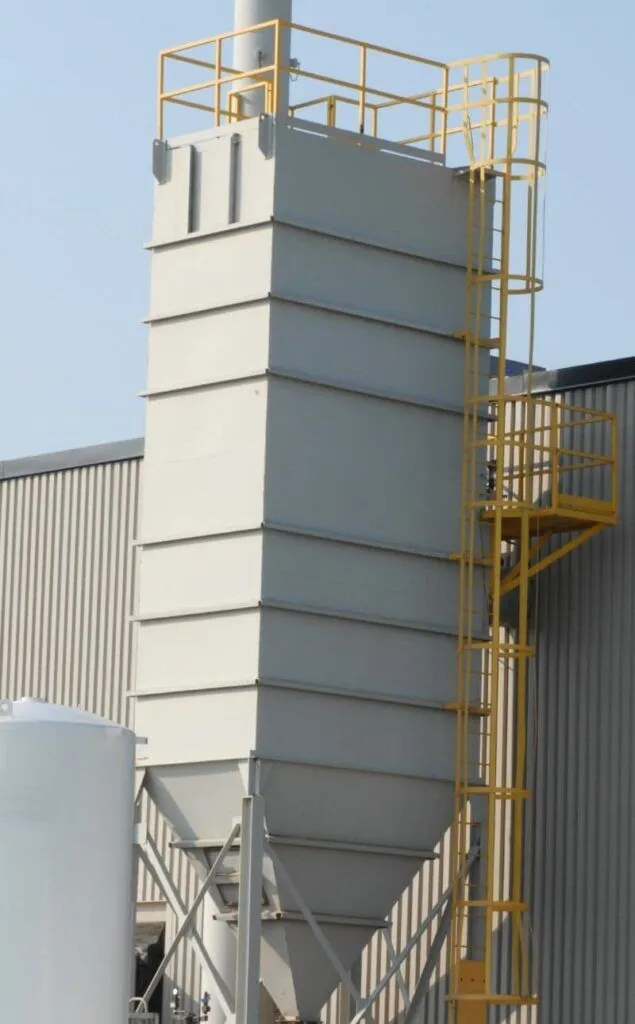
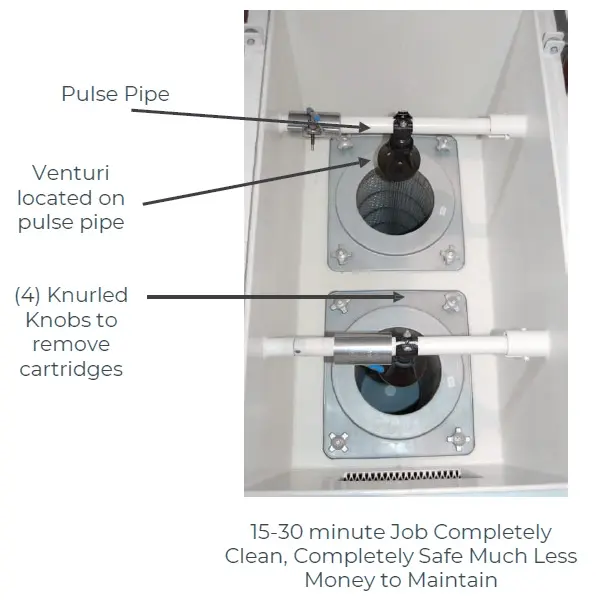
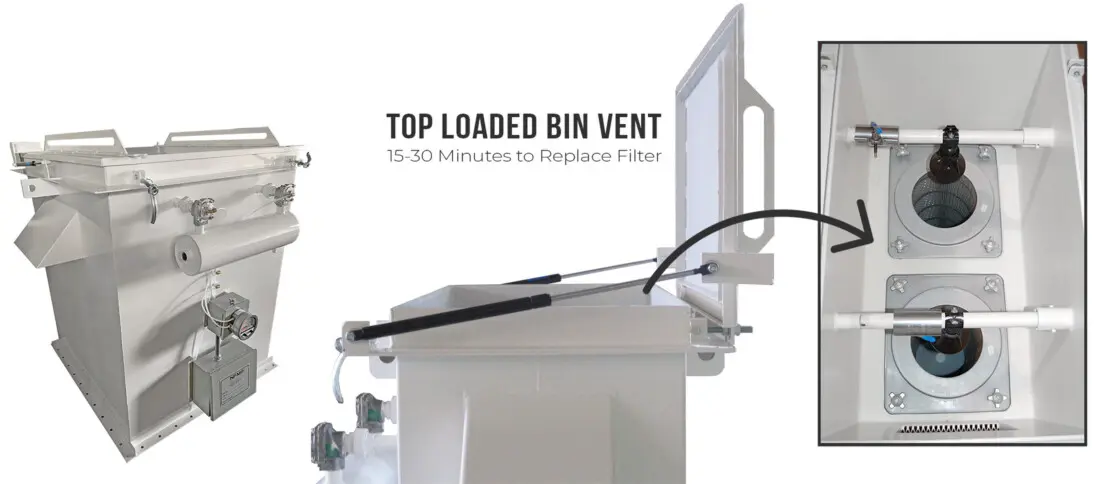
Bin vent filters clean the displaced air created while filling silos, day bins, hoppers and other material destination points. Top-load designs place the service task above the tube sheet, helping simplify filter access and reduce contact with accumulated dust.
Pulse-jet filter receivers
Separate product from conveying air under pressure or vacuum
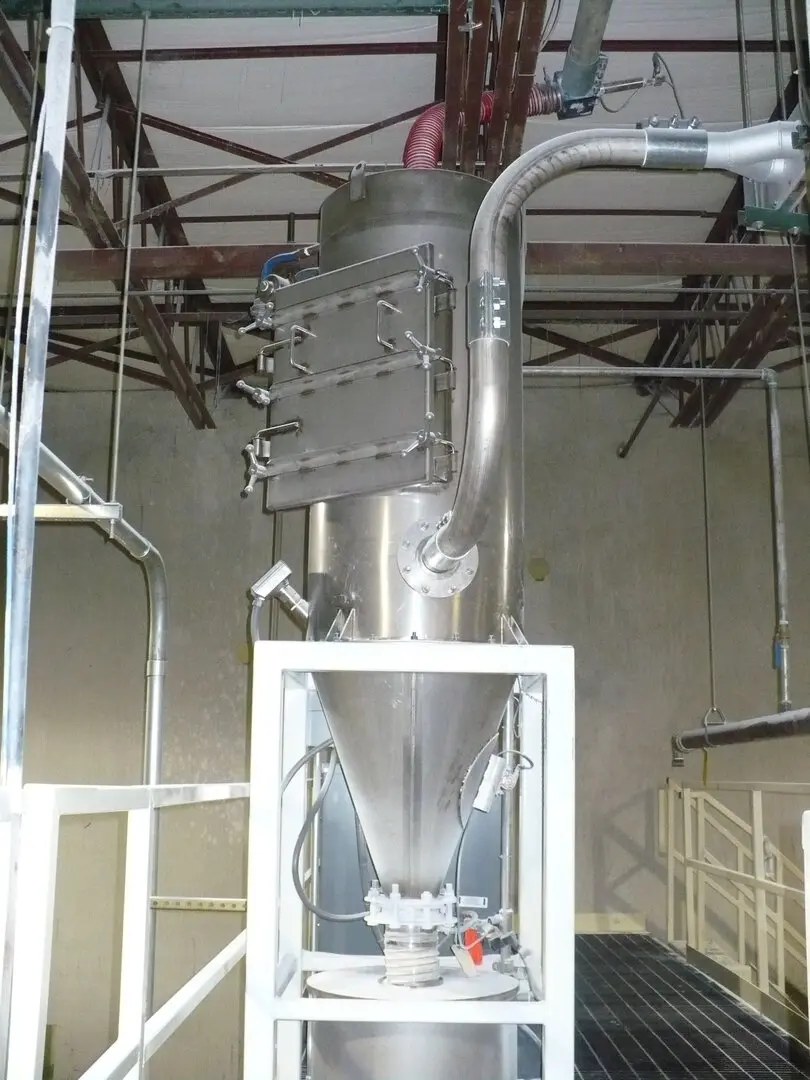
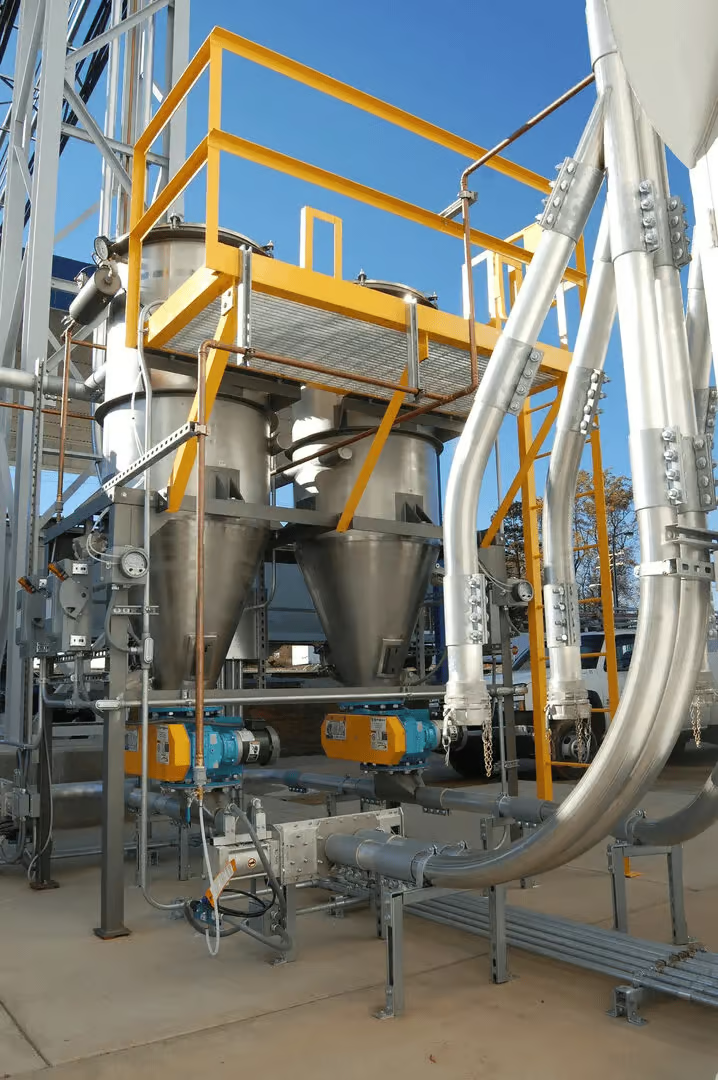
Filter receivers combine product collection and air filtration at the destination of a pneumatic conveying system. Cylindrical construction is well suited to elevated pressure, vacuum and sanitary applications where cleanout and internal geometry are important.

Pressure conveying
Receive material at the end of a positive-pressure conveying line while filtering the transport air.
Vacuum conveying
Operate as a high-vacuum receiver with housing, media and seals selected for the design condition.
Sanitary processing
Cylindrical bodies and specialized construction can support food, dairy and cleanout-sensitive duties.
Cyclones and mechanical separation
Remove coarse particulate before it reaches the final filter
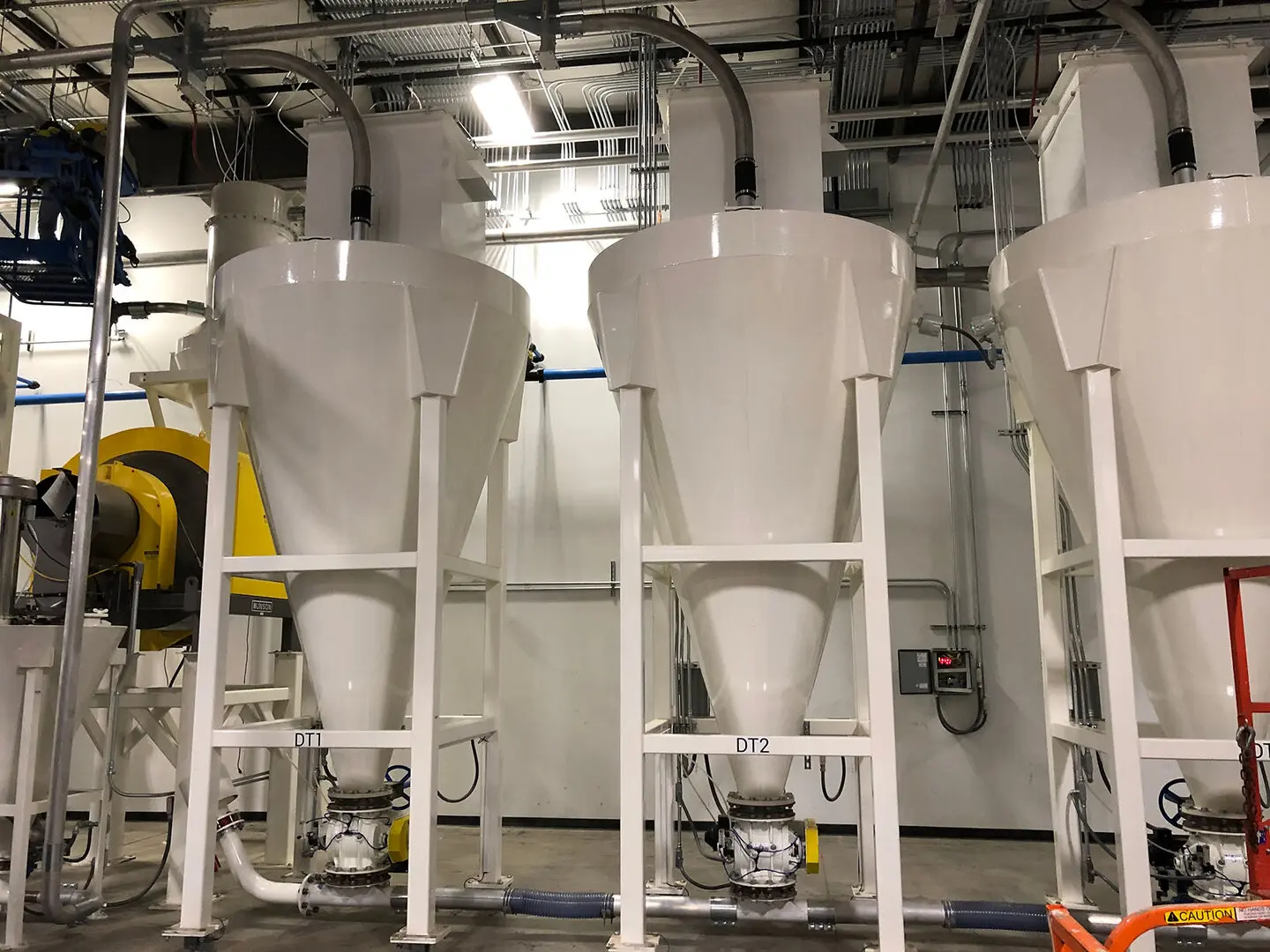
High-efficiency cyclones use tangential velocity and centrifugal force to separate heavier particles from the gas stream. They can act as product receivers, standalone separators for coarse material or pre-cleaners that reduce loading on a downstream baghouse.
- No moving or replaceable separation components
- Indoor or outdoor construction
- Useful for product recovery and coarse dust
- Can help reduce filter loading and extend filter service intervals
- Not a substitute for final filtration where fine particulate control is required
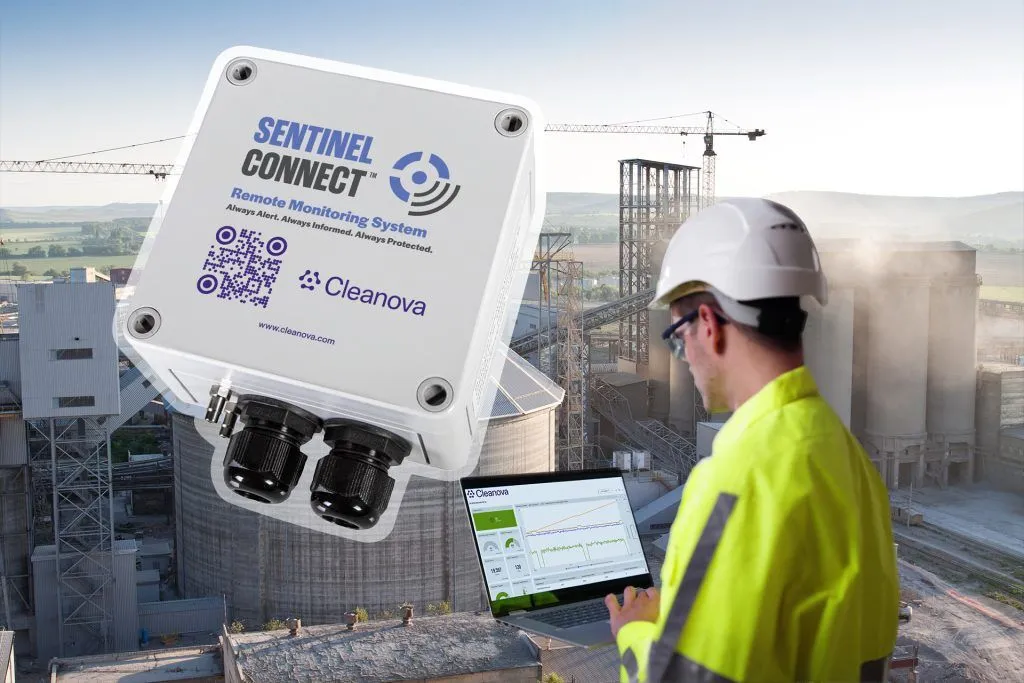
Sentinel Connect™ remote monitoring
Turn dust collector data into actionable maintenance decisions
Cleanova’s Sentinel Connect™ industrial IoT gateway connects operating data to a cloud analytics portal. Dashboards, alerts, reports and historical trends help teams see changing conditions before they become production or compliance problems.
- Encrypted data transmission
- IP66-rated enclosure for harsh industrial environments
- Dashboards, alerts, reporting and historical data
- Suitable for one collector or multiple facilities
- Supports condition-based maintenance and performance review
Service, retrofits and lifecycle support
Repair the root cause—not just the symptom
Cleanova | Micronics supports dust collection equipment throughout its lifecycle with OSHA- and MSHA-trained field crews, in-house laboratory resources, inspections, rebuilds, filter changes, troubleshooting and operator training.
Inspections & Audits
System-performance reviews, condition reports, leak detection, troubleshooting and recommendations.
Filter Changeouts & Cleaning
Complete bag changes, cartridge changes, high-efficiency cleaning and outage support.
Mechanical Repairs
Hoppers, housings, tube sheets, pulse pipes, dampers, access doors, ductwork and structural repairs.
Retrofits & Conversions
Pulse-jet conversions, top-removal upgrades, clean-air plenums, new tube sheets and capacity improvements.
Laboratory Analysis
Failed-bag analysis, permeability, tensile, burst, flex and microscopic evaluation.
Training
Customized classroom and field instruction for operation, maintenance, troubleshooting and bag installation.
Preventive Maintenance
Monthly, quarterly, semiannual or annual programs built around plant requirements and outage schedules.
Emergency Support
Experienced field resources for urgent failures, emissions concerns and production-critical repairs.
Replacement media, parts and accessories
Support for the collector, cleaning system and discharge train
CMT and Cleanova | Micronics can help identify replacement media and service parts for many OEM dust collectors—not only new Micronics equipment.
Temperature, chemical exposure, moisture, inlet loading, particle size, abrasiveness, cleaning intensity and bag-to-cage fit all affect pressure drop, emissions and service life. For suitable duties, ePTFE membrane media can improve dust release, fine-particle capture and operating stability.

Ducting and air movement
The airflow path matters as much as the filter
Properly sized branches, smooth transitions, manageable pressure losses and balanced pickup points help deliver the capture velocity the process needs without oversizing the fan.
View ducting, fans and air-movement componentsDust collector sizing and specification
The information we review before recommending equipment
ACFM alone is not enough. These inputs help establish collector style, media, air-to-cloth ratio, fan duty, housing construction, discharge arrangement and safety requirements.
Dust collection systems in North Carolina and South Carolina
Local application support backed by a full engineered-filtration group
Carolina Material Technologies supports manufacturers across North Carolina and South Carolina with site visits, equipment selection, system integration and coordination with Cleanova | Micronics engineering and field-service resources. That local-to-factory connection helps move projects from a dusty process problem to a practical, maintainable system.
Frequently asked questions
Industrial dust collection questions
What is the difference between a baghouse and a cartridge dust collector?
A baghouse generally uses long fabric filter bags and is often favored for high dust loading, demanding temperatures, abrasive service or large airflow. Cartridge collectors use pleated elements with more media area in a compact footprint and can offer fast clean-side changeouts. Dust properties and operating conditions determine which is appropriate.
How is an industrial dust collector sized?
Sizing begins with the airflow needed at each pickup point, then evaluates duct velocity, system pressure loss, dust loading, temperature, moisture, filter-media behavior, air-to-cloth ratio, cleaning method, emissions goals and the discharge arrangement. ACFM by itself is not enough.
What is a pulse-jet dust collector?
A pulse-jet collector periodically sends short bursts of compressed air through the filter elements to release accumulated dust into the hopper. Cleaning can occur while the collector is operating, depending on the design and process.
When should a cyclone be installed ahead of a baghouse?
A cyclone may be useful when the air stream contains a large amount of coarse or heavy material, valuable recoverable product, sparks or particles that would unnecessarily load or abrade the final filter. The cyclone handles pre-separation; the baghouse handles finer particulate.
What makes a top-load bin vent easier to maintain?
The filters are removed from above the tube sheet on the clean-air side rather than from inside a dusty lower plenum. Compact pleated elements, accessible retaining hardware and a shorter service envelope can make the changeout cleaner and faster.
Can an existing baghouse be upgraded instead of replaced?
Often, yes. Depending on structural condition and process requirements, upgrades may include a new tube sheet, clean-air plenum, pulse-cleaning system, top-removal conversion, filter-media change, hopper or duct repairs, controls, monitoring and explosion-protection improvements.
Do you supply replacement filter bags and dust collector parts?
Yes. Available items include filter bags, pleated elements, cartridges, cages, venturis, diaphragm valves, repair kits, solenoids, timer boards, differential-pressure gauges, clamps, seals, leak-detection supplies, precoat and installation hardware for many OEM systems.
Can dust collectors be monitored remotely?
Yes. Sentinel Connect™ provides an industrial gateway and cloud portal for dashboards, alerts, reports and historical operating data. Remote visibility can support troubleshooting, preventive maintenance and multi-site performance review.