
Industrial Butterfly Valves
Carolina Material Technologies supplies butterfly valves for dry bulk material handling applications where compact shutoff, dependable isolation and clean system integration matter. We most commonly apply butterfly valves on hopper outlets, bulk bag unloaders, dust evacuation connections and feeder isolation/fill points—typically in the 3" to 12" size range.
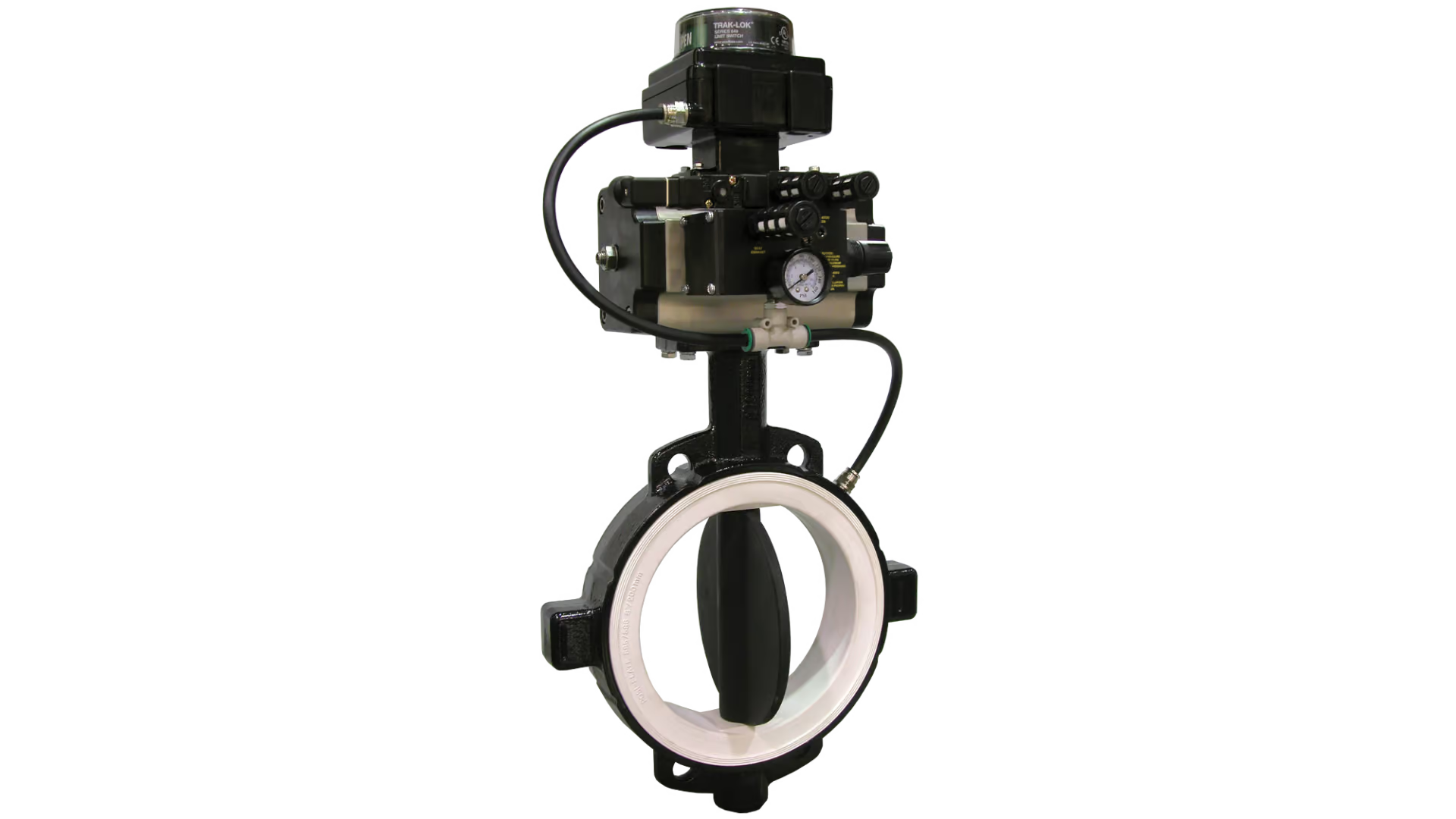
We do not treat every butterfly valve the same.
Some applications simply need a compact, dependable isolation valve. Others need a tighter seal, lower actuation torque, cleaner shutoff or better cycle life. We evaluate the valve duty—not just the flange size—before recommending a Bray, Posi-flate or other appropriate butterfly valve solution.
Where we most often use butterfly valves
While Bray offers many butterfly valve families, the applications most relevant to your customer base are usually much more focused: compact isolation and shutoff in dry bulk material handling systems.
Hopper Outlet Isolation
Used below hoppers, receivers and bins to isolate product flow during maintenance, cleaning or controlled process transitions.
Automatic Dust Valves
Useful in dust evacuation and venting connections where a compact shutoff valve is needed as part of a dust control strategy.
Bulk Bag Unloader Isolation
Often installed between the bag discharge area and the hopper or evacuation connection below to control dust and isolate the chamber.
Feeder Fill / Isolation
Used between supply hoppers and screw or vibratory feeders to isolate the feeder during startup, service or changeover.
Two practical butterfly valve paths for this market
Rather than trying to show every butterfly valve family available, this page focuses on the two most useful lanes for your bulk material handling customers: general industrial Bray butterfly valves and Posi-flate inflatable seated butterfly valves.

Bray Butterfly Valves
Bray butterfly valves are a versatile solution for isolating or regulating flow and are well suited for hopper, receiver and silo-related duties where a compact quarter-turn valve is the right fit. For your market, resilient seated styles are usually the most relevant starting point.
- Compact quarter-turn design
- Strong fit for hopper, silo and isolation duties
- Available in multiple materials and configurations
- Manual, pneumatic and automated options
Posi-flate Series 585 / 586
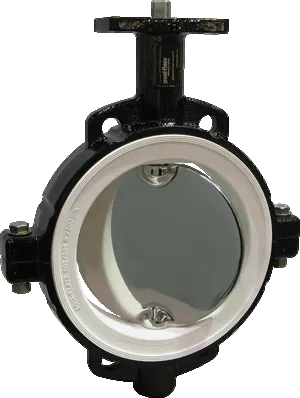
Posi-flate butterfly valves use an inflatable seat that expands against the disc to create a more uniform seal with lower torque and less seat impingement. They are an excellent option where dust-tight shutoff and cycle life are high priorities.
- Inflatable seat for bubble-tight shutoff
- Lower torque and less seat wear
- Great option for dust-tight sealing
- Best evaluated case-by-case for abrasive materials
Bray vs. Posi-flate: which butterfly valve is the better fit?
Both can be effective isolation valves, but they solve slightly different problems in bulk material handling applications.
| Selection Factor | Bray Butterfly Valve | Posi-flate Butterfly Valve |
|---|---|---|
| Best Fit | General-purpose hopper outlet isolation, air shutoff and feeder isolation. | Applications needing a tighter seal, lower torque and enhanced shutoff performance. |
| Sealing Method | Conventional resilient-seat butterfly valve construction. | Inflatable seat expands against the disc for a more uniform seal and reduced seat impingement. |
| Dust Control | Good general isolation depending on seat and configuration. | Strong option where dust-tight shutoff is especially important. |
| Torque / Actuation | Typical quarter-turn torque characteristics. | Often lower torque because the seat is not constantly dragged across the disc during normal opening and closing. |
| Cycle Life | Strong general industrial performance when properly selected. | Often preferred where long life and repeat cycling are priorities. |
| Abrasive Products | Application review required; can be a solid starting point depending on valve materials and service conditions. | Although often promoted for severe service, truly abrasive dry bulk duties still need careful seat-life review. |
| Typical CMT Use | The more common and economical fit for many day-to-day bulk material handling applications. | Premium choice when the sealing and life advantages justify it. |
Butterfly valves in actual bulk handling systems
These examples help customers immediately understand where butterfly valves fit inside a working system. Pointer callouts below highlight the red butterfly valves in each application image.

Bulk Bag Unloader Dust Isolation
In this bulk bag unloading system, the butterfly valve is used as a compact isolation point in the evacuation / product transfer area. This style works well when you need a simple quarter-turn shutoff integrated into a tight equipment layout.

Bag Chamber to Hopper Isolation
Here the butterfly valve creates isolation between the bulk bag discharge chamber and the hopper below. This is a practical way to manage dust evacuation and maintain control over the transfer point during operation or service.
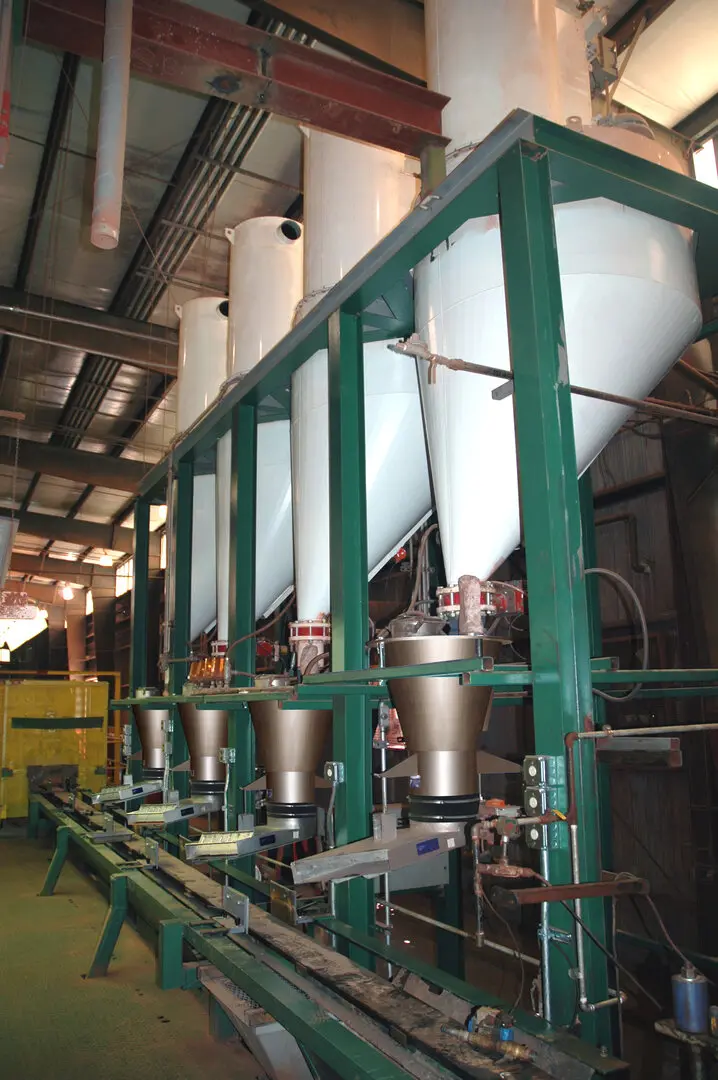
Feeder Isolation & Fill Valves
In this multi-feeder installation, butterfly valves are mounted between the hoppers and feeders to isolate the feeder and control the connection above it. This is one of the clearest examples of where compact butterfly valves shine in bulk solids systems.
What matters most when choosing a butterfly valve?
The right valve depends on more than the flange size. These are the practical questions we typically work through with customers.
Material Characteristics
Consider whether the product is fine, dusty, abrasive, free-flowing, sticky or likely to pack in the valve seat area.
Valve Function
Is the valve only isolating, or does it need to cycle frequently, control dust, protect a feeder or act as part of a process sequence?
Required Shutoff Quality
Some applications are fine with general isolation, while others need a cleaner, more dust-tight seal.
Cycle Frequency
The more often the valve cycles, the more important actuator sizing, torque and seat wear become.
Mounting & Connections
Confirm whether the valve is wafer, lug or another style and how it will fit between the customer’s flanges or equipment connections.
Manual or Automated Operation
Lever, gear, pneumatic or electric actuation should be matched to how the customer actually plans to use the valve.
Common sizes and configurations we actually see
Although butterfly valves are available in many large-diameter and specialty configurations, your business most often encounters the smaller sizes used on equipment and process skids rather than large process pipeline work.
Representative valve options
These are good representative images and families to show on the page without overwhelming the customer with every possible variant.
What do we need to quote the right butterfly valve?
You do not need to know the exact series before reaching out. Send us the application details and we can help determine whether a Bray, Posi-flate or other configuration makes the most sense.
Send Us Your Application →Industrial Butterfly Valve FAQ
What is a butterfly valve used for?
A butterfly valve is a quarter-turn valve used to isolate or regulate flow. In bulk solids systems, we most often use them on hopper outlets, dust connections and feeder isolation points.
When should I use a Posi-flate butterfly valve?
Posi-flate valves are worth considering when a customer needs a tighter shutoff, lower torque or longer life in a cycling application, especially where dust control matters.
Are Bray butterfly valves a good fit for bulk solids?
Yes—especially for practical isolation duties around hoppers, receivers and equipment. They are often the most straightforward and economical starting point.
What valve size do you commonly sell?
In your market, most butterfly valve applications tend to fall in the 3" to 12" diameter range rather than very large line sizes.
Are inflatable seated valves always best for abrasive products?
Not necessarily. They offer real sealing and wear advantages in many services, but truly abrasive materials still need careful application review because seat wear can remain the deciding factor.
Can you supply automated butterfly valves?
Yes. Butterfly valves can be provided with manual, pneumatic or electric actuation, plus accessories like limit switches and solenoid packages.
Can a butterfly valve be used as a feeder isolation valve?
Yes. That is one of the most common uses on bulk material handling systems—isolating the feeder from the upstream hopper or refill source.
Do you only supply butterfly valves in the Carolinas?
No. We provide local application support in North and South Carolina, but many valves can be sold and shipped more broadly as distribution products.
See where butterfly valves fit in the rest of the system
Need help choosing the right butterfly valve?
Send us the size, valve duty, material handled and any available drawings or photos. We can help determine whether a standard Bray butterfly valve, Posi-flate inflatable seated valve or another isolation solution is the best fit for the application.