
Reliable High-Level, Low-Level & Plug Detection for Bins, Silos and Hoppers
Point level indicators help prevent overfills, empty bin conditions, plugged chutes, equipment damage, and unexpected downtime. CMT helps you choose the right switch technology for your material, vessel, environment, and control objective.
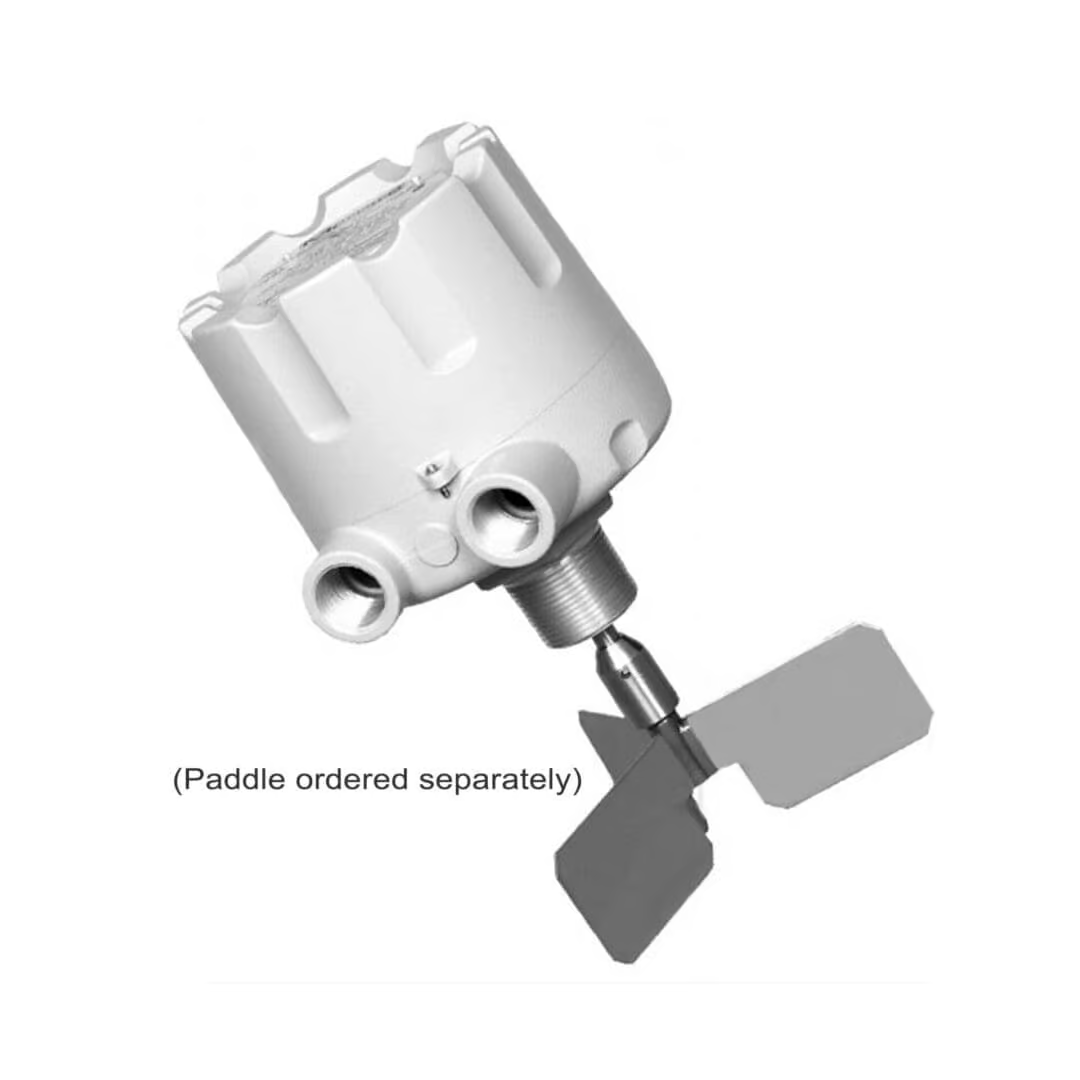
What Is a Point Level Indicator?
A point level indicator detects whether material is present or absent at a specific point inside a bin, silo, hopper, chute, or vessel. Unlike continuous level sensors that measure inventory over a range, point level controls are typically used for alarm points, interlocks, shutdown signals, or process confirmation.
High-Level Detection
Prevent overfilled silos, dust releases, wasted product, and unsafe cleanup situations.
Low-Level Detection
Alert operators before material runs out and causes process interruptions or missed batches.
Plugged Chute Detection
Detect blocked transfer points before material backs up into upstream equipment.
Material Presence Confirmation
Verify material availability or flow status as part of your automation and safety logic.
The Wrong Level Switch Can Create the Very Problems It Was Supposed to Prevent
Bulk solids are not always easy to measure. Dust, buildup, vibration, changing density, material impact, poor mounting location, and temperature swings can all cause unreliable level detection. That is why CMT focuses on the application first — not just the part number.
Point Level Indicators Available from CMT
Monitor Technologies offers a range of point level technologies including rotary paddle, fail-safe rotary, RF capacitance, vibratory probes, diaphragm switches, tilt switches, and proximity switches for powders, pellets, granules, and other bulk solids.


Rotary Paddle Level Indicators
Rotary paddle level switches are one of the most common and cost-effective choices for high-level and low-level detection in dry bulk solids. They are often used on bins, silos, hoppers, and vessels where simple, rugged material presence detection is needed.
- Good fit for powders, pellets, granules, feeds, aggregates, and many dry materials
- Available with different paddles, extensions, and mounting configurations
- Useful for overfill prevention, refill signals, and basic inventory alarms
- Fail-safe rotary options available for critical applications
MK2 RF Capacitance Probes
RF capacitance point level probes are a strong option where sensitivity, probe style, and material contact detection are important. These sensors can work well in many powder, bulk solid, liquid, and slurry applications when properly applied.
- Useful for high-level or low-level detection
- Good choice where a probe-style sensor is preferred
- Can be applied in many solids, liquid, and slurry applications
- Application review is important when buildup or coating is possible



DuraVibe Vibratory Level Probes
Vibratory level probes are used for reliable point level detection in powders and bulk solids. They are often a good choice where material density, humidity, temperature, or buildup concerns make other technologies less attractive.
- Reliable detection across a wide range of material densities
- Good choice for powders and granular materials
- Single-probe designs can help avoid packing issues seen with fork-style sensors
- Useful where changes in material, humidity, or temperature may affect other sensors
Proximity Switches
Proximity point level switches provide compact, solid-state detection of material presence or absence. They can be a practical fit where space is limited or where a small, simple sensor is preferred.
- Compact option for detecting bulk solids
- Useful where a small sensor footprint is needed
- Best selected after reviewing material and mounting conditions


Diaphragm Switches
Diaphragm switches are simple, economical point level controls used where material pressure against the diaphragm indicates presence. They are often used when a flush-mount, minimally intrusive sensor is preferred.
- Good option where vessel clearance is limited
- Minimal intrusion into the vessel
- Simple level detection for many dry bulk material applications
Not Sure Which Point Level Switch You Need?
That is exactly where CMT can help. The best level switch depends on material behavior, mounting location, required output, vessel geometry, and the consequence of failure.
Send Us This Information
- Material name and approximate bulk density
- High-level, low-level, or plugged chute detection?
- Bin, silo, hopper, chute, or process vessel?
- Mounting location and available clearance
- Temperature, dust, moisture, vibration, or pressure concerns
- Required output: relay, PLC signal, alarm, or control panel integration
When to Upgrade an Existing Sensor
- Frequent false alarms
- Material buildup on the sensing element
- Sensor damage from material impact
- Operator distrust of the alarm
- Hard-to-access installation location
- Critical overfill or empty-bin risk
Common Point Level Indicator Applications
Point level controls are used across bulk material handling systems to protect equipment, automate refills, prevent overfills, and alert operators before a small issue becomes downtime.
Silo Overfill Protection
High-level alarms for trucks, rail unloading, pneumatic conveying, and storage silos.
Low-Level Refill Signals
Call for material before a bin runs empty and disrupts production.
Plugged Chute Detection
Detect backed-up material in chutes, transitions, and transfer points.
Feeder Protection
Confirm material presence before running screw feeders, rotary valves, or conveyors.
Batching & Ingredient Systems
Support process logic and material availability confirmation.
Dusty Bulk Solids
Choose technologies that can handle dusty, changing, or difficult materials.
Point Level Indicator FAQs
What is the best point level indicator for dry bulk solids?
Rotary paddle switches are often a cost-effective starting point, but the best option depends on the material, density, dust, buildup, mounting location, and whether fail-safe operation is required.
When should I use a rotary paddle level switch?
Rotary paddles are commonly used for simple high-level and low-level detection in bins, silos, hoppers, and vessels handling dry powders, pellets, granules, and similar bulk solids.
When is a vibratory probe better?
Vibratory probes can be a better fit for sensitive detection, changing material conditions, or applications where density, humidity, temperature, or buildup may affect other sensor types.
Can you help replace an existing level switch?
Yes. Send us photos, the model number, and the application details. We can help identify a direct replacement or recommend a better-fit upgrade.
Can these sensors connect to a PLC?
Yes. Depending on the model, point level sensors can be wired into alarms, relays, control panels, or PLC inputs.
Send Us Your Application and We’ll Help You Select the Right Sensor
Whether you need a rotary paddle switch, capacitance probe, vibratory level probe, proximity switch, or diaphragm switch, CMT can help you choose the right technology for your material and process.