
Bin Aeration Systems for Bulk Solids Flow Problems
Solve bridging, rat-holing, and poor material discharge using air-based flow aids. Bin aeration systems help fluidize bulk solids so they move consistently through silos, hoppers, and bins.

Why Bin Aeration Matters
Many bulk solids do not flow reliably due to compaction, moisture, particle shape, or storage time. Aeration introduces low-pressure air to reduce internal friction and help material behave more like a fluid.
Bridging
Material forms a stable arch and stops flowing.
Rat-Holing
Material flows only in a narrow channel.
Inconsistent Discharge
Flow surges or stops unpredictably.
Material Compaction
Stored material becomes dense and difficult to move.
How Bin Aeration Works
Aeration devices introduce controlled air into the material, reducing friction between particles and the silo wall. This allows material to flow more consistently and reduces the likelihood of blockage.
Air Pads (Continuous Aeration)

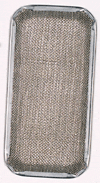

Gentle, Continuous Material Fluidization
Air pads provide a low-pressure, continuous flow of air along silo walls to keep material moving. They are ideal for fine powders and materials that tend to pack or stick.
- Creates a thin air film to reduce friction
- Helps maintain steady material flow
- Minimal moving parts
- Energy efficient for continuous use
Best For: Cement, fly ash, lime, and other fine powders.
Air Pad Specifications
Air pads are designed for continuous aeration using low-pressure air. Exact specifications vary based on model and application, but typical ranges are shown below.
Operating Air Pressure
Typically 2 – 15 PSI (low pressure, high volume air)
Air Consumption
Low continuous air consumption depending on pad size and material
Construction
Flexible membrane with durable housing designed for long-term use in abrasive environments
Installation Location
Mounted along silo cone or hopper walls to promote mass flow
Temperature Range
Suitable for most ambient and moderate process temperatures (material dependent)
Maintenance
No moving parts — minimal maintenance required
Note: Proper spacing, number of pads, and air supply design are critical to performance. CMT can help determine the optimal layout based on your silo geometry and material.
Evasser (Intermittent Aeration)
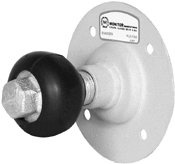
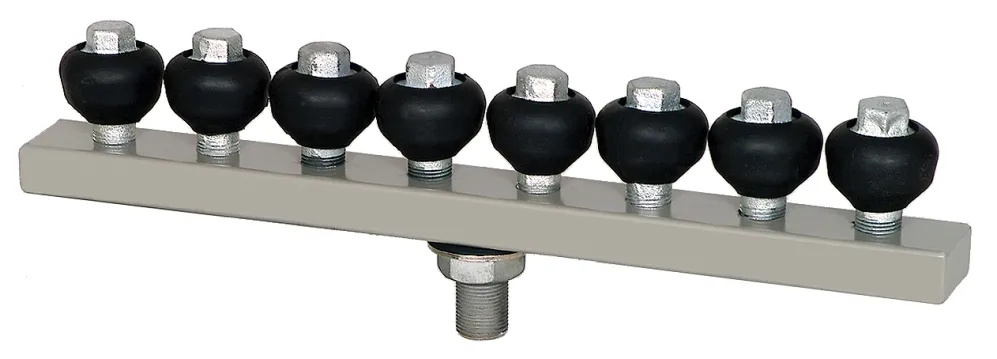
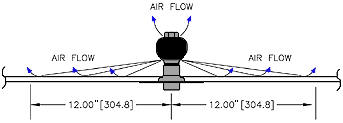

Pulsed Air for Breaking Compacted Material
Evassers deliver short bursts of air to break up compacted material and restore flow. They are typically used where material does not respond to continuous aeration.
- Breaks up hardened or compacted material
- Used in conjunction with control timers or systems
- More aggressive than air pads
- Effective in difficult flow conditions
Best For: Sticky, compacted, or difficult materials that don’t flow easily.
Evasser Specifications
Evassers provide intermittent, high-impact air bursts to break up compacted material. They are typically used in more difficult applications where continuous aeration is not sufficient.
Operating Air Pressure
Typically 40 – 80 PSI (short-duration pulses)
Air Delivery
Intermittent bursts controlled by timers or PLC systems
Discharge Pattern
Directed air blast designed to break up bridging and compacted material
Installation Location
Mounted in silo cone or problem areas where material compacts
Control Options
Timer-based or automated control via PLC for sequencing multiple units
Maintenance
Simple design with durable components for repeated cycling
Note: Evassers are typically spaced strategically and sequenced to maximize effectiveness. CMT can help design the correct number, placement, and timing strategy.
Air Pad vs Evasser
Air Pads
- Continuous airflow
- Gentle fluidization
- Best for fine powders
- Low energy usage
Evasser
- Intermittent bursts
- High energy pulses
- Breaks compacted material
- More aggressive solution
Common Applications
Cement & Fly Ash
Lime & Minerals
Food Powders
Chemical Powders
Frequently Asked Questions
When should I use bin aeration?
When material does not flow reliably due to compaction, moisture, or particle behavior.
Can aeration damage material?
When properly applied, aeration is gentle and does not damage most materials.
How much air is required?
This depends on material type, silo size, and system design. CMT can help determine requirements.
Fix Your Flow Problems at the Source
Send us your material and silo details and we’ll recommend the right bin aeration solution.
Request a Quote