
Industrial Diverter Valves
Route powders, pellets and granules between process destinations with a diverter selected around the material—not simply the pipe size. Carolina Material Technologies supplies pneumatic conveying, plug, gravity, WYE and cross-contamination-control diverter valves for dry bulk material handling systems.
The job is not just to change direction.
The correct diverter must redirect the material without creating excessive pressure loss, product damage, leakage, wear, buildup or unacceptable carryover into the inactive line. That makes the material, conveying method and contamination requirements just as important as inlet and outlet dimensions.
Which diverter valve should I use?
Multiple diverter styles can sometimes perform the same basic routing function. The best choice usually becomes clearer once pressure, material behavior, wear and cross-contamination requirements are considered.
| Application | Typical Starting Point | Why | Watch For |
|---|---|---|---|
| General pneumatic conveying | Flap / conveying diverter | Compact routing with a smooth transition and relatively small change in conveying direction. | Pressure, seal compatibility, product trapping and abrasion. |
| Abrasive product or larger particles | Plug diverter | Straight-bore plug provides a smooth flow path and eliminates the rubber flap seal used in many flap-style diverters. | Plug/body materials, torque and required connection arrangement. |
| Cross-contamination-sensitive product | SlideFlex diverter | Designed specifically for applications where product cross-contamination between destinations must be minimized. | Conveying phase, pressure rating, temperature and cleaning requirements. |
| Gravity-fed powders or granules | Gravity flap or bucket diverter | Fabricated construction provides simple routing without the requirements of a pressure conveying valve. | Material impact, abrasion, angle of repose and chute geometry. |
| WYE-shaped conveying line routing | WYE-line diverter | Provides another compact routing architecture where the piping arrangement favors a Y-shaped branch. | Material, pressure, diverter design and manufacturer-specific sealing method. |
| Fill multiple scales, hoppers or bins in series | Fill / Pass Scale Diverter | Purpose-built to divert into a vessel or allow material to continue through the conveying line. | Vessel venting, sequence controls and weighing requirements. |
Four core diverter technologies
Rather than treating every two-way valve as interchangeable, we select the internal design around what will provide the cleanest, most reliable flow path for the material.

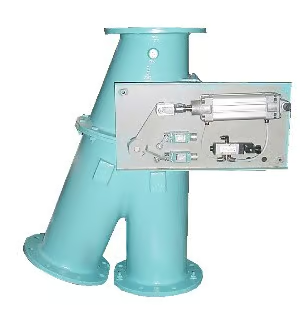
Flap / Conveying Diverter Valves
A compact internal flap redirects the conveying stream between two flow paths. Smooth internal transitions and small divert angles help minimize turbulence, pressure loss and locations where conveyed product can lodge.
- Dry powders, pellets and granules
- Cast aluminum, stainless or iron body options
- Pneumatic, electric or manual actuation
- Pipe, tube or flanged connection options
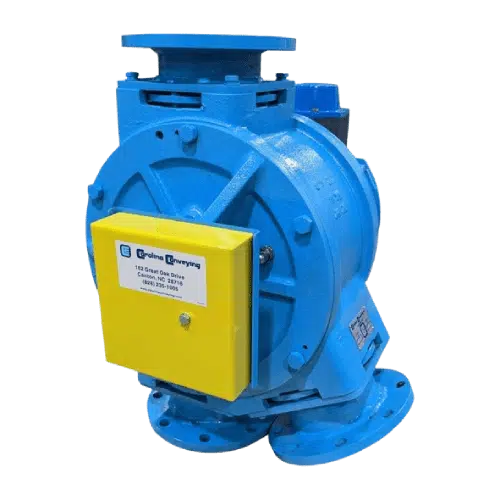
Plug Diverter Valves
A rotating plug with a single straight bore redirects the conveying stream between outlets. The full circular flow path makes the plug diverter particularly useful where larger particles, abrasion or product degradation are concerns.
- Dilute- and dense-phase conveying
- No rubber flap seal in the material stream
- Cast heavy-duty body and plug construction
- Pneumatic, electric or manual operation available
SlideFlex Diverter Valves
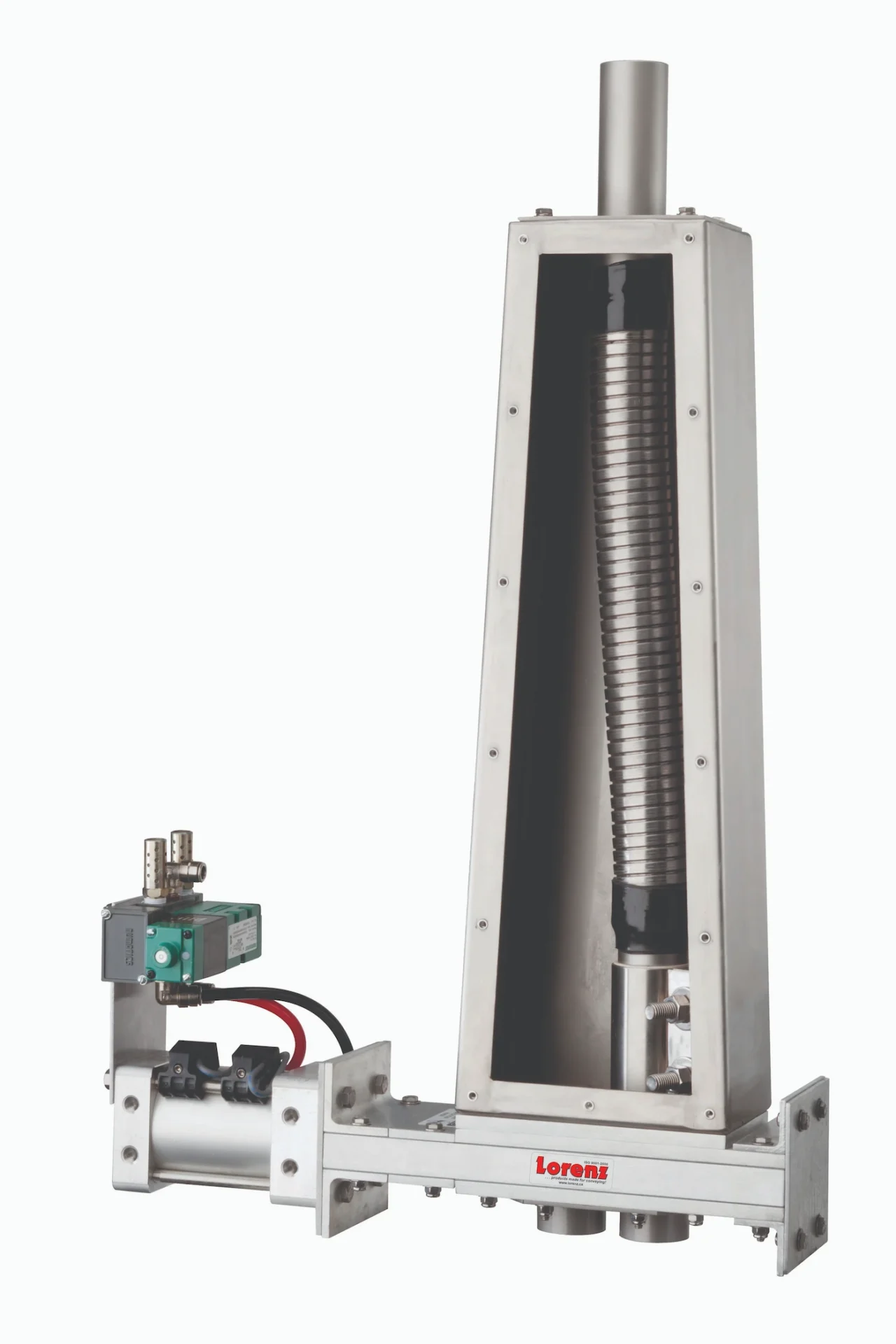
For applications where carryover between destinations is unacceptable, the Lorenz Series P SlideFlex provides a purpose-built alternative to conventional flap and plug arrangements.
- Designed to eliminate product cross-contamination
- Vacuum and dilute-phase pressure applications
- Unobstructed material flow path
- Horizontal or vertical installation

Gravity Diverter Valves
Fabricated gravity diverters redirect powders, pellets and granules through chutes and spouts where the material is not being pneumatically conveyed. Fabrication allows unusual dimensions, angles and flange configurations.
- 2-way and 3-way configurations
- Round, square or rectangular connections
- Flap or abrasion-resistant bucket styles
- Custom divert angles available
Flap vs. plug diverter: where does each fit?
Both can route material in a pneumatic conveying system, but the internal flow path and sealing method make them behave differently with difficult products.
Compact, streamlined material routing
Carolina Conveying's conveying diverter uses an internal flap and gradual transition between the inlet and outlets. This makes it a strong general-purpose choice where compact size and a smooth conveying path are priorities.
Straight-bore routing for tougher materials
The plug diverter uses a cast rotating plug with a circular bore matching the conveying line. That design removes the rubber flap seal from the material stream and can be advantageous for abrasive products or larger particles that may interfere with a conventional flap.
What if product cannot carry over into the wrong destination?
In many systems, routing material to the correct outlet is only part of the problem. Residual product left in a diverter or inactive flow path can matter when changing formulas, ingredients, colors, polymers or other contamination-sensitive materials.
The Lorenz Series P 2-Way SlideFlex is specifically designed for applications where product cross-contamination must be avoided in vacuum or dilute-phase pneumatic conveying systems.
Gravity Diverter Valves
When material is simply falling through a chute or spout, a pressure-rated pneumatic conveying diverter may add unnecessary complexity. Fabricated gravity diverters provide a highly flexible way to route powders, pellets and granules between process destinations.


Other diverter architectures are available when the application calls for them.
CMT is not limited to one diverter manufacturer or internal geometry. Customer-specified equipment and alternate designs can be considered when they offer a better fit for an existing system or process requirement.

WYE-Line Diverter Valves
WYE-line designs provide another approach to routing pneumatic conveying lines where the desired piping geometry or customer specification favors a Y-shaped branch arrangement.
Discuss a WYE Diverter →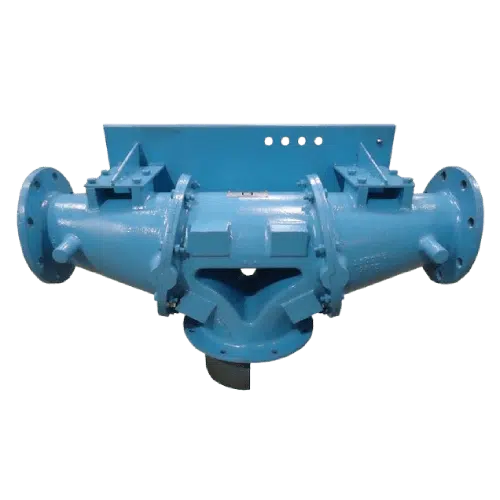
Fill / Pass & Scale Diverters
Scale diverters are purpose-built for filling hoppers or weighing vessels while allowing material to continue through the conveying line when the destination is bypassed.
Explore Specialty Valves →Common diverter valve problems we try to prevent
Premature diverter problems are often symptoms of a mismatch between the valve design, conveyed material and actual operating conditions.
Product trapped in the dead leg
Large particles or accumulated material can prevent complete sealing to the inactive branch and create leakage or contamination.
Cross-contamination
Residual material can become unacceptable when a system handles multiple recipes, ingredients, colors or product families.
Excessive abrasive wear
High particle hardness and velocity can quickly attack seals, flaps and impact areas unless the flow path is selected accordingly.
Pressure loss
Abrupt changes in direction, restricted passages or poor internal geometry can consume conveying pressure that the rest of the system needs.
Switching through material flow
Unless the selected diverter is specifically designed for it, changing position through an active solids stream can increase trapping, wear and sealing problems.
Incorrect position feedback
A conveying system should know that the diverter has reached its commanded position before product is sent toward the new destination.
How should the diverter be actuated?
Cycle frequency, available utilities, desired fail position and plant controls all affect the actuator and accessory package.
What do we need to select your diverter?
You do not need to know whether the application requires a flap, plug, SlideFlex or another design. Send us the process information and we can help narrow the valve technology first.
Send Us Your Application →Industrial Diverter Valve FAQ
What does a diverter valve do?
A diverter valve changes the path of a bulk material stream, typically directing one inlet toward one of multiple destinations. Different designs are used for gravity flow and pneumatic conveying.
What is the difference between a flap diverter and a plug diverter?
A flap diverter redirects the flow using an internal pivoting plate and sealing arrangement. A plug diverter rotates a bored internal plug between outlets, providing a different flow path that can be advantageous with abrasive materials or larger particles.
Which diverter is best for abrasive material?
It depends on the product and operating conditions, but a heavy-duty plug diverter is often worth evaluating because its straight-bore plug does not use a rubber flap seal in the conveyed material path.
What diverter should I use to prevent cross-contamination?
Applications with strict contamination requirements should be evaluated specifically around product carryover. The Lorenz SlideFlex Series P is one available design engineered specifically to eliminate cross-contamination in vacuum and dilute-phase systems.
Can diverter valves be used in dense-phase conveying?
Certain designs can. For example, heavy-duty plug diverters are available for dilute- and dense-phase applications. Final selection must account for actual pressure, material and conveying conditions.
Can gravity diverters be custom fabricated?
Yes. Fabricated gravity diverters can accommodate custom sizes, divert angles and round, square or rectangular connections.
Should a diverter switch while product is flowing?
That depends on the valve design and application. Unless the selected diverter is specifically engineered for switching through the material stream, changing position with material flowing can increase trapping, wear or leakage risk.
Can you replace an existing diverter from another manufacturer?
Yes. Send us the existing manufacturer and model, line size, connection dimensions, divert angle, actuator information and photos. We can evaluate a direct or application-equivalent replacement.
Continue building the conveying system
Need help selecting the right diverter valve?
Send us the material, conveying method, line size, pressure and desired destinations. We can compare flap, plug, SlideFlex, gravity, WYE and other diverter technologies and recommend the design that best fits the application.