

Ferrous, non-ferrous and stainless-steel detection
Bunting Industrial Metal Detection Systems
Detect and reject metallic contamination from free-falling powders, pneumatic conveying lines, pumped liquids, conveyor systems, packaged goods and heavy bulk materials.
CMT helps select the detector, aperture, controls, reject device, installation point and surrounding material-handling equipment.
The complete inspection system matters
Metal Detection Is More Than a Search Head
Metal detection is often paired with upstream magnetic separation equipment and integrated into pneumatic conveying systems or mechanical conveying systems . The correct combination depends on the product, expected contaminant, inspection objective, and location within the process.
Detection performance depends on the product, contaminant, aperture, product speed, installation environment, controls and reject arrangement. The complete system must detect the metal, remove or identify the affected product and confirm that the inspection process is functioning correctly.
Free-falling powder, pneumatic product, pumped liquid and packaged goods require different detector and reject designs.
Moisture, salt, temperature and product conductivity can influence detector response and must be addressed during setup.
The reject mechanism must respond quickly enough to isolate contaminated product while minimizing unnecessary product loss.
Equipment overview
Match the Metal Detector to the Product Flow
Choose a product family below or contact CMT for assistance matching the detector, electronics and reject device to your process.
Free-falling powders and granules
Gravity-Fall Metal Detection Systems
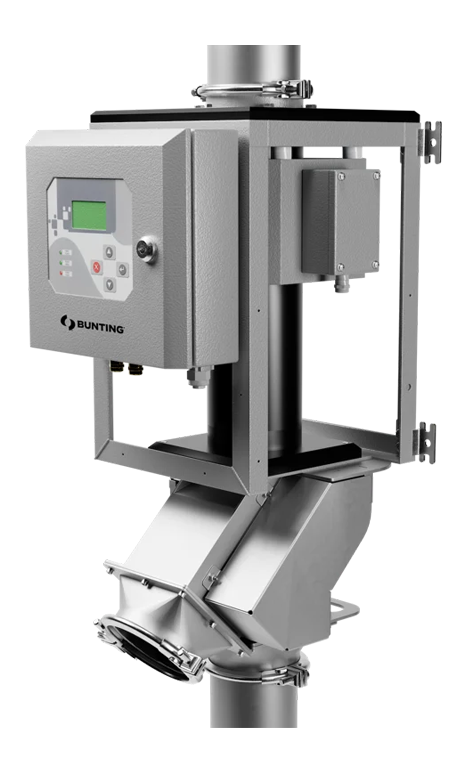
Gravity-fall detectors inspect powders, granules and bulk ingredients as they move through vertical process lines. When metal is detected, a fast-acting reject device diverts the contaminated portion without requiring the complete process to stop.
The Elite GF is the premium hygienic configuration with advanced controls and sanitary reject features. The Pro GFA provides a cost-effective, flexible solution for a broad range of food, grain, milling and powder-and-bulk applications.

Performer Elite GF
Highly hygienic inspection with integrated sensing tube, compact installation height, tool-free reject access and optional clean-in-place preparation.
Performer Pro GFA
Reliable free-fall inspection with multiple sizes, finishes, controls and reject arrangements for powders and bulk solids.

Performer P Configuration
High-sensitivity detector configuration for demanding food, pharmaceutical and powder-processing inspection points.


Detection and rejection sequence
See the Performer Pro GFA in operation
Material passes through the detector aperture before the reject mechanism isolates the portion of product associated with a confirmed metal-detection event.
- Continuous gravity-flow inspection
- Fast automatic reject sequence
- Multiple aperture and connection sizes
- Food, sanitary and industrial finishes

Pressure and vacuum conveying lines
Pneumatic Metal Detection Systems
Pneumatic metal detectors inspect dry powders and granular ingredients moving through enclosed pressure or vacuum conveying lines. The system detects and rejects metal while maintaining pipeline integrity and minimizing disruption to production.
Depending on product, line size, sensitivity and installation requirements, Performer P and Performer R detector configurations can also be incorporated into pneumatic applications.

Closed-line inspection
See pneumatic detection and rejection
The detector and reject assembly identify contamination within the enclosed material stream and isolate the affected portion while preserving normal conveying-line operation.
- Pressure and vacuum transport
- Vertical and horizontal integration
- Advanced self-monitoring and diagnostics
- High-throughput food and powder processing
Packaged and unpackaged products
Tunnel-Style Metal Detectors
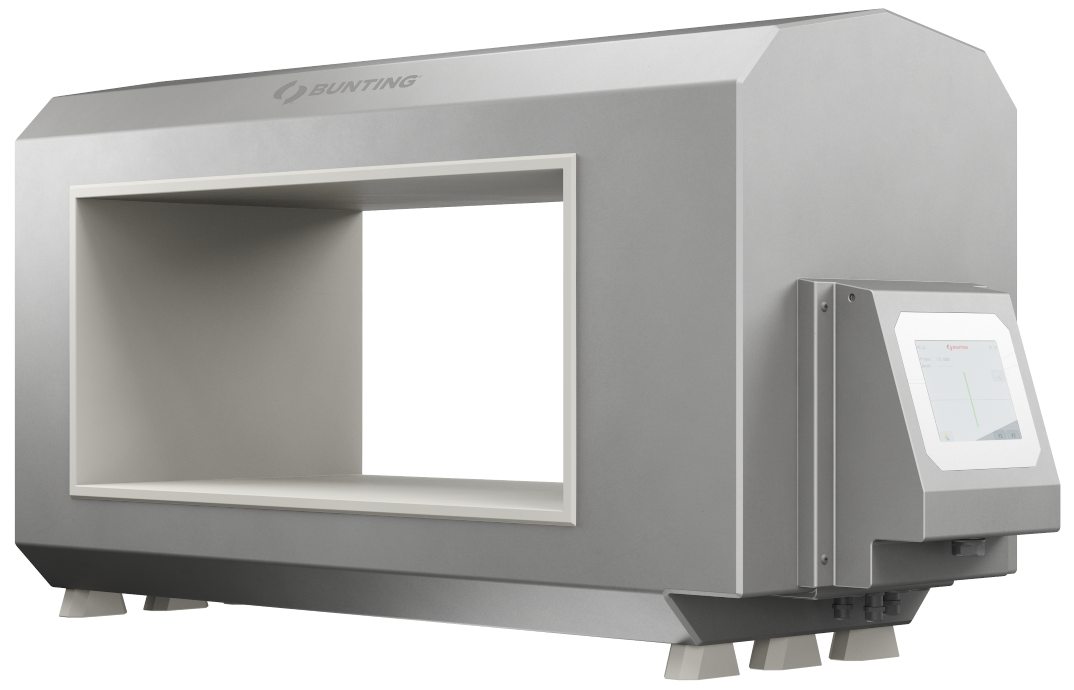
Tunnel-style detectors inspect products as they pass through a closed detector aperture on a nonmetallic conveyor belt, chute or trough. They can inspect individual packages, cases, bulk product and bags of dry ingredients.
Tunnel detectors require proper separation from surrounding conductive and moving metal. CMT can review conveyor construction, rollers, frames, fasteners and nearby equipment before installation.
Performer Elite IT
Premium tunnel detector with hygienic construction, advanced product learning, custom apertures and multiple protection ratings.
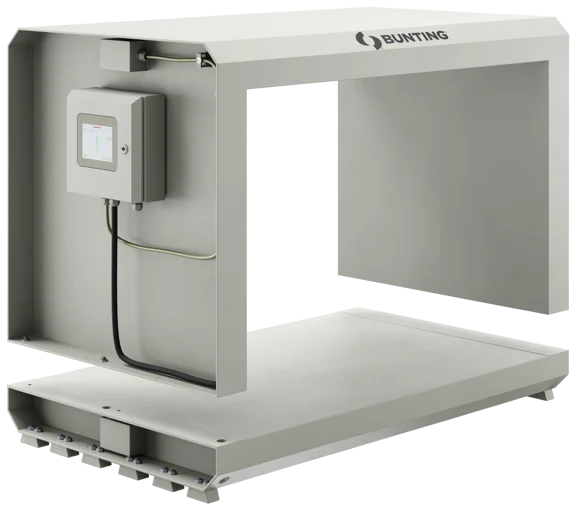
Performer Pro DT
Two-piece detector that installs around selected existing conveyors or vibratory chutes without removing the belt.
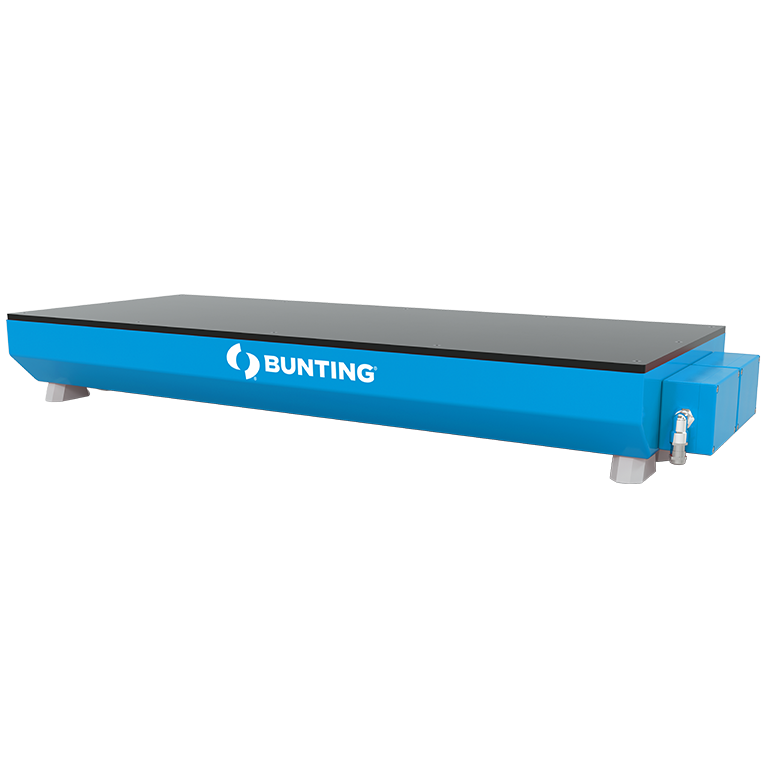
Performer Pro UBL
Single-sided detector installed beneath a nonmetallic belt or vibratory chute for heavy bulk-product inspection.
Complete inspection and rejection systems
Integrated Conveyor Metal Detectors
Bunting Performer Elite DCM systems combine the detector, conveyor, controls and reject device into one engineered package for packaged or unpackaged food products.
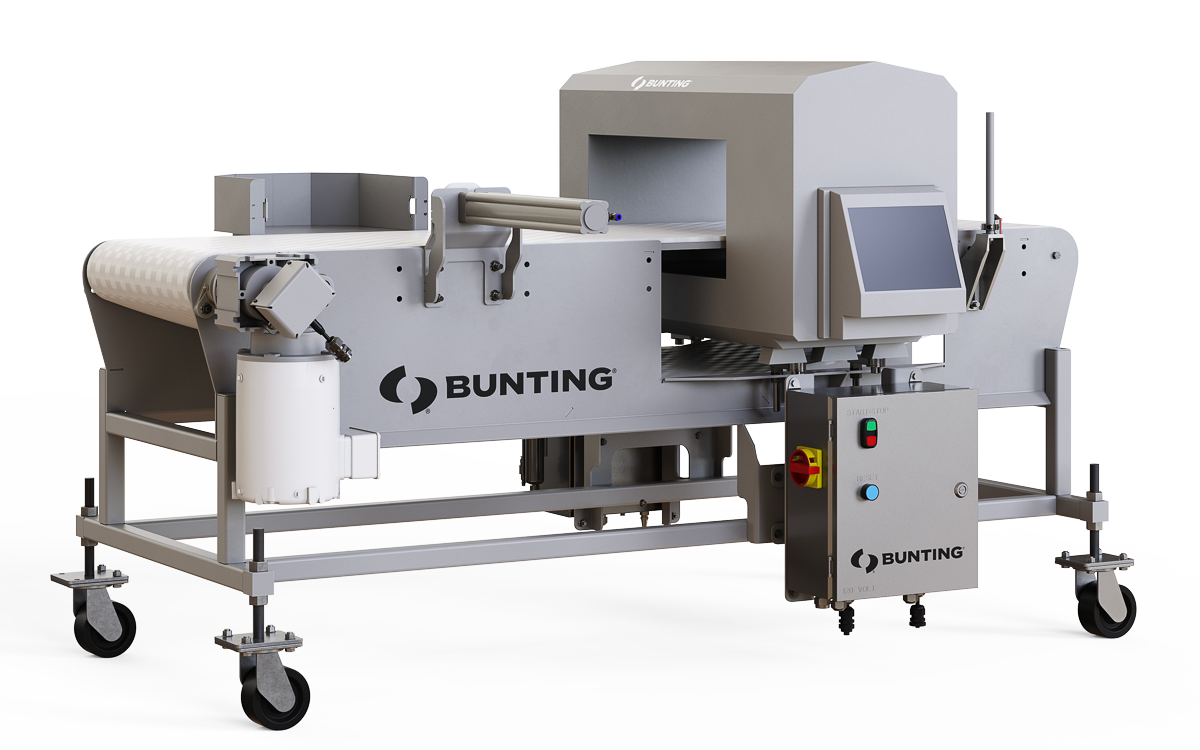
Performer Elite DCM
A custom-built stainless-steel conveyor inspection system supplied ready for installation with detector, belt, controls and the selected reject arrangement.
Detection, Tracking & Rejection
The complete system tracks product movement from the detector to the reject point so contaminated product can be isolated from the accepted stream.

Liquids, pastes and slurries
Inline Metal Detection for Pumped Products
Performer inline systems detect and separate metallic contamination from pumped liquids, sauces, pastes and slurries. Stainless-steel construction and cleanable reject arrangements support food, beverage, dairy and other sanitary processing lines.
Viscosity, pressure, temperature, flow rate, particulates, connection style, cleanability and acceptable product loss must all be reviewed before selecting the detector and reject mechanism.

Mining, minerals, aggregate and biomass
Heavy Industrial & Under-Belt Metal Detection
Industrial detectors identify damaging tramp metal in heavy bulk product streams before it reaches crushers, grinders, screens, chippers and other vulnerable equipment.
Performer Pro UBL
Installs beneath a nonmetallic conveyor or vibratory chute and scans upward through the belt into the material burden.
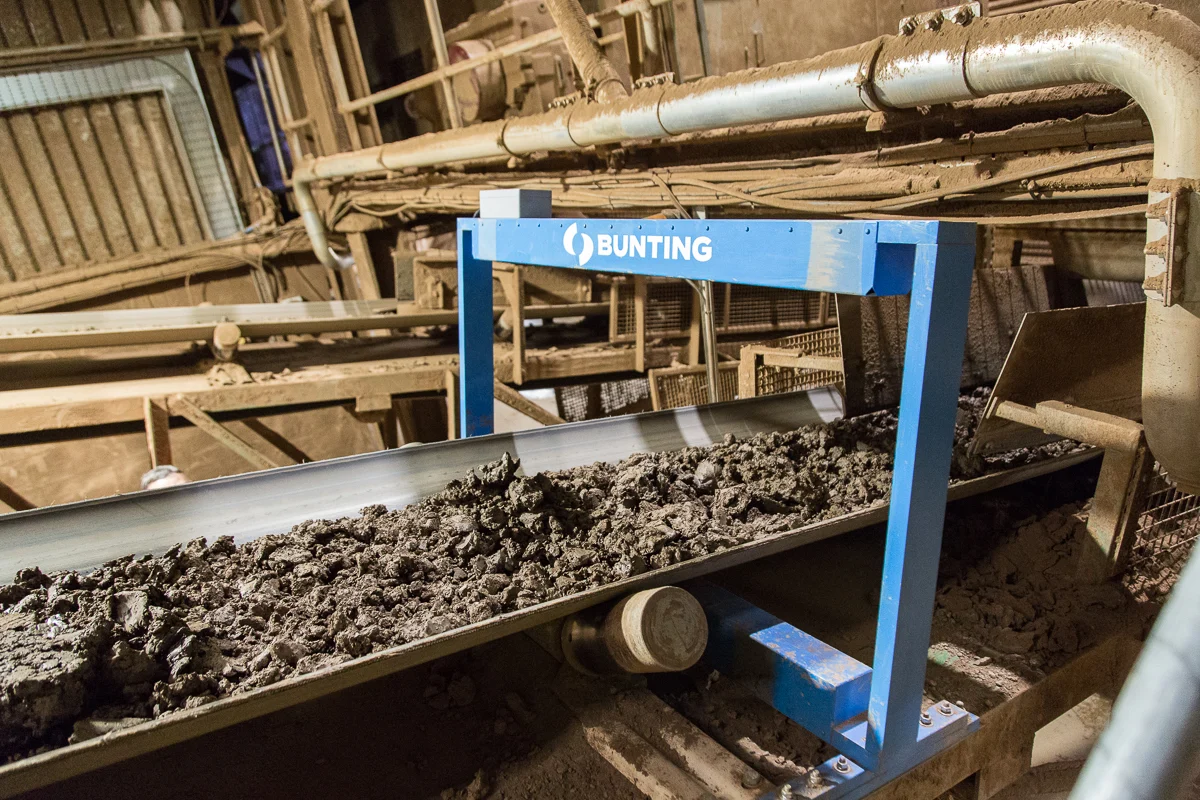
TN77 Tunnel Detector
Heavy-duty split-frame detector for locating ferrous and difficult-to-detect manganese-steel components in bulk materials.
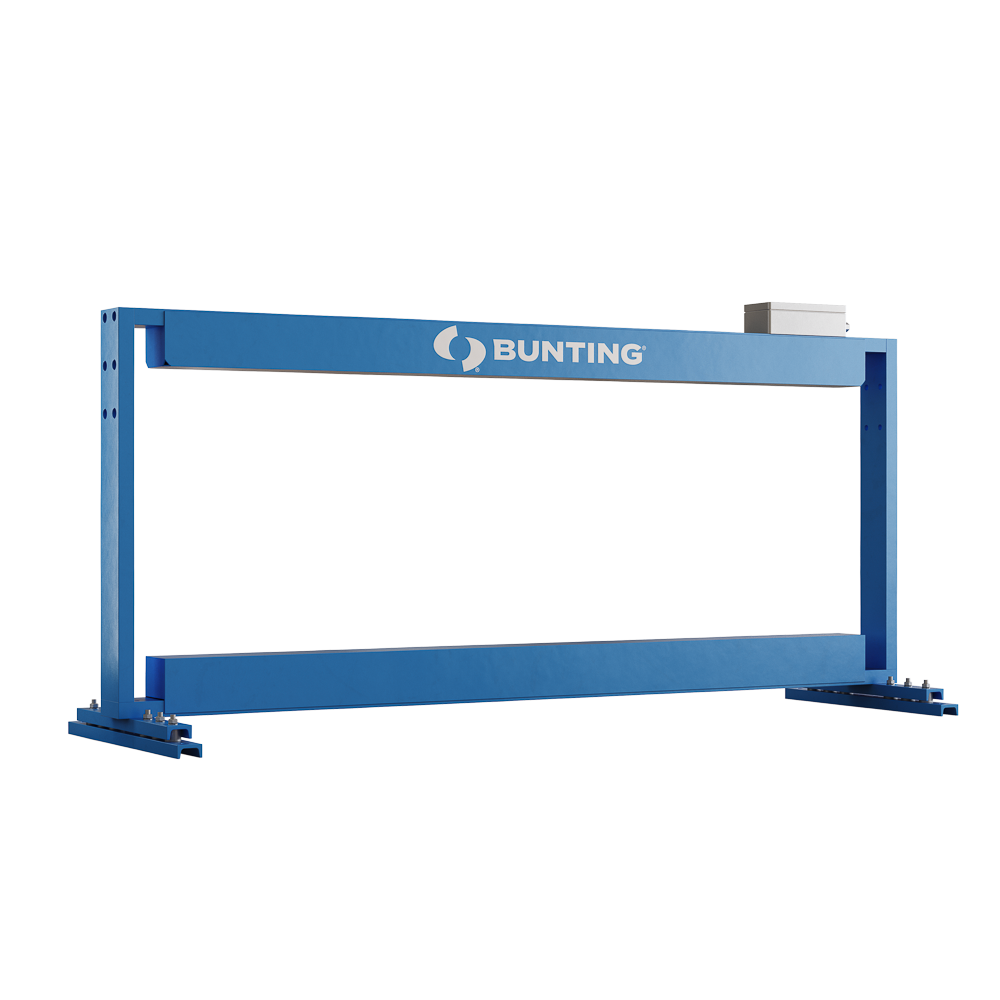
TN48 Detector
Industrial tunnel-style detection for conveyor applications requiring reliable tramp-metal identification and equipment protection.
| Detector | Installation | Typical materials | Primary objective |
|---|---|---|---|
| Performer Pro UBL | Beneath nonmetallic belt or vibratory chute | Sand, gravel, coal, biomass, wood chips, cullet and bulk materials | Detect tramp metal without surrounding the complete conveyor |
| TN77 | Split tunnel surrounding conveyor burden | Crushed stone, limestone, gypsum, minerals and aggregate | Locate ferrous and manganese-steel components before crushers or screens |
| TN48 | Industrial conveyor inspection point | Heavy bulk and process materials | Protect downstream machinery and reduce unplanned downtime |
Specialized inspection systems
Continuous Web Detection & Combined Checkweighing
Bunting also provides specialized systems for inspecting continuous web products and combining metal detection with high-accuracy weight verification.
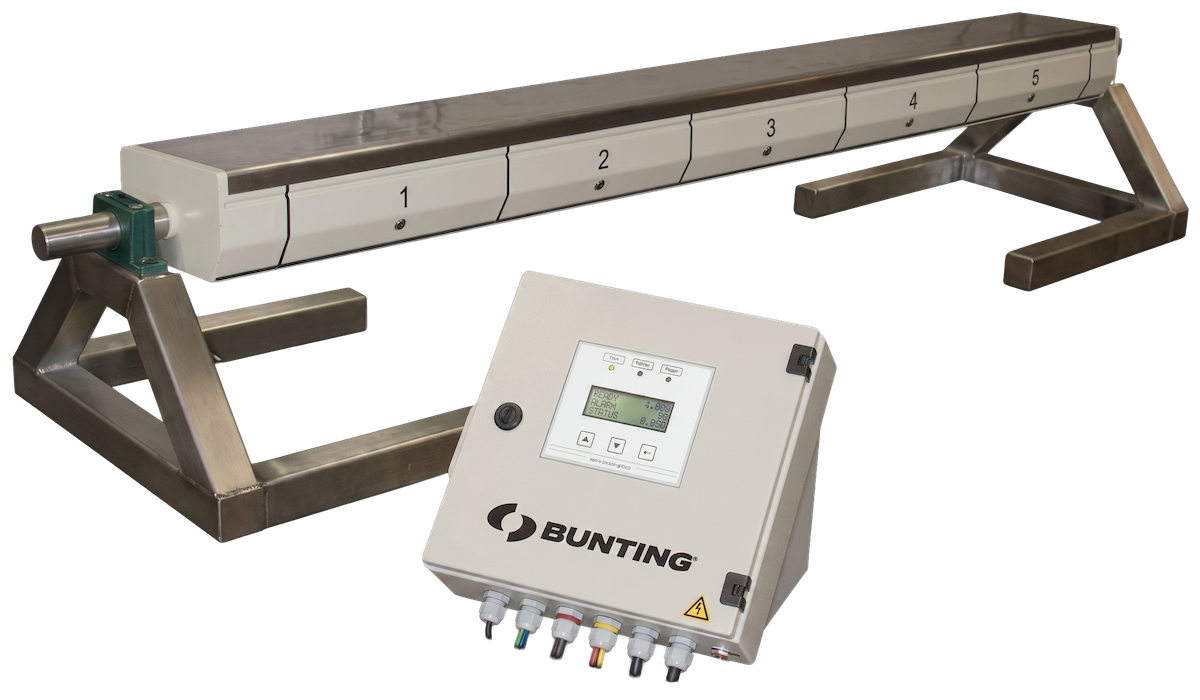
Performer Web Pro D
Metal detection for applicable continuous sheets, webs and roll-fed products where inspection must occur across the moving material width.
Performer Weigh
A fully integrated metal detector and high-accuracy EMFR weigh cell for single-point contaminant inspection and package-weight verification.
*Actual rate depends on product size, shape, behavior, speed and operating conditions.
Detector controls and data
Controls That Support Reliable Inspection
The appropriate electronics package depends on the detector, application complexity, reporting requirements and desired level of plant integration.
07 Electronics
Advanced touchscreen controls for demanding food, pharmaceutical and multi-product inspection applications.
05 Electronics
Streamlined controls for reliable operation where advanced networking and extensive product storage are not required.
Critical control points
Where Should a Metal Detector Be Installed?
The best inspection point depends on the contamination risk, process configuration and whether the goal is equipment protection, intermediate control or final product release.
Inspect incoming raw materials before contamination enters the main process.
Detect metal introduced through equipment wear or processing damage.
Inspect powders and ingredients within pressure or vacuum conveying lines.
Inspect the combined product after multiple ingredients have been processed.
Use gravity-fall inspection immediately before bags, boxes or containers are filled.
Inspect finished packages using a tunnel detector and conveyor reject system.
Inspect sauces, liquids, pastes and slurries before filling or further processing.
Identify damaging tramp metal in heavy bulk material before vulnerable equipment.
Application review process
Selecting the Right Metal Detection System
CMT and Bunting evaluate the complete application rather than selecting a detector from sensitivity values alone.
Define the Product
Product form, dimensions, bulk density, moisture, temperature, conductivity, package type and expected product effect.
Review the Process
Gravity flow, pneumatic conveying, pumped pipeline, belt conveyor, vibratory chute, continuous web or packaged-product inspection.
Define the Inspection Goal
Product quality, final inspection, regulatory control, contamination investigation or protection of downstream equipment.
Engineer the Complete System
Detector aperture, electronics, metal-free zone, reject device, confirmation, collection bin, controls and surrounding equipment.
Frequently asked questions
Industrial Metal Detection FAQs
What types of metal can an industrial metal detector detect?
Properly selected industrial metal detectors can detect ferrous metals, non-ferrous metals such as aluminum or brass, and stainless steel. Actual sensitivity depends on the metal type, contaminant orientation, aperture size, product effect and process conditions.
What is the difference between a magnet and a metal detector?
A magnetic separator physically captures ferrous and magnetically susceptible contamination. A metal detector senses ferrous, non-ferrous and stainless-steel contaminants and activates an alarm or reject device.
What is product effect?
Product effect is the signal created by the product itself due to moisture, salt, conductivity, temperature or other properties. Modern controls learn and compensate for product effect so the detector can distinguish normal product from metal contamination.
Can a metal detector inspect pneumatically conveyed powder?
Yes. Pneumatic systems such as the Performer Elite Food P inspect powders and granular ingredients moving through pressure or vacuum conveying lines and can automatically reject contaminated material.
Which metal detector is used for free-falling powder?
Gravity-fall systems such as the Performer Elite GF or Performer Pro GFA are designed for free-falling powders, granules and dry bulk ingredients in vertical process lines.
Can a metal detector inspect liquids, sauces or slurries?
Yes. Performer Elite PL inline systems detect and separate metal from pumped liquids, sauces, soups, dairy products, pastes and other viscous products.
What is a metal-free zone?
A metal-free zone is the required clearance around a detector aperture where nearby conductive or moving metal could otherwise interfere with reliable operation. The necessary clearance depends on the detector and installation.
How is contaminated product rejected?
Reject methods include flaps, cowbells, diverters, air blasts, pusher arms, retracting belts, belt stops and alarm systems. Selection depends on the product, speed, package, line configuration and acceptable product loss.
Can Bunting metal detectors be retrofitted into an existing line?
Many detectors can be incorporated into existing gravity lines, pneumatic systems, conveyors and pipelines. Split detectors such as the Performer Pro DT may simplify installation around selected existing conveyors or chutes.
Does CMT provide onsite support in North and South Carolina?
Yes. Carolina Material Technologies provides local application support across North Carolina and South Carolina, including site visits to review the product, process, detector location, reject system and surrounding material-handling equipment.
Start with the product and process
Build a Metal Detection System Around Your Application
Send CMT your product information, throughput, line size, package dimensions, process arrangement, sanitation requirements and inspection objective. We will help identify the appropriate Bunting detector, controls, reject system and installation arrangement.