
Russell Finex Separation Equipment
Liquid-Solid Separators
Recover valuable solids, dewater slurries, and reduce the solids carried into downstream processes.
Carolina Material Technologies helps you evaluate the Russell Liquid Solid Separator™ for continuous separation of solids from liquid streams. Start with the material you want to recover, the liquid quality you need, and your production rate.
Define the result you need
Turn a mixed stream into useful outputs
Your process may prioritize the recovered solids, the separated liquid, or both. Defining those goals helps establish the right screen and operating conditions.
Recover Useful Solids
Capture material that would otherwise leave with a liquid stream. Evaluate the recovered material against your requirements for reuse or further processing.
Dewater Retained Material
Separate liquid from retained solids to support handling and subsequent processing. The achievable moisture content depends on the material and setup.
Reduce Downstream Solids
Remove screenable solids before the next process stage. Define acceptable solids carryover and assess how separation fits the rest of the system.
Screen-based separation with centrifugal assistance
How the Russell Liquid Solid Separator works
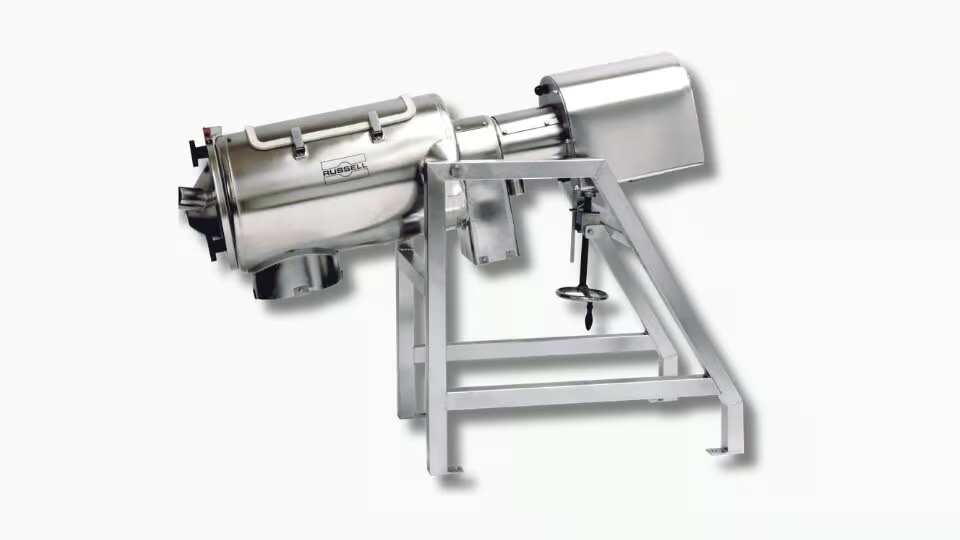
A cylindrical mesh basket works with a rotating paddle assembly to separate the incoming slurry into a liquid stream and retained solids.
1. Introduce the Slurry
Material enters at the lower end of the machine by gravity feed or a suitable pump arrangement, then moves into the mesh basket.
2. Separate Through the Mesh
The rotating paddles provide centrifugal assistance to move liquid through the mesh. Solids retained by the selected aperture remain inside the basket.
3. Discharge the Solids
A helical scroll on the paddle assembly conveys retained solids toward the oversize outlet, providing a separate discharge from the liquid stream.
Equipment demonstration
See liquid-solid separation in action
Explore the Russell Finex demonstration, then discuss the screen aperture, feed conditions, and separation targets for your own material.
Watch the separator video on YouTube →Applications to evaluate
Separate solids from production and recovery streams
The separator can be evaluated for soft and fibrous solids as well as other screenable material. Particle shape, concentration, and liquid behavior affect performance.
Dairy Processing
Evaluate curd recovery from whey and similar duties. Establish the particle sizes to retain and the requirements for both recovered solids and liquid.
Food & Beverage
Applications include vegetable processing, cider, and starch liquor. Review ingredient recovery, liquid quality, and cleaning requirements.
Industrial Liquid Streams
Consider latex emulsions, fibrous streams, and wastewater containing screenable solids. Identify the value of recovery and the needs of downstream treatment.
Match the setup to the separation
Balance throughput and solids dryness
Machine angle and an optional variable-speed arrangement provide ways to tune the separation. The best setting depends on your feed and the relative importance of throughput, solids recovery, and discharged moisture.
A representative trial should measure both output streams against your process requirements.

Configuration details to review
- Mesh aperture and screen construction
- Machine inclination and speed adjustment
- Optional spray bars to help keep the mesh clear
- Surface finish and cleaning access
- Motor selection for the installation environment
- Feed, liquid outlet, and solids collection arrangements
Application review
What we need to select your separator
Share a description of the process and the following details to help CMT assess the next step with Russell Finex.
Feed Characteristics
- Material name and composition
- Normal and peak flow rates
- Solids concentration and particle sizes
- Viscosity and temperature
Separation Targets
- Solids to recover or remove
- Acceptable solids in the liquid outlet
- Target moisture in recovered solids
- Planned use of each output stream
Installation Requirements
- Gravity or pumped feed
- Available space and discharge heights
- Cleaning and contact-material requirements
- Utilities and process controls
Liquid-solid separation FAQs
What determines which solids are retained?
The mesh aperture is a key selection factor. Particle size, shape, flexibility, and behavior under operating conditions also affect retention. Testing helps confirm the result for your material.
How dry will the discharged solids be?
There is no single moisture result for every application. Material characteristics, feed conditions, mesh, machine angle, and speed affect dewatering. Specify the moisture target and verify it with a representative trial.
Can the separator be gravity fed?
Yes. The equipment can receive a gravity-fed or pumped stream with a suitable installation. Review available head, feed consistency, and outlet arrangements during selection.
Is this the same as a self-cleaning liquid filter?
The equipment serves different separation duties. The Liquid Solid Separator is designed for continuous solids separation and recovery from liquid streams. Self-cleaning liquid filters are another option for removing unwanted oversize from liquids and pastes. The feed and desired outputs determine the appropriate choice.
Does separation make wastewater ready for discharge?
Removing screenable solids is one treatment step. The liquid outlet may require additional treatment, depending on its remaining constituents and the destination of the stream.
Can we test our material before selecting equipment?
Ask CMT about arranging an application trial with Russell Finex. Provide representative feed material and define the required flow, solids recovery, liquid quality, and discharged moisture so the trial addresses your production goals.
Explore related equipment
Self-Cleaning Liquid Filters
Evaluate enclosed filtration for oversize removal from liquids and pastes.
Explore Liquid Filters →Grading Sieves
Explore vibratory separators for particle-size classification and suitable wet separation duties.
Explore Grading Sieves →Russell Finex Equipment
Compare screening, separation, and filtration options for your process.
View the Equipment Range →What do you need to recover?
Tell us about your liquid stream, the solids it contains, and the result you need. CMT can help you evaluate the equipment and testing needed to move forward.