
Specialty Bulk Material Valves
Some bulk material handling applications require more than a conventional slide gate, butterfly valve or standard diverter. Carolina Material Technologies supplies purpose-built double dump valves, fill/pass scale diverters and tube diverter valves for difficult discharge, weighing, batching and specialized material-routing applications.
Sometimes the “normal” valve is the wrong valve.
Specialty valves become valuable when the process has a requirement that a standard component does not address well—large particles that jam a rotary airlock, abrasive product that causes excessive wear, multiple weighed hoppers on one conveying line or routing that benefits from a direct tube-to-outlet material path.
Three solutions for three very different problems
These components are grouped together because they solve specialized bulk handling problems—not because they perform the same function. The correct starting point depends on whether the process needs difficult-material discharge, fill/bypass functionality or specialized product routing.

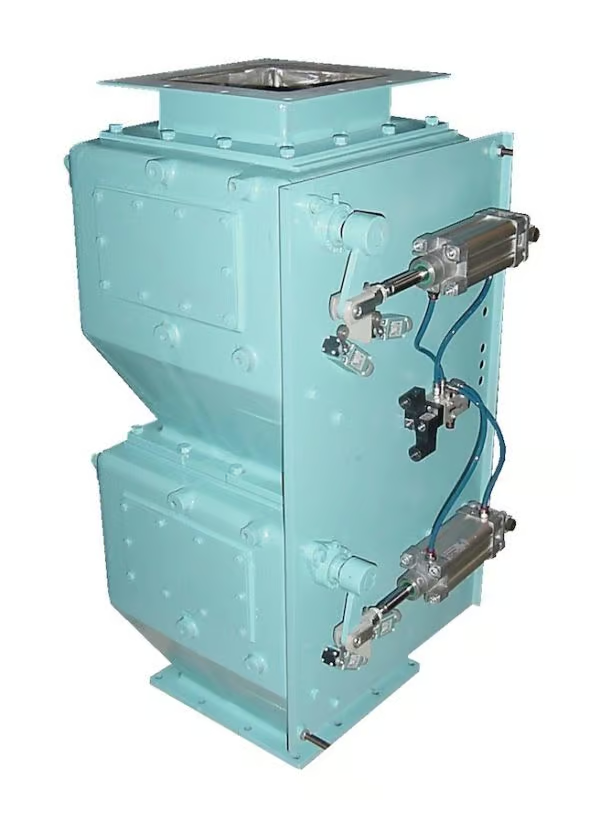
Double Dump Valves
Two alternating flap chambers discharge material in batches while maintaining separation across the valve. Double dumps are particularly useful with large, fibrous or abrasive materials that can create problems in conventional rotary valves.
- Dust collector and gravity hopper discharge
- Large, fibrous and abrasive materials
- Low-pressure applications
- Electric, pneumatic or counterweight operation
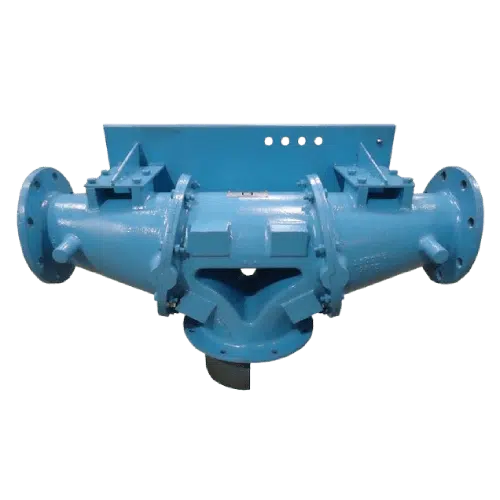
Scale / Fill-Pass Diverter Valves
A fill-pass valve allows material to continue through the main conveying line or be diverted downward into a hopper, silo or weighing vessel. Multiple valves can be arranged in series to serve several destinations from one conveying line.
- Multiple hoppers on one conveying line
- Weigh and batching systems
- Fill or bypass operation
- Dedicated displaced-air exhaust connection
Tube Diverter Valves
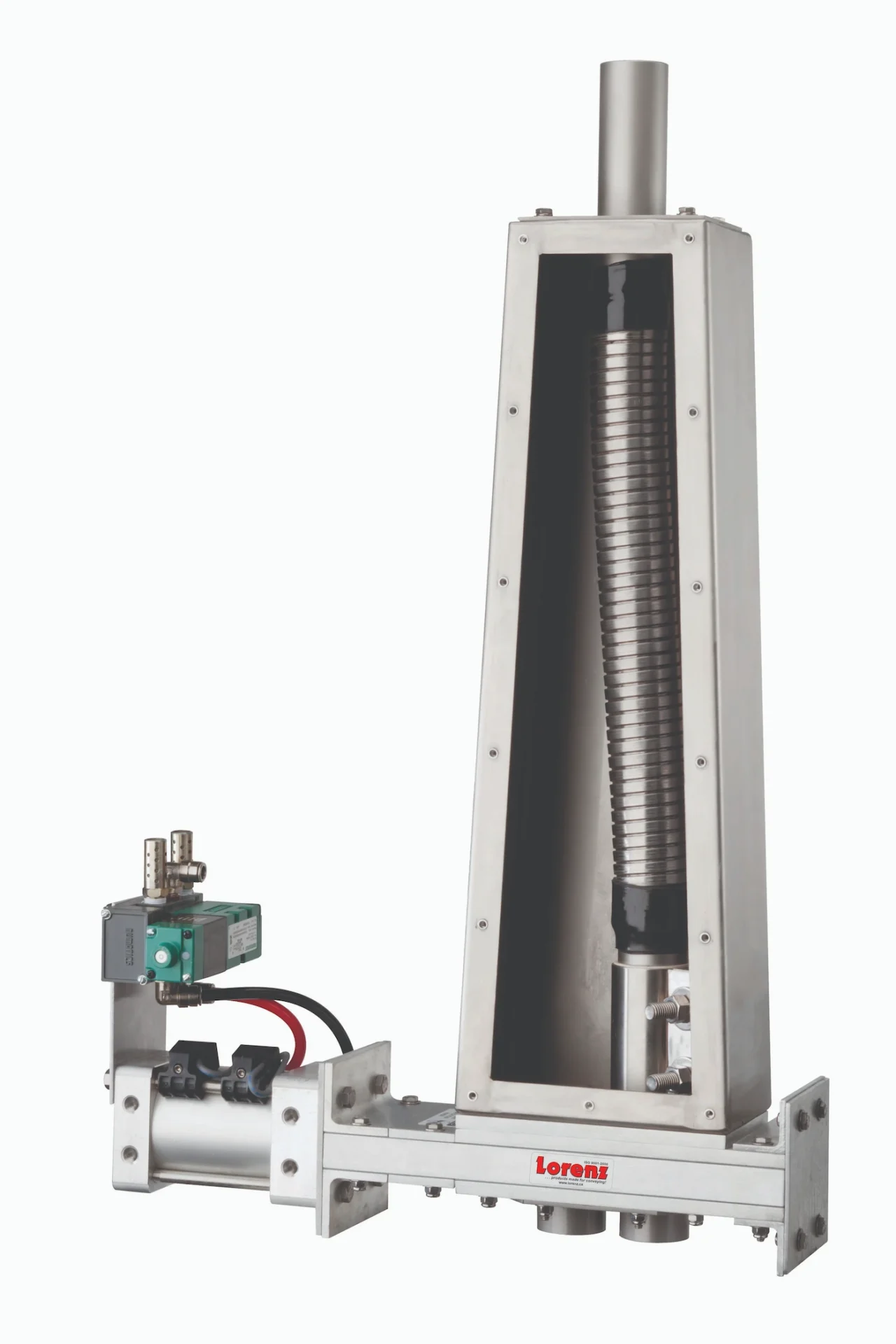
Tube-style diverters route material by moving an internal conveying tube between outlets rather than directing product across a common flap or plug chamber. This can provide a direct, controlled flow path to the selected destination.
- Direct inlet-to-selected-outlet flow path
- Inactive outlet separated from primary material stream
- Useful for contamination-sensitive routing
- Alternative to conventional flap and plug diverters
Which specialty valve solves the problem?
Start with what the process actually needs to accomplish rather than selecting a valve by appearance or product category.
| Process Problem | Typical Starting Point | Why | Important Consideration |
|---|---|---|---|
| Large particles are jamming a rotary airlock | Double dump valve | Alternating flap chambers can pass larger solids without forcing the material through close rotor clearances. | Double dumps are primarily low-pressure discharge devices, not direct substitutes for every rotary airlock application. |
| Abrasive material is rapidly wearing a rotary valve | Double dump valve | The alternating flap arrangement eliminates the close rotor-to-housing clearances found in a rotary airlock. | Actual pressure differential, material behavior and cycle requirements still need to be reviewed. |
| One conveying line needs to fill several hoppers | Scale / fill-pass diverter | Material can either continue downstream or be diverted downward into the selected vessel. | Controls, hopper venting, weighing sequence and available installation space should be evaluated. |
| A weigh hopper must be filled and then bypassed | Scale / weigh diverter | Specifically configured around hopper filling plus straight-through bypass operation. | Valve timing should be coordinated with the weighing and batching sequence. |
| Product should travel through a dedicated path to each outlet | Tube diverter | An internal conveying tube aligns between the inlet and selected outlet rather than routing product through a shared chamber. | Material properties, conveying conditions, line size and switching requirements should all be reviewed. |
| Carryover into the inactive outlet is a concern | Tube / SlideFlex diverter | The tube architecture provides a defined material path toward the active outlet and separates the inactive destination. | For broader contamination-sensitive pneumatic conveying applications, compare all diverter technologies before selection. |
| General pneumatic conveying line routing | Flap, plug, WYE or conveying diverter | Conventional conveying diverters are usually the better starting point for general two-way product routing. | See our dedicated Industrial Diverter Valve page. |
Double Dump Valves
A double dump uses two flap gates arranged vertically in separate chambers. The flaps cycle alternately so material moves downward in batches while one chamber remains closed as the other dumps.
Double dump valve vs. rotary airlock
Double dumps and rotary airlocks can appear in similar positions below hoppers and dust collectors, but they operate very differently and should not be treated as interchangeable components.
Usually preferred when...
The process needs continuous material discharge, controlled feeding, or an airlock suitable for a pneumatic conveying pressure differential.
Explore Rotary Airlocks →Worth considering when...
Large pieces, fibers, stringy material or severe abrasion would tend to jam a rotor or create unacceptable wear—and the process can operate within the double dump's application envelope.
Compare the TwoScale / Fill-Pass Diverter Valves
A scale diverter—also called a weigh or fill/pass diverter—is especially useful when several hoppers or weighing vessels must be filled from a common conveying line.
Instead of simply choosing between two branch lines, the valve can either allow material to continue through the main conveying line or redirect it downward into the vessel below.
Tube Diverter Valves
A tube diverter takes a different approach to changing material destinations. Instead of using a flap or rotating plug inside a common material chamber, the conveying tube itself moves into alignment with the selected outlet.
This creates a defined inlet-to-outlet path and can be especially useful where product separation, clean routing or minimizing carryover into the inactive destination is important.
Where specialty valves earn their place
These technologies are typically selected when a particular process requirement makes a conventional valve or rotary airlock less suitable.
Dust Collector Discharge
Double dumps can discharge collected material while reducing jamming problems associated with large or difficult solids.
Fibrous Products
Fibers, stringy products and irregular pieces can create a difficult interface with conventional rotary-airlock clearances.
Abrasive Materials
Where rotor and housing wear would be excessive, an alternate low-pressure discharge method may provide better service life.
Multiple Weigh Hoppers
Fill/pass diverters make it possible to serve multiple batch or weigh vessels from a common conveying line.
Sequential Ingredient Filling
A series of fill/pass valves can distribute dry ingredients to multiple process destinations.
Contamination-Sensitive Routing
Tube diverters can provide a distinct material path where separation of the inactive destination is a major consideration.
Not sure which valve you need?
That is normal with specialty equipment. Tell us the problem you are trying to solve rather than starting with a valve model. We can work backward from the material, equipment and process conditions to determine the right technology.
Send Us Your Application →Specialty Bulk Material Valve FAQ
What is a double dump valve?
A double dump uses two alternating flap chambers to discharge bulk material in batches while helping maintain separation across the valve. It is primarily used for low-pressure bulk-solids discharge.
When should I use a double dump instead of a rotary airlock?
A double dump is worth evaluating where large particles, fibrous products or severe abrasion would tend to jam or rapidly wear a conventional rotary valve and the process conditions are appropriate for the double dump design.
Can a double dump be installed under a dust collector?
Yes. Dust collectors, cyclones and gravity-feed hoppers are common locations for double dump valves, especially where the collected material is difficult for a conventional airlock.
What is a fill-pass or scale diverter?
It is a specialty conveying valve that allows material either to pass through the main conveying line or divert downward into a hopper, silo or weighing vessel.
Can one conveying line fill several hoppers?
Yes. Multiple scale / fill-pass diverters can be arranged in series, allowing selected hoppers or weighing vessels to be filled from one common conveying line.
What is a tube diverter?
A tube diverter changes product destination by aligning an internal conveying tube with the selected outlet. This creates a defined inlet-to-outlet flow path rather than routing material through a common flap or plug chamber.
When should I consider a tube diverter?
Tube diverters are worth evaluating where a direct material path, separation of the inactive outlet or reduced product carryover is especially important.
Is a tube diverter the same as a standard pneumatic conveying diverter?
No. It performs the same general routing function, but uses a different internal architecture. Standard flap, plug, WYE and other options are covered on our Industrial Diverter Valve page.
Compare the other valve families
Have an unusual valve or material-handling problem?
Send us the process conditions and tell us what is not working. Whether the problem is jamming, abrasion, hopper filling, product carryover or specialized material routing, we can help determine whether a specialty valve—or a different flow-control technology entirely—is the better solution.