
Industrial Mixers & Blenders for Liquids, Pastes, Slurries, Powders & Dry Solids
Carolina Material Technologies helps manufacturers select, size, and integrate industrial mixers and blenders for demanding process applications — from dry powder blending and liquid dispersion to high-viscosity pastes, adhesives, coatings, sealants, resins, and engineered mixing systems.
Mixing equipment is not one-size-fits-all.
The right mixer depends on your material behavior, viscosity, batch size, shear requirement, heat transfer needs, discharge method, cleaning requirements, and upstream/downstream process. We help plants in North Carolina and South Carolina evaluate the complete application — not just the mixer.
Through Reynolds Industries, located in Fort Mill, SC, CMT supports industrial mixing applications with equipment manufactured by a team offering in-house engineering, machining, fabrication, assembly, electrical, controls, and testing capabilities.
Common Applications
Ribbon & Paddle Blenders for Powders, Granules & Bulk Solids
Ribbon and paddle blenders are critical for dry solids processing when a plant needs repeatable batch blending of powders, granules, pigments, resins, fertilizers, ceramics, animal feed ingredients, and other dry bulk materials.
Ribbon blenders use inner and outer helical agitators to move material in opposing directions, creating axial and radial movement through the trough. Paddle-style designs can be preferred for faster blending, more fragile products, lower shear, or applications where liquid addition and reduced product degradation are important.
- Dry powder and granular material blending
- Minor ingredient distribution and color/pigment blending
- Liquid addition through spray bars or nozzles
- Heating or cooling jacket options
- Load cells for batching and formulation control
- Sanitary, stainless, carbon steel, and explosion-proof configurations


Industrial Mixing Equipment We Support
From dry solids to high-viscosity non-flowing products, CMT can help narrow the correct mixer style for your process.

Ribbon & Paddle Blenders
Batch blending for powders, granules, pigments, resins, fertilizers, ceramics, and other dry solids.
- Working capacities up to 515 ft³ standard
- Up to 1,000 ft³ available
- Spray bars, jackets, vacuum, load cells
Technical Notes
Reynolds ribbon blenders use a shallow helix design to promote left-to-right movement while reducing centrifuging. Available options include modified covers, liquid addition spray bars, 304L or 316L stainless construction, multiple discharge points, heating/cooling jackets, internal vacuum design, explosion-proof motors, VFDs, soft starts, and load cells.
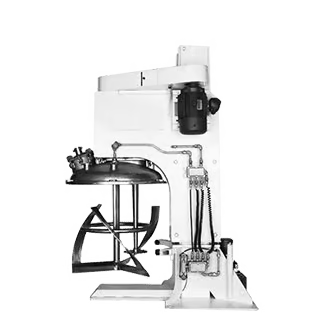
Dual Shaft Mixers
Combines low-speed batch turnover with high-speed dispersion for medium to high-viscosity materials.
- Helical blade agitator
- Offset high-speed disperser
- Vacuum, pressure, heating/cooling options
Technical Notes
Dual shaft mixers combine a low-speed helical agitator with a saw-tooth high-speed disperser. The low-speed blade promotes turnover and wall scraping while the disperser adds shear for wet-out, dispersion, and lump reduction. Options include vacuum pumps, mechanical seals, sight glass systems, cleaning nozzles, hydraulic drives, ASME vessels, and jacketed heating/cooling designs.
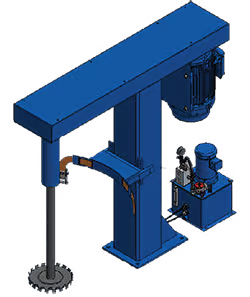
High Speed Dispersers
High-shear mixing for dissolving powders into liquids, breaking lumps, and creating homogeneous dispersions.
- Lab through production sizes
- Designs up to 300 HP
- Coatings, inks, pigments, cosmetics
Technical Notes
High speed dispersers use blade tip speed and hydraulic shear to draw powders or solids into the liquid phase. They are commonly used for coatings, inks, dyes, colorants, cosmetics, and similar dispersions. Options include multiple blade styles, hydraulic column lift, air-over-oil lift, explosion-proof construction, mechanical seals, vacuum/pressure rated lids, and traversing capability.
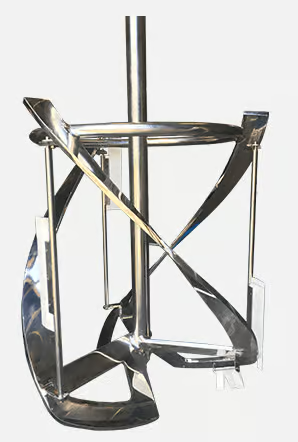
Low Speed Agitators
Designed for difficult liquid and semi-solid products requiring turnover, heat transfer, and controlled movement.
- Helical, turbine, and specialty blade options
- Vacuum to pressure designs
- Heating/cooling jacketed vessels
Technical Notes
Low speed agitators are well suited for high-viscosity, thixotropic, and varying-density materials. Reynolds designs include helical blades, rotating baffles, scraper options, CIP systems, shaft speed measurement, mechanical seals, hydraulic drives, and jacketed ASME vessel options for heat transfer applications.
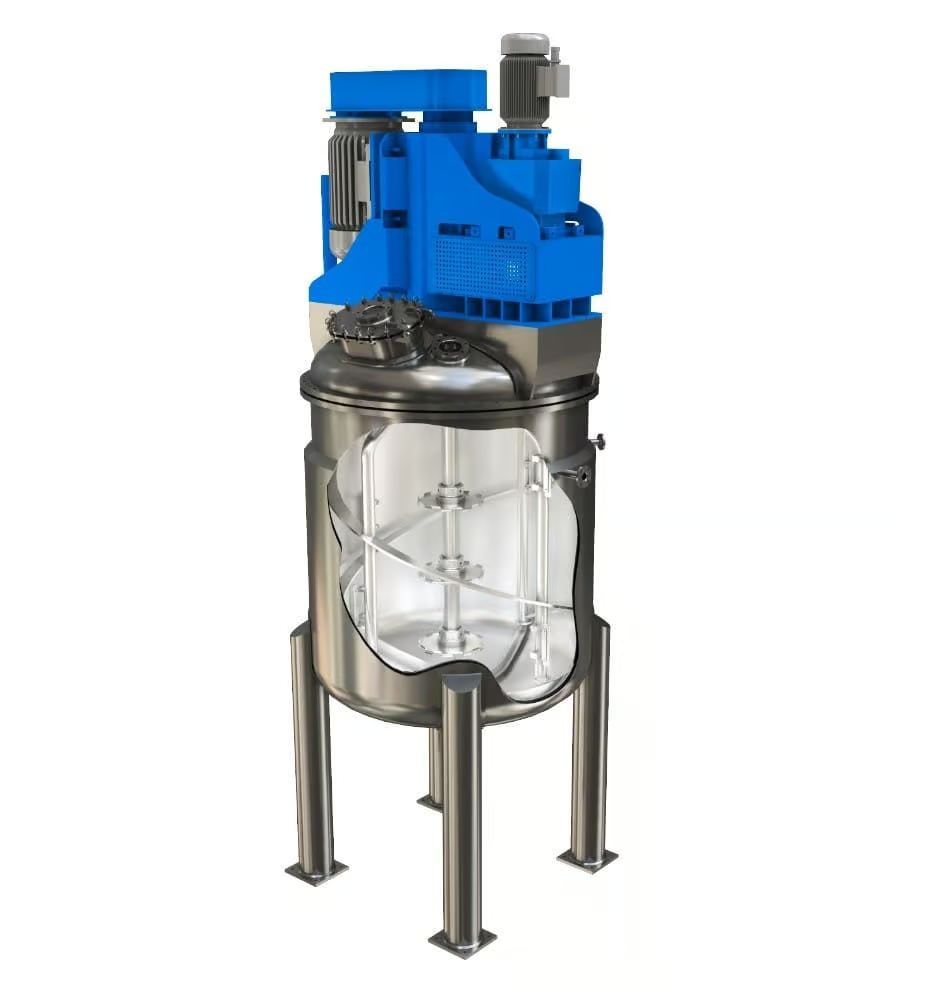
Coaxial & Multi-Shaft Mixers
For complex applications needing multiple mixing actions in one vessel — agitation, scraping, dispersion, and turnover.
- High viscosity processing
- Multiple blade configurations
- Custom vessel and control options
Technical Notes
Coaxial and multi-shaft mixers are used when one agitator cannot provide all required mixing actions. A system may combine low-speed scraping, center agitation, and high-speed dispersion to improve turnover, wall heat transfer, powder wet-out, and final product uniformity in viscous or process-sensitive batches.
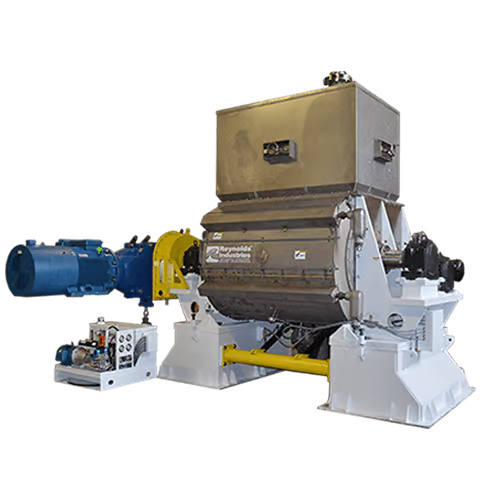
Sigma Mixers
Heavy-duty kneading and mixing for extremely viscous, dense, sticky, or plastic mass materials.
- Adhesives, hot melts, rubber, pastes
- Tilting, bottom discharge, or auger discharge
- Vacuum and jacketed designs
Technical Notes
Sigma mixers use two horizontally mounted sigma-shaped blades operating at differential speeds to create intensive kneading and mixing. They can process materials ranging from dry powders to stiff plastic masses. Options include stationary or tilting bowls, bottom discharge, mono-screw extrusion, jacketed troughs, vacuum or pressure designs, explosion-proof construction, and specialty alloys.
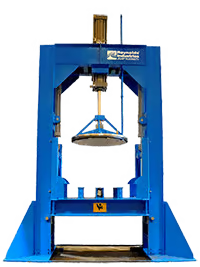
Press-Out Stations
Hydraulic discharge systems for high-viscosity or non-flowing materials that will not efficiently drain by gravity.
- Rapid advance feature
- Fixed or variable-height platforms
- Platen and seal material options
Technical Notes
Press-out stations use a hydraulic platen to discharge heavy, viscous, or non-flowing product from vessels into shipping containers, cartridges, pails, or downstream packaging. Features can include rugged steel fabrication, powerful hydraulic drives, rapid advance, pressure and platen velocity controls, gas venting, safety sensors, and pneumatic or manual seals.
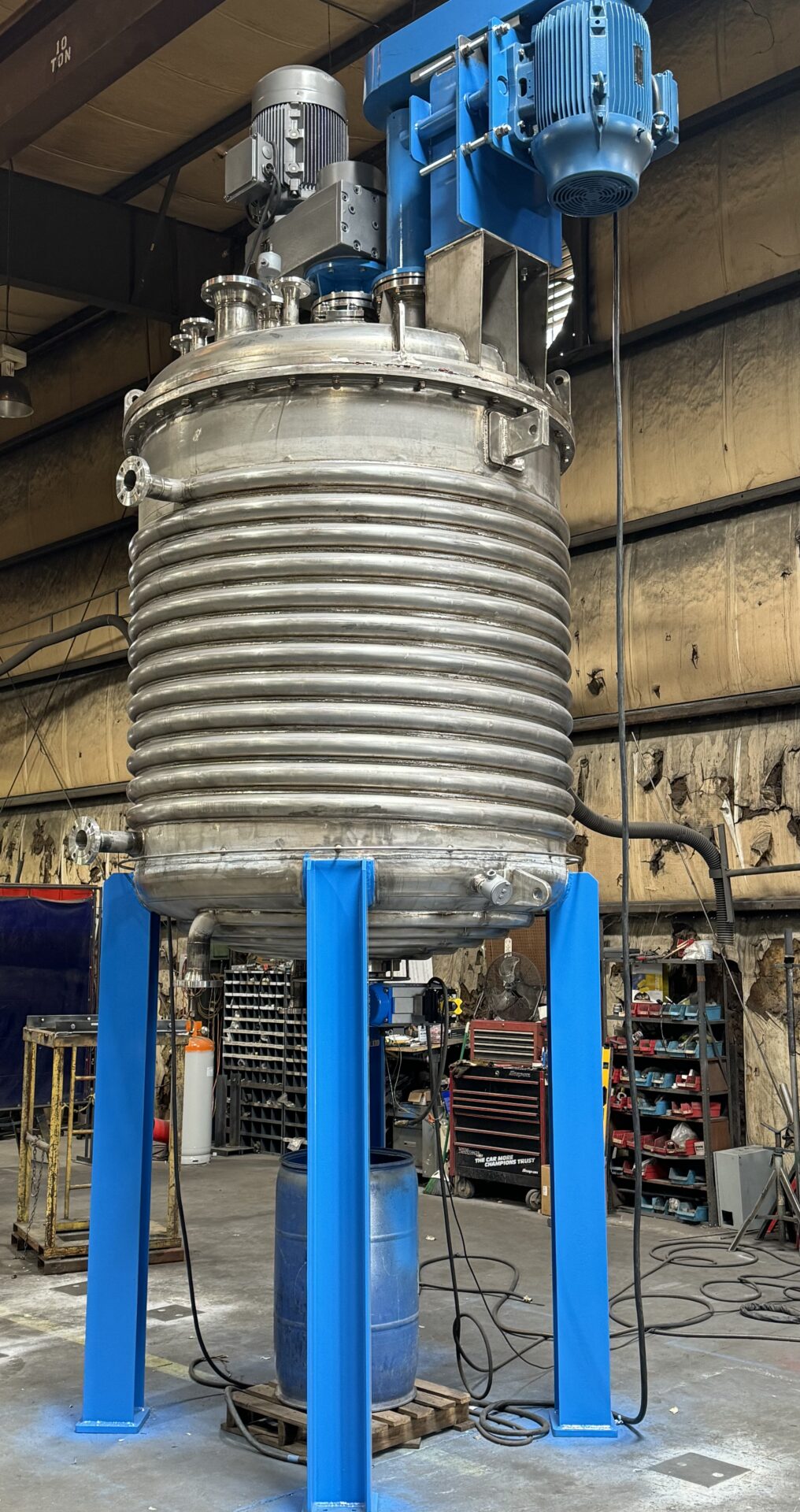
Jacketed Vessels
Heating and cooling vessels for temperature-controlled mixing, reaction, dispersion, and batch processing.
- ASME options available
- Dimple, half-pipe, or conventional jackets
- Vacuum and pressure designs
Technical Notes
Jacketed mixer vessels are used when batch temperature control is part of the process. Depending on the heating/cooling load and pressure requirements, vessels may include dimple jackets, half-pipe jackets, conventional jackets, internal temperature probes, vacuum fittings, sight glasses, spray nozzles, and multiple material inlet nozzles.

Engineered Mixer Systems
Integrated systems with mixing, weighing, batching, feeding, pumping, piping, controls, and process integration.
- Skid-mounted systems
- Manual to automated controls
- Startup and operator training support
Technical Notes
Engineered systems can include ingredient feeding, weighing, batching, mixing, pumping, solvent recovery, mezzanines, piping, wiring, controls, and process integration. Reynolds supports mechanical, electrical, controls, and process engineering, along with lab testing and scale-up support for qualifying new or existing processes.
How to Choose the Right Industrial Mixer or Blender
| Application Need | Common Mixer Choice | Key Design Questions |
|---|---|---|
| Dry powder or granular blending | Ribbon blender or paddle blender | Bulk density, friability, blend uniformity, batch size, liquid addition, discharge style, dust control |
| Powder into liquid dispersion | High speed disperser | Viscosity, lump breaking, shear requirement, powder induction rate, batch time, blade style |
| Medium to high-viscosity product | Dual shaft mixer | Turnover rate, heat transfer, vacuum, wall scraping, discharge method, horsepower |
| Very high-viscosity or non-flowing material | Sigma mixer or dual shaft mixer with press-out station | Material stiffness, kneading requirement, discharge pressure, cleanup, platen style |
| Temperature-controlled process | Jacketed mixer or vessel | Heating/cooling load, jacket type, product temperature measurement, scraper design |
| Full production line integration | Engineered mixer system | Feeding, weighing, batching, pumping, controls, safety, floor space, installation requirements |

Complete Mixing Systems, Not Just Standalone Equipment
Many mixing problems are actually system problems. Poor ingredient feeding, inaccurate batching, dusting, difficult discharge, poor temperature control, and undersized pumps can all limit mixer performance.
CMT can help evaluate the surrounding process and coordinate equipment such as bulk bag unloaders, feeders, conveyors, batching systems, tanks, pumps, dust collection, valves, controls, platforms, and discharge systems.
- Mixing, weighing, batching, and feeding
- Product pumping and transfer
- Mezzanines, piping, wiring, and controls
- Skid-mounted systems for faster installation
- Lab testing and scale-up support when required
Frequently Asked Questions
What is the difference between a ribbon blender and a paddle blender?
A ribbon blender uses helical ribbons to move material in opposing directions through a trough, making it common for dry powder and granular blending. Paddle blenders use paddles or plows to move material more aggressively or gently depending on design, and may be preferred for faster blend times, fragile materials, or liquid addition.
When should I use a dual shaft mixer?
Dual shaft mixers are commonly used when a product needs both low-speed turnover and high-speed dispersion. They are especially useful for medium to high-viscosity materials such as adhesives, sealants, coatings, pastes, plastisols, epoxies, and similar products.
When is a press-out station needed?
A press-out station is used when finished material is too viscous or non-flowing to discharge efficiently by gravity. The hydraulic platen pushes product from the vessel into containers, cartridges, pails, or downstream packaging.
Can mixers be built with heating or cooling jackets?
Yes. Jacketed vessels can be designed for heating or cooling with dimple, half-pipe, or conventional jacket styles depending on the process, pressure, temperature, and heat transfer requirements.
Can CMT help load, unload, or feed ingredients into the mixer?
Yes. CMT can help integrate mixers with upstream and downstream equipment such as screw conveyors, flexible screw conveyors, bucket elevators, bulk bag unloaders, bag dump stations, feeders, valves, dust collection, load cells, and batching controls. This is often where the biggest process improvements are found — not just inside the mixer, but in how ingredients enter, discharge, and move through the system.
Let’s review your material, batch size, viscosity, and process goals.
Send us your application details and we can help narrow the best mixer or blender style for your operation.
Helpful Details to Provide
- Material name and bulk density or viscosity
- Batch size or production rate
- Dry, liquid, slurry, paste, or high-viscosity product
- Heating, cooling, vacuum, or pressure needs
- Sanitary, stainless, XP, or special requirements