
Fox Venturi Eductors for Pneumatic Conveying
Maintenance-free conveying for powders, pellets, flakes, regrind, dust, sludge, and bulk solids — with no moving parts, no rotary airlock blowback, and fewer wear components in the product stream.
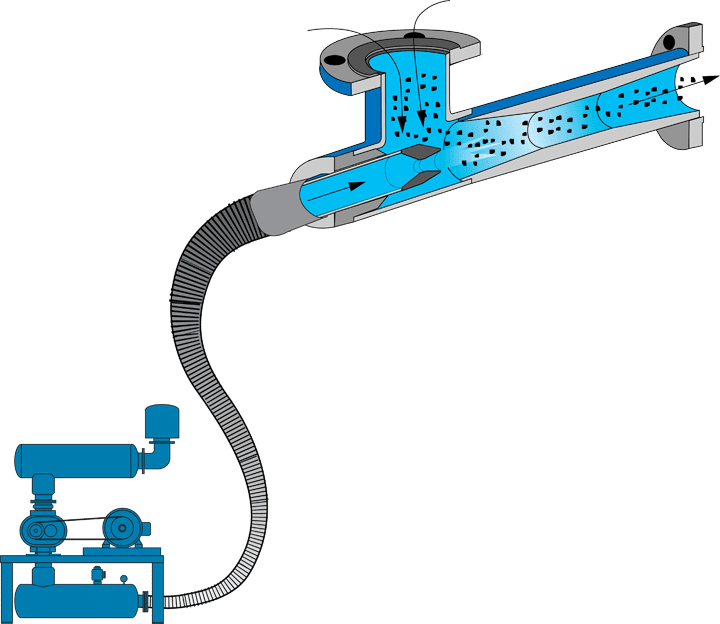
A simpler way to feed solids into a pneumatic conveying line.
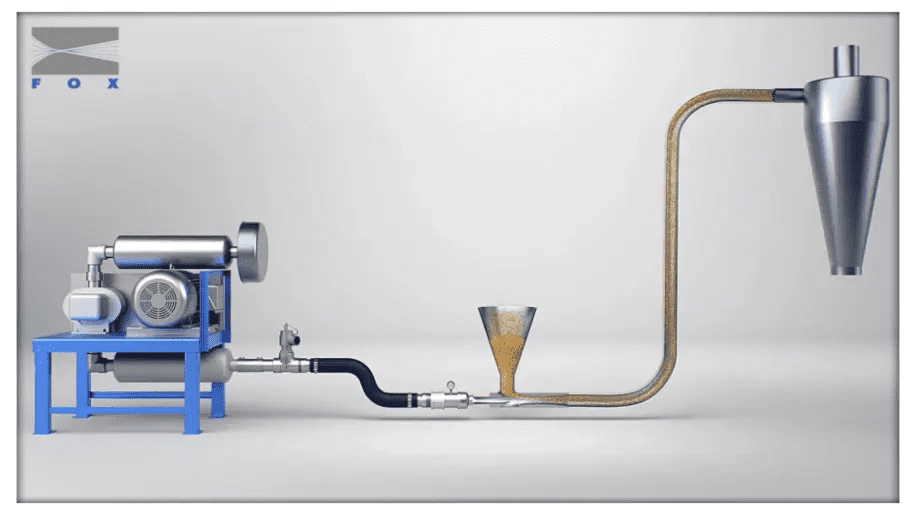
A Fox Venturi Eductor converts blower air into suction at the product inlet. Bulk material gravity-feeds into the eductor and is entrained into a positive-pressure dilute-phase conveying line.
Unlike a rotary valve, the eductor has no rotating pockets, no shaft seals, no bearings, and no metal-to-metal shearing at the inlet. This makes it especially valuable for abrasive powders, fragile products, irregular flakes, plastic regrind, dust collector discharge, and applications where leakage or blowback has become a maintenance problem.
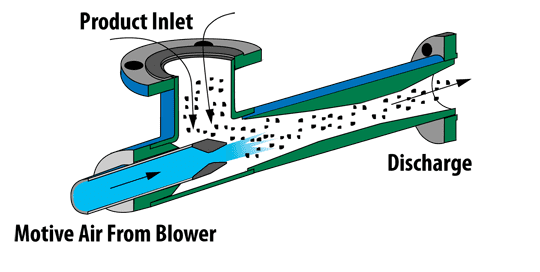
Fox Eductor System Video
This video shows the basic operating principle behind Fox eductor conveying: motive air, suction at the solids inlet, and discharge into the conveying line.
Why plants replace rotary valves with Fox eductors.
Rotary valves are common, but they can create recurring problems in positive-pressure conveying systems — especially with fine, abrasive, dusty, fragile, or irregular materials.
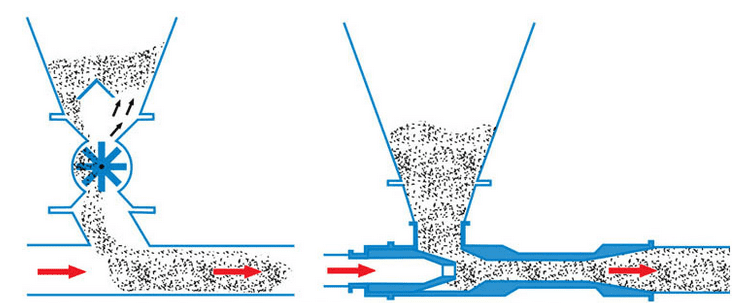
Common Rotary Valve Issues
- Blowback into hoppers, dust collectors, screeners, or feed equipment.
- Rotor, seal, bearing, and housing wear with abrasive products.
- Shearing, smearing, fines generation, or product degradation.
- Leakage and fugitive dust around the feed point.
- Ongoing spare parts, rebuilds, and maintenance downtime.
Fox Eductor Advantages
- No moving parts in the material stream.
- No rotary airlock blowback at the product inlet.
- Lower maintenance burden for difficult materials.
- Reduced product shearing and mechanical damage.
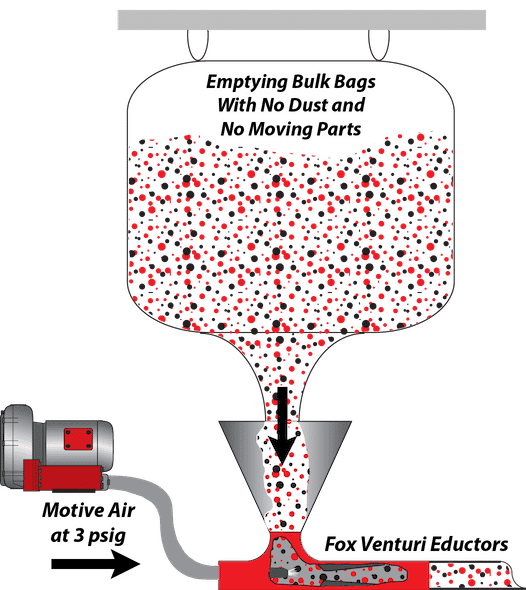
- Compact installation beneath bins, bulk bags, feeders, screeners, and collectors.
More than a component — a properly sized conveying solution.
Fox eductor performance depends on material characteristics, conveying distance, vertical lift, line size, elbows, destination pressure, blower selection, and the equipment feeding the eductor.
Material Review
Bulk density, particle size, temperature, abrasiveness, moisture, flowability, fragility, and required rate are reviewed before sizing.
Eductor + Blower Sizing
The eductor is matched to the motive air source, line size, conveying distance, bends, and required solids flow rate.
System Integration
Carolina Material Technologies can help integrate the eductor with hoppers, transitions, bulk bag unloaders, feeders, dust collectors, receivers, and controls.
Where Fox eductors fit in your plant.
Eductors are often installed directly beneath process equipment where solids discharge by gravity and need to be conveyed cleanly to another point in the plant.
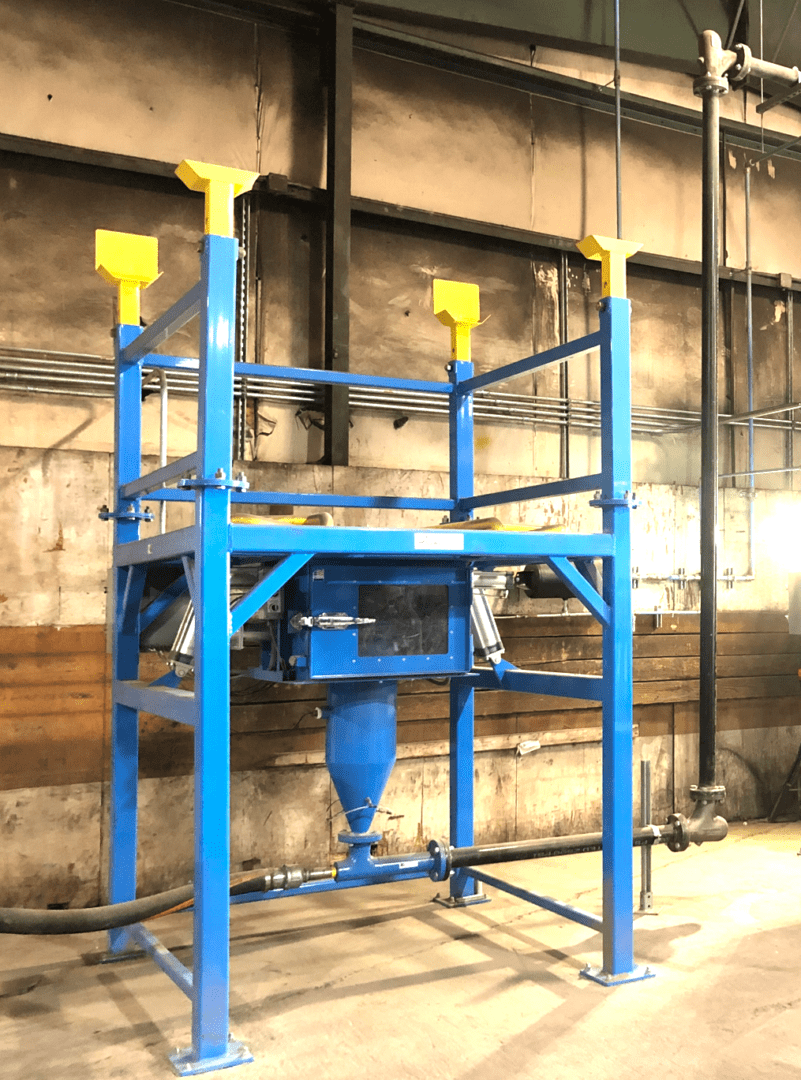
Bulk Bag Unloaders
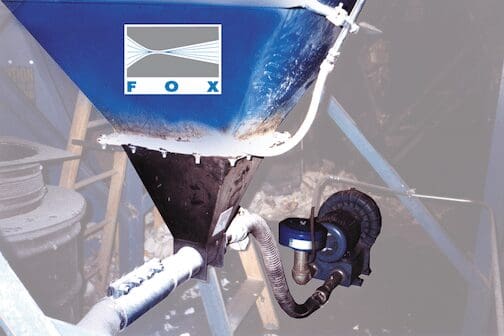
Convey powders, pellets, and additives from bulk bag dischargers without adding a rotary airlock below the unloader.
Dust Collectors & Baghouses
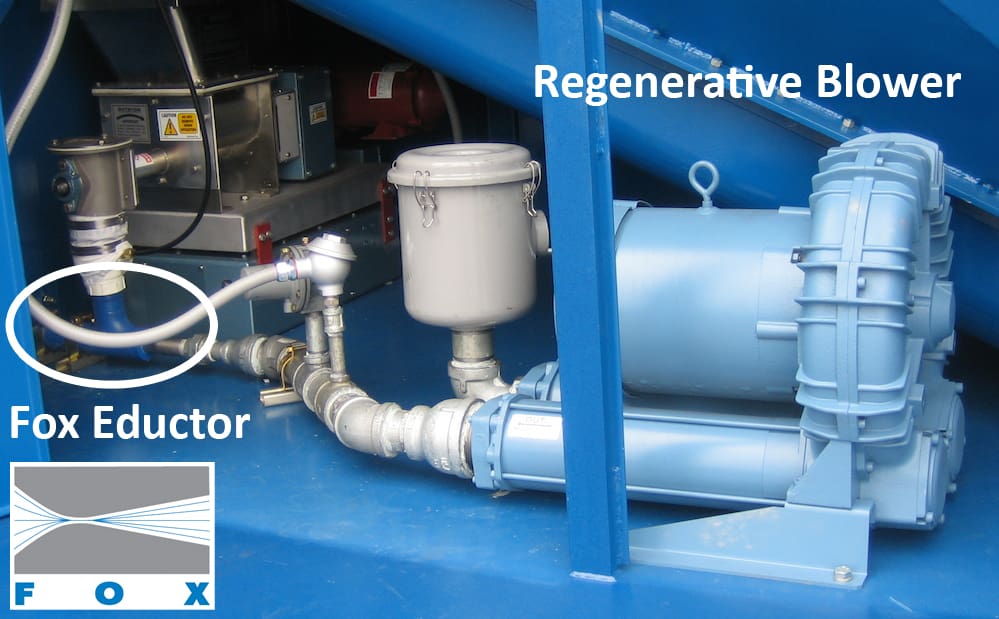
Move collected dust or reclaim valuable product while reducing leakage, screw conveyor maintenance, and fugitive dust.
Screw Feeders
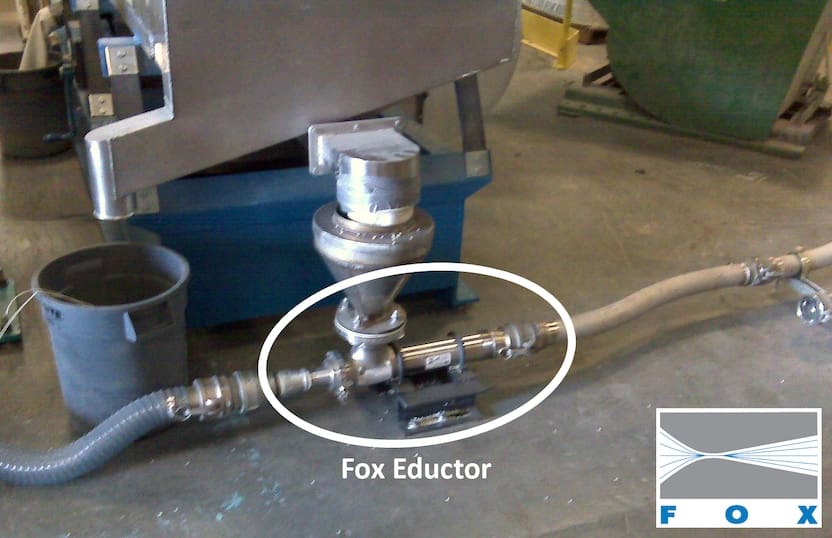
Use a screw feeder for accurate solids dosing, then let the Fox eductor entrain the metered material into the conveying line.
Screeners & Classifiers
Convey overs, unders, reclaim, fines, or product discharge from low-clearance equipment without airlock blowback.
Dried Sludge & Environmental
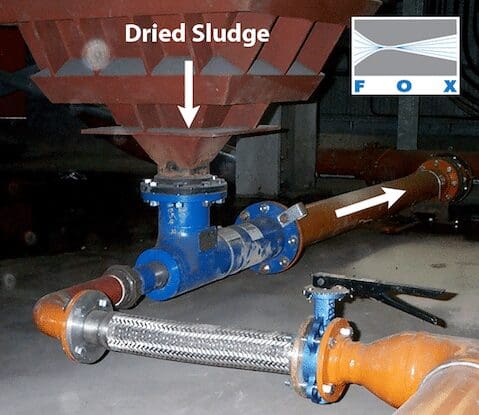
Reliable solids conveying for dried sludge, sorbents, activated carbon, lime, limestone, ash, and environmental injection systems.
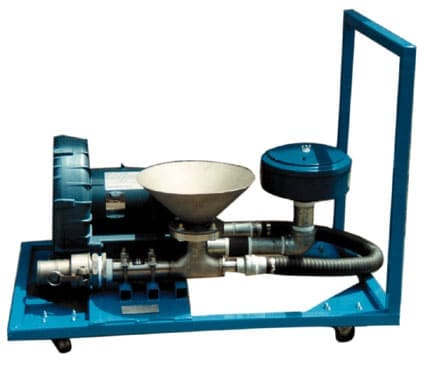
Custom & Mobile Systems
Compact blower/eductor assemblies can be skid-mounted, cart-mounted, or integrated into a larger process system.
Matched motive air matters.
Most Fox solids conveying eductors are driven by a dedicated blower rather than high-pressure plant compressed air. The blower is selected to match the eductor, material, line size, conveying distance, and destination.
- Rotron side-channel blowers for compact, lower-pressure applications.
- Positive displacement blower packages for higher rates or longer distances.
- Inlet filters, silencers, relief valves, check valves, gauges, and controls.
- Conveying line, wide-radius bends, diverters, receivers, and custom transitions.
Designed around your material and process.
Standard Solids Conveying Eductors
For powders, granules, pellets, flakes, and free-flowing bulk solids fed by gravity into dilute-phase pneumatic conveying lines.
Enlarged Suction Port Eductors
Useful for flakes, regrind, shredded materials, dust collector outlets, and equipment with large or rectangular discharge openings.
Ceramic-Lined Eductors
For abrasive products such as filled plastic pellets, minerals, ash, cement, silica, grit, or other erosive solids.
Sanitary / Food-Grade Eductors
Polished stainless designs for food and dairy applications where cleanability, inspection, and reduced contamination risk are critical.
Rotary Valve Venting Eductors
Used to pull blowback air and suspended solids away from rotary valves and send them to a bin, silo, dust collector, or process destination.
Slurry Eductors
For mixing or conveying solids with liquids, including wet pellet applications, washdown systems, and liquid-driven eductor applications.
When water or liquid is the motive fluid.
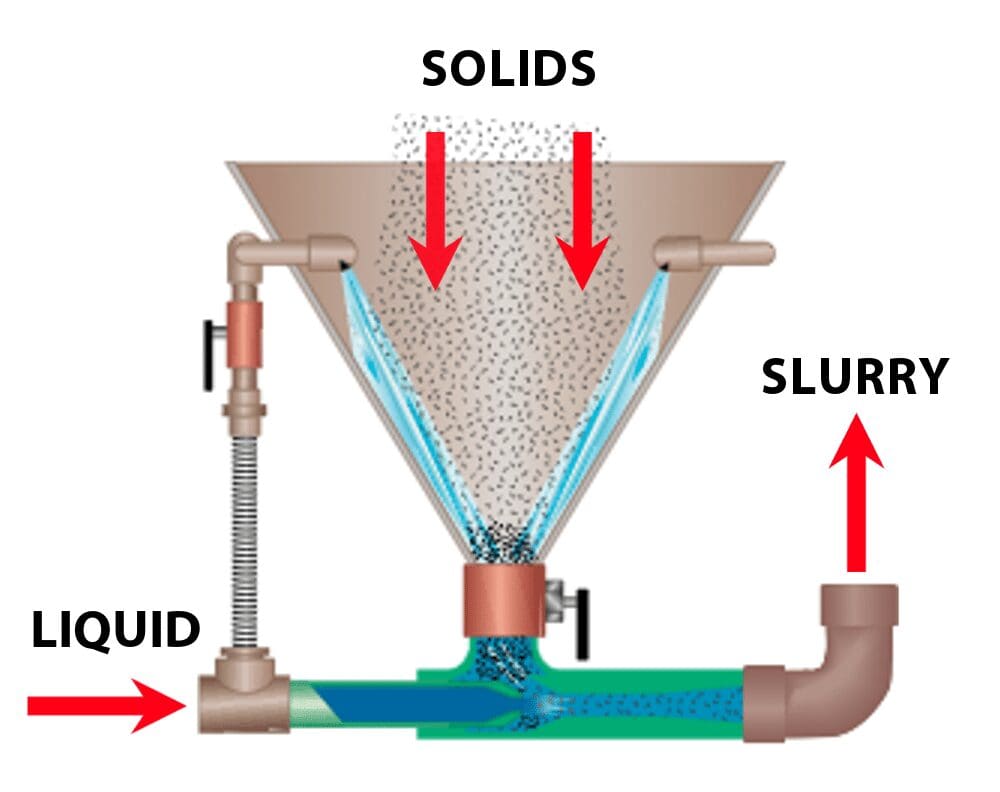
Fox slurry eductors are used when solids need to be mixed, wetted, or conveyed with a liquid stream rather than air. These systems can be useful for wet pellets, powders into liquid, washdown-fed systems, and slurry transfer applications.
Slurry eductors are different from solids conveying eductors, but the same venturi principle applies: a motive fluid creates suction that draws material into the eductor and discharges the combined stream downstream.
Ceramic-lined and wear-resistant options.
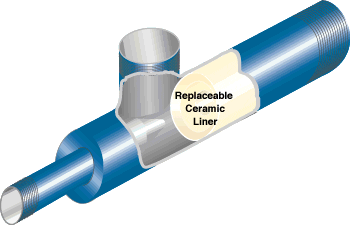
For abrasive solids, ceramic-lined eductors help extend service life by protecting high-wear internal surfaces. These are commonly considered for glass-filled plastic pellets, minerals, cement, ash, grit, silica, and other erosive materials.
- Wear-resistant internal liners.
- Options for stainless, carbon steel, ceramic-lined, and specialty alloys.
- Custom inlet transitions to minimize bridging and improve feeding.
- Conveying velocity can be reviewed to reduce bend and line wear.
Common Fox eductor applications by industry.
| Industry | Typical Materials | Where Eductors Are Used |
|---|---|---|
| Plastics & Compounding | Pellets, regrind, flakes, glass-filled pellets, color concentrates, ground film. | Extruders, grinders, screeners, silos, bulk bags, reclaim loops, multiple destinations. |
| Food & Dairy | Salt, sugar, spices, flour, coffee, tea powder, whey, milk powders, cereals, snack foods. | Screw feeders, spray dryers, screeners, classifiers, bag dumps, additive systems, bulk bags. |
| Environmental & Power | Activated carbon, hydrated lime, limestone, ash, sorbents, dried sludge, boiler additives. | Injection systems, dust collectors, boiler applications, duct injection, silo discharge. |
| Cement, Minerals & Foundry | Cement, CKD, sand, foundry dust, metal grit, alumina, silica, mineral dust. | Dust collector discharge, reclaim, kiln-related conveying, abrasive solids handling. |
| Chemical & Industrial | Powders, pellets, additives, pigments, resins, catalysts, fillers, process dusts. | Feeders, mixers, baghouses, bins, bulk bag unloaders, process transfer systems. |
What we need to size an eductor system.
A successful eductor application starts with the right data. If you are replacing an airlock, retrofitting a collector, conveying from a bulk bag unloader, or designing a new pneumatic conveying line, these details help determine whether an eductor is the right fit.
- Material name, bulk density, particle size, temperature, moisture, and abrasiveness.
- Required conveying rate: normal and maximum.
- Horizontal distance, vertical lift, number of elbows, and line routing.
- Discharge destination and pressure at the end of the conveying line.
- What equipment feeds the eductor: bulk bag unloader, feeder, dust collector, screener, bin, silo, etc.
- Preferred material of construction, end connections, sanitary requirements, and controls.
When an eductor is a strong fit — and when it needs review.
Strong Fit
- Material can gravity feed to the eductor.
- You want to eliminate airlock maintenance.
- Dust, blowback, leakage, or wear is a recurring issue.
- Material is abrasive, fragile, irregular, or difficult for airlocks.
Needs Careful Review
- Very long conveying distances.
- High destination pressure.
- Cohesive material that bridges above outlets.
- Existing undersized blower or conveying line.
Not a Feeder
Eductors are not precision metering devices. If your process needs controlled feed rate, the solids should be metered with a screw feeder, vibratory feeder, loss-in-weight feeder, or other dosing device before entering the eductor.
Examples of Fox eductor installations and related systems.
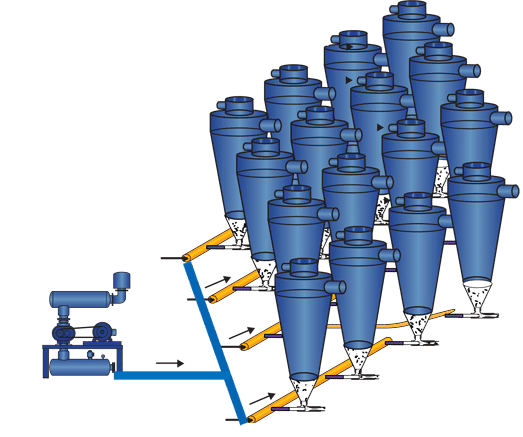
Receivers & Cyclones
Correctly selected air/solids separation is critical for complete conveying system performance.
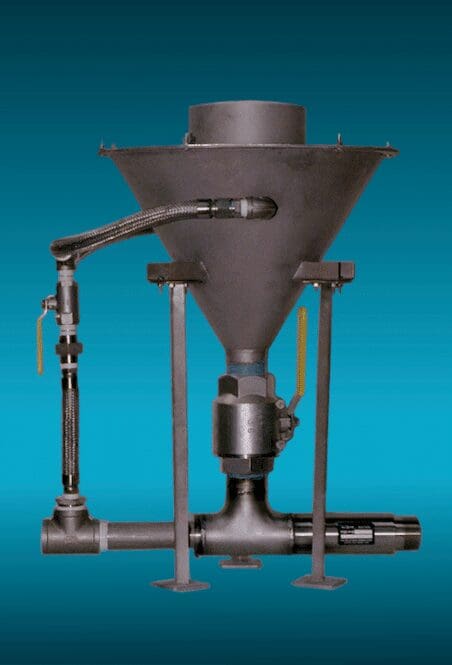
Washdown / Slurry
Liquid-driven eductors can pull solids into a motive liquid stream for slurry transfer or mixing.
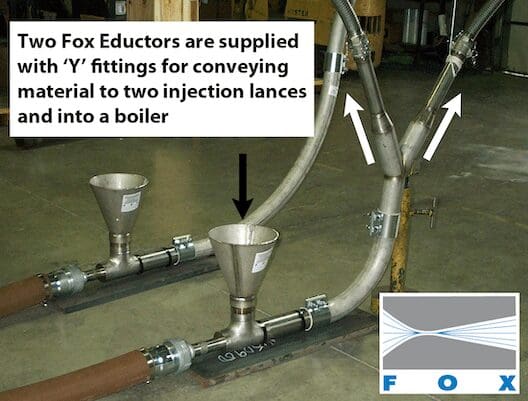
Boiler & Injection
Used for additive, sorbent, dried sludge, activated carbon, lime, and boiler-related injection systems.
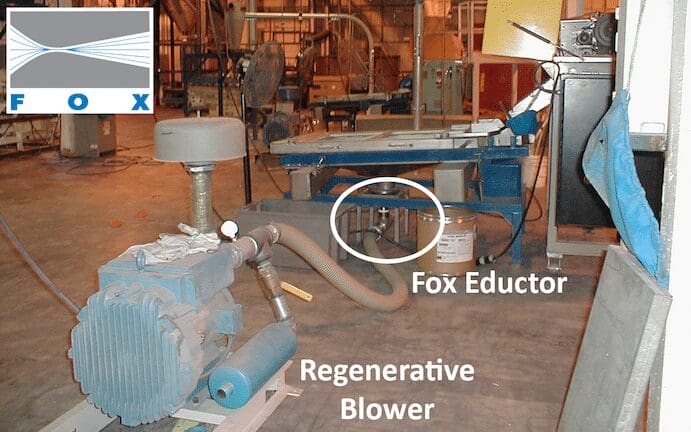
Plastics Screeners
Automate reclaim of overs, unders, and usable material from screening operations.
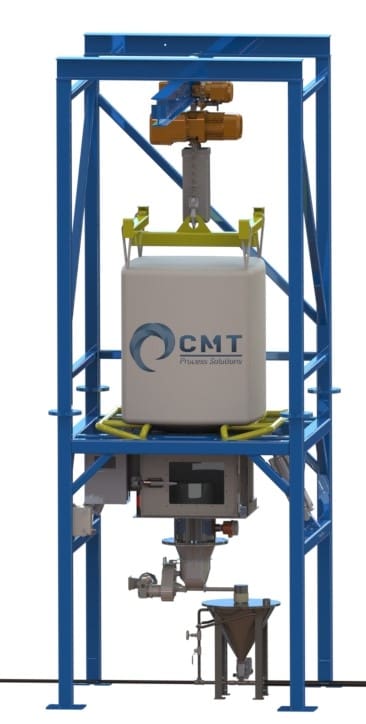
Bulk Bag to Slurry
Combine bulk bag discharge with slurry eductor technology for powder-to-liquid applications.
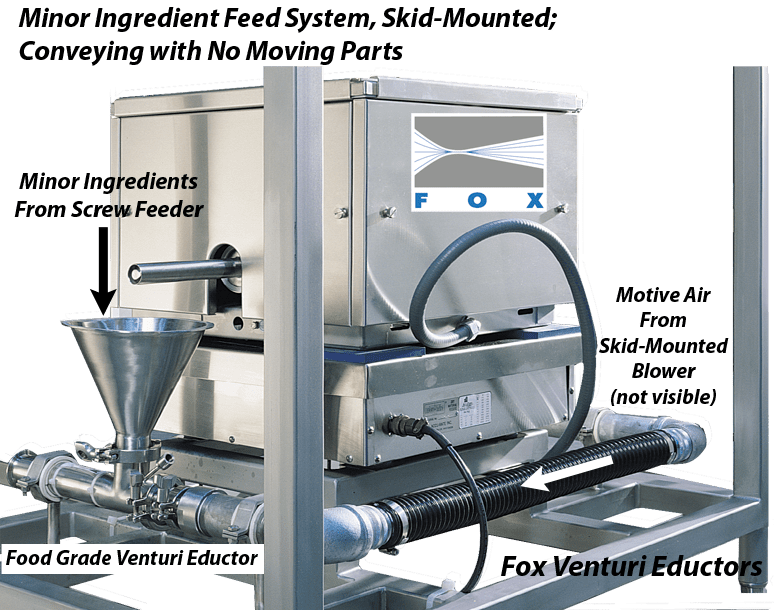
Metered Additive Systems
Use a screw feeder to dose material, then an eductor to convey it to a mixer, bin, duct, or process line.
And Many More Fox Eductor Applications
Fox eductors have been applied across thousands of solids conveying, slurry, dust collection, plastics, food, environmental, power, cement, and industrial process applications.
View More Fox Eductor ApplicationsFrequently asked questions.
Do Fox eductors require compressed air?
No. Most solids conveying eductors are driven by low-pressure blower air. Compressed air is generally only considered for special cases, intermittent operation, very small lines, or rotary valve venting applications that discharge into higher-pressure lines.
Can an eductor replace a rotary airlock?
Often, yes — especially when the airlock is causing blowback, wear, leakage, dust, product damage, or maintenance issues. However, retrofit applications need to be reviewed because existing blowers, pipe routing, line size, and destination pressure may limit what is possible.
Can eductors meter the solids feed rate?
No. Eductors convey material; they do not precisely control feed rate. If accurate dosing is required, a screw feeder, vibratory feeder, or loss-in-weight feeder should meter the material into the eductor.
Are eductors good for fragile products?
They can be. Because there is no rotor shearing at the inlet, eductors are often considered for fragile pellets, snack foods, cereal, coffee, flakes, and other products where mechanical degradation is a concern. Testing may be recommended for highly fragile materials.
What equipment can feed a Fox eductor?
Common feed points include bulk bag unloaders, bins, silos, dust collectors, baghouses, screw feeders, loss-in-weight feeders, screeners, classifiers, mixers, grinders, mills, bag dumps, and extruders.
Can Fox provide more than just the eductor?
Yes. Fox systems may include blowers, filters, silencers, relief valves, hoppers, transitions, piping, bends, diverter valves, receivers, cyclones, dust collectors, feeders, controls, and skid-mounted packages.
Need help deciding if a Fox eductor fits your application?
Carolina Material Technologies supports Fox eductor applications across North and South Carolina. Send us your material, rate, distance, and current equipment layout — we can help review whether an eductor, blower/eductor package, or complete conveying system makes sense.
Related Equipment & Systems
Explore related Carolina Material Technologies solutions for bulk material handling and pneumatic conveying.