
Rotary valves that solve flow, airlock, and maintenance problems
Industrial rotary airlock valves for powders, pellets, flakes, granules, dust collectors, pneumatic conveying systems, and process feed points. We help you select the right drop-thru, blow-thru, side-entry, quick-clean, stainless, square, offset, or NFPA-style rotary valve based on your material, pressure, sanitation, and maintenance requirements.
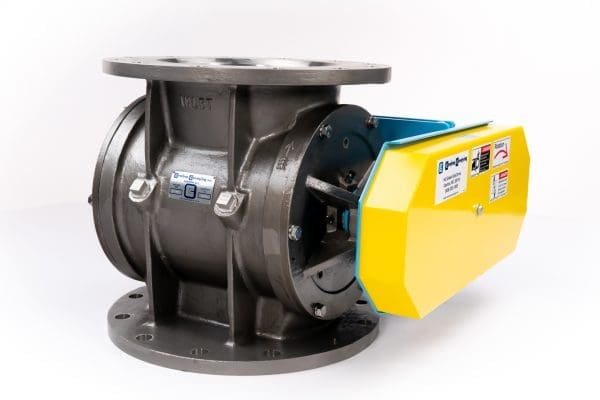
Not just a valve — the right airlock, rotor, clearance, seal, and clean-out design for your material.
Common rotary valve problems we help solve
Most rotary valve issues are not “just a valve problem.” They usually trace back to material behavior, rotor style, pressure differential, sealing method, installation, or cleaning requirements.
What does a rotary airlock valve do?
A rotary airlock valve meters bulk material while maintaining an air seal between different pressure zones. In bulk material handling systems, rotary valves are commonly used under hoppers, bins, cyclones, dust collectors, filter receivers, pneumatic conveying pickup points, and process equipment.
- Feeder applications: control material discharge where no pressure differential is present.
- Dust collector applications: discharge collected fines while limiting air leakage.
- Pneumatic conveying applications: feed material into positive pressure or vacuum systems.
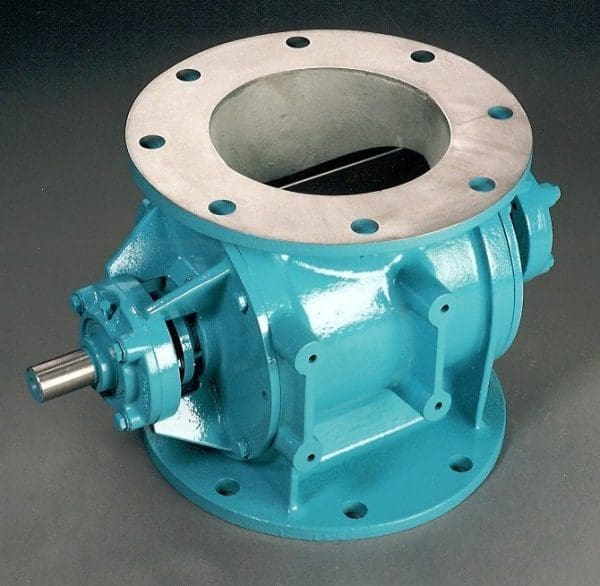
Types of rotary valves we offer
Choosing the right valve style matters. The same material can behave very differently depending on inlet geometry, rotor type, pressure differential, sanitation needs, and whether the valve is feeding gravity discharge or a pneumatic conveying line.
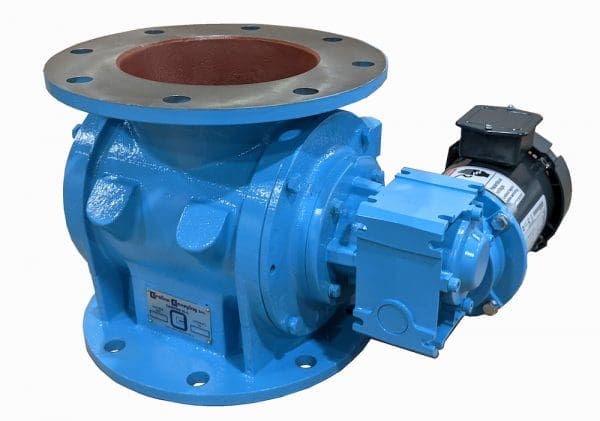
Standard gravity discharge and airlock duty
Best for hoppers, bins, cyclones, dust collectors, filter receivers, and general process discharge where the inlet and outlet are in-line.
- Common for gravity-fed discharge.
- Can be used in many feeder and collector applications.
- External bearings support serviceability.
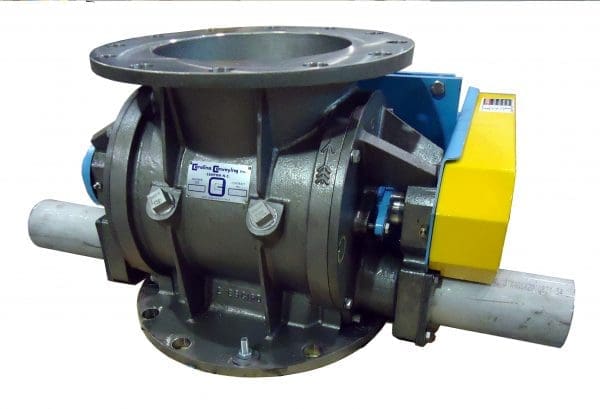
Direct feeding into pneumatic conveying lines
Designed so air and material pass through the valve body into the conveying line, often providing a compact solution for pressure or vacuum conveying systems.
- Useful when low profile pneumatic pickup is required.
- Common for powders and granular products.
- Best for appropriate pressure and material conditions.
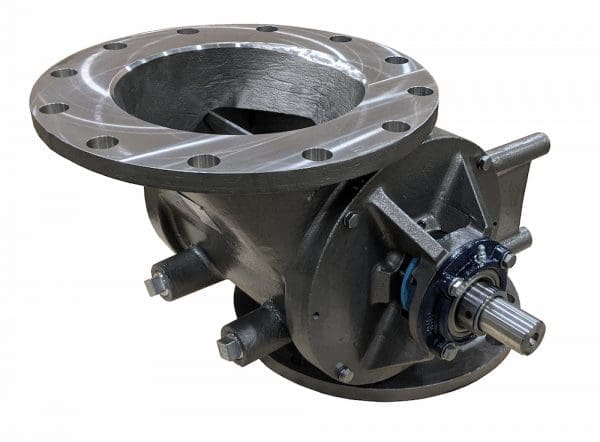
Reduced shear for lumpy or stringy materials
Side-entry valves are used when material needs to enter the rotor differently to reduce shear, shock loading, or jamming.
- Useful for stringy, lumpy, or difficult materials.
- Helps reduce shock loads at the shear point.
- Can improve reliability where standard drop-thru valves struggle.
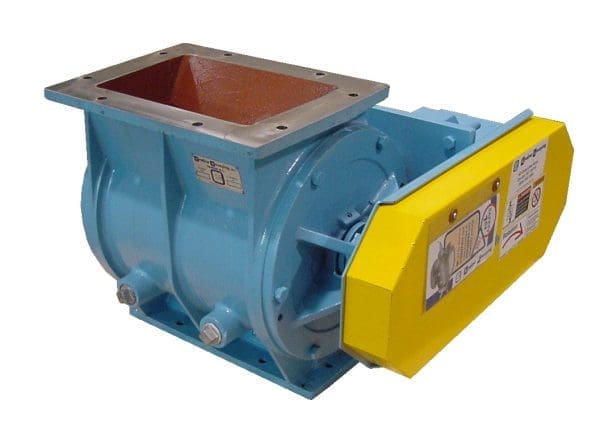
Purpose-built for pellets, flakes, and crumb rubber
Offset valves are ideal for non-friable materials like plastic pellets, flakes, and crumb rubber because the outlet is offset from the inlet and the product enters the rotor pocket before the shear point.
- Helps reduce pellet and flake jamming.
- Contoured inlet can push product away from the shear point.
- Strong fit for plastics and recycling applications.
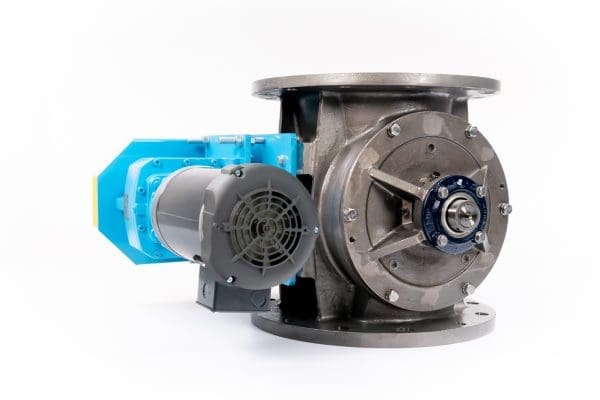
Food, chemical, and corrosion-resistant construction
Stainless valves are used where corrosion resistance, product purity, sanitation, or washdown considerations are important.
- Food ingredients, chemicals, and sanitary processes.
- Available with clean-out and access options.
- Can be configured around process requirements.
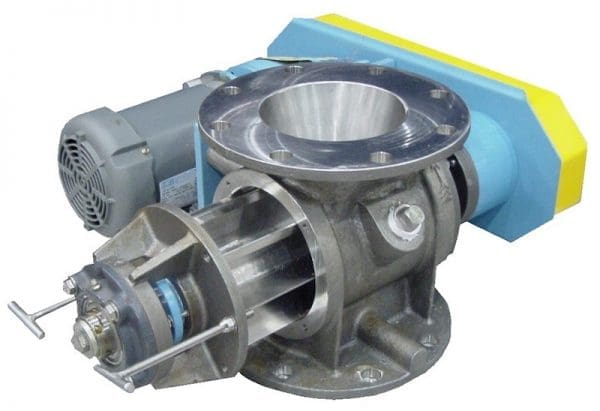
Fast access for cleaning and inspection
Quick-clean designs reduce the downtime required for internal access, sanitation, inspection, and product changeover.
- Ideal for frequent cleaning or allergen changeovers.
- Helps reduce maintenance labor.
- Useful for food, chemical, and specialty applications.
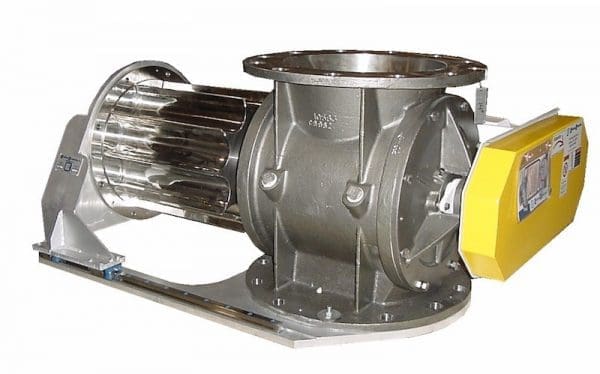
Rotor removal without wrestling the valve
Slide rail and easy-clean valves provide improved access for sanitation and maintenance when the valve must be cleaned or inspected frequently.
- Rotor access for deeper cleaning.
- Reduces downtime in sanitary processes.
- Better fit for frequent product changeovers.
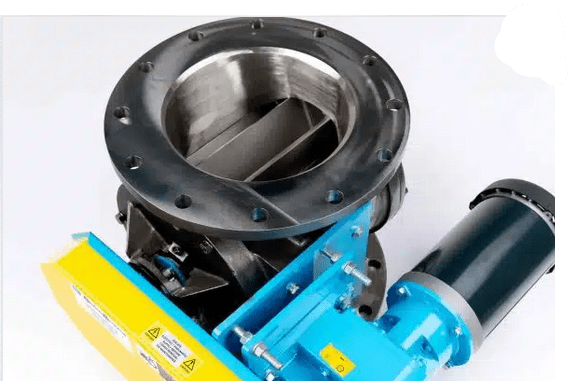
Designed for combustible dust safety strategies
NFPA-style rotary valves may be required where the valve is part of a combustible dust or explosion isolation strategy. Final selection should be reviewed against the process hazard analysis and applicable code requirements.
- Combustible dust applications.
- Explosion isolation considerations.
- Requires proper application review.
Rotary valve selection guide
This quick guide helps narrow the starting point. Final selection should consider pressure differential, bulk density, particle size, abrasiveness, temperature, sanitation, and service access.
| Valve Type | Best Fit | Watch Outs |
|---|---|---|
| Drop-Thru | Dust collectors, cyclones, hoppers, filter receivers, gravity discharge | May not be ideal for flakes or pellets that jam at the shear point |
| Blow-Thru | Pneumatic conveying pickup with compact layout | Material and pressure conditions matter; not for every abrasive or difficult product |
| Side Entry | Stringy, lumpy, or difficult materials needing reduced shear | Requires application-specific review |
| Offset / Rectangular | Plastic pellets, flakes, crumb rubber, non-friable products | Purpose-built design, not always needed for simple powders |
| Quick Clean / Slide Rail | Food, chemical, sanitary, allergen, or frequent cleaning service | Higher upfront cost but often lower cleaning downtime |
| NFPA / Explosion Isolation | Combustible dust and explosion isolation strategies | Must match code, dust hazard analysis, and system design |
Rotor design matters more than most people realize
The rotor is where air leakage, product shearing, pocket fill, and maintenance issues often begin. Rotor design should be selected based on pressure differential, material fragility, particle shape, abrasiveness, and whether the application is gravity feed, dust collection, or pneumatic conveying.
- Open rotors: tighter clearances for higher pressure differential applications.
- Closed rotors: contain product inside the rotor pocket and are commonly used for gravity feed and dust collection.
- Open/closed hybrid rotors: useful for flakes, pellets, stringy, or abrasive materials where containment and tighter sealing are both important.
Open rotor applications may require rotor centralization and special clearance attention. Some applications require special clearances — especially where pressure, temperature, or abrasive products are involved.
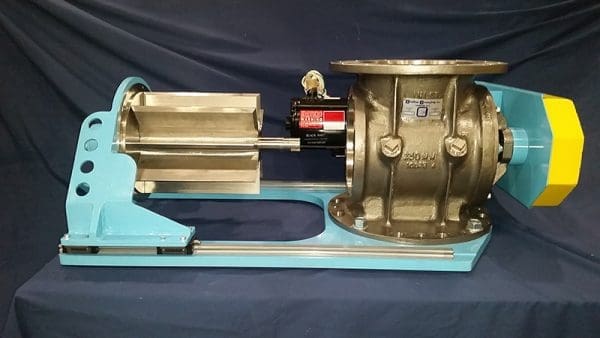
Designed to reduce real maintenance pain
Maintenance access is one of the biggest differences between an ordinary rotary valve and a valve that actually lowers cost of ownership. Designs with easier bearing access, rotor removal, packing access, and clean-out features can save hours during routine service.
- Fast tear-down: some designs can be disassembled and reassembled in roughly 30 minutes.
- Faster bearing service: regreaseable bearings can be changed quickly instead of forcing full valve disassembly.
- Packing access: removable gland follower designs allow service access to shaft seals without pulling the valve out of line.
- Lower parts complexity: simpler designs reduce the number of parts maintenance has to fight with.
Seal leakage: if air leaks, product usually follows
Shaft seal packing has to be maintained correctly, especially in positive pressure conveying applications. If air leaks through the shaft seal, product leakage often follows and the packing can deteriorate quickly.
- Clean lantern rings and shaft surfaces before installing new packing.
- Verify air purge lines and fittings are not clogged.
- Use proper air purge pressure above maximum conveying line pressure.
- Check for leakage before reconnecting to full production service.

How rotary valves are sized
Rotary valves are sized by volume. Throughput is often stated in pounds per hour or tons per hour, but valve capacity must be converted to cubic feet per hour using bulk density.
Accessories and options that complete the valve package
Rotary valve performance often depends on the surrounding components. The right inlet, outlet, adapter, purge, guard, and isolation device can prevent safety issues, poor filling, plugged vents, and unnecessary maintenance.
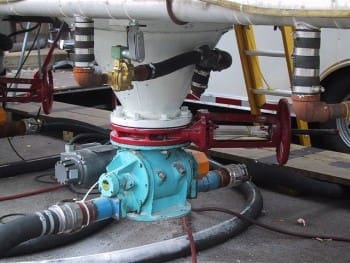
Smoother transition into the air stream
Fabricated outlet adapters connect the rotary airlock to positive pressure or vacuum conveying lines while reducing turbulence into the conveying air stream.
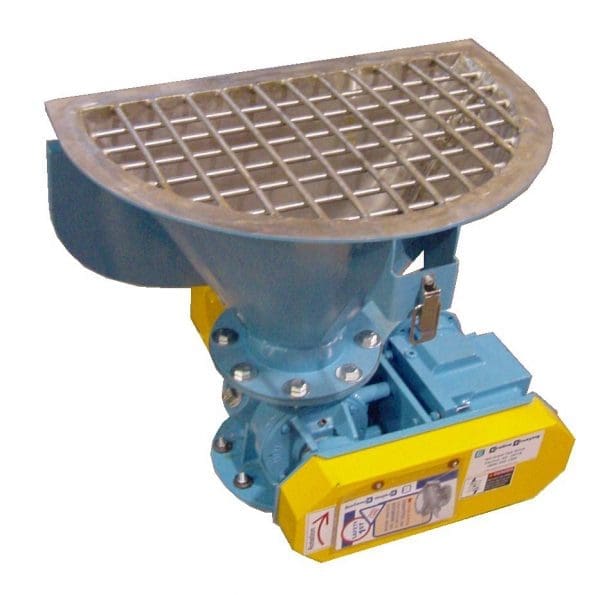
Control flow before the valve
Maintenance gates and surge hoppers allow upstream product control, inspection, and safer valve service without emptying the entire process.
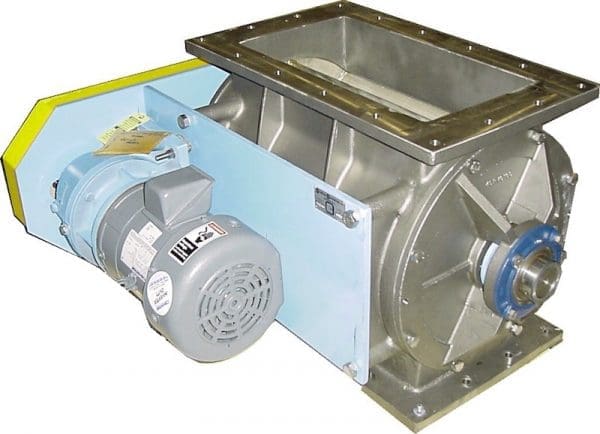
Fit the valve to the process
Custom inlet/outlet shapes, stainless construction, rectangular bodies, special rotors, and unique layouts help match existing equipment and material behavior.
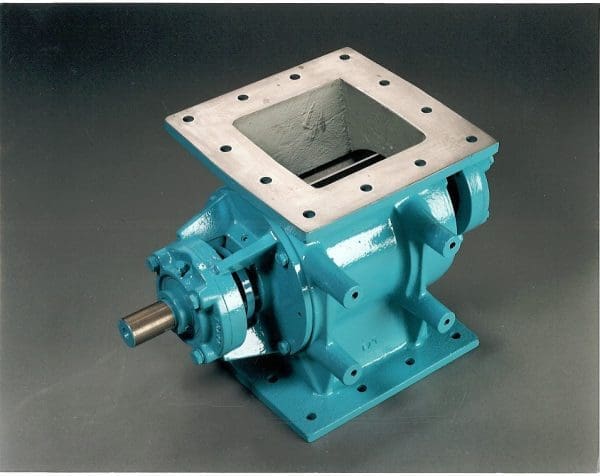
Guards, gaskets, sleeves, and purge kits
Finger guards, flange gaskets, spigot adapters, flexible sleeves, hose clamps, air preparation kits, and air purge packages help the valve install safely and perform correctly.
Materials and applications
We help select rotary valves for a wide range of material behaviors — not just a generic flow rate. Abrasive, fluffy, fibrous, sticky, granular, free-flowing, sluggish, dry, and damp products can all require different valve choices.
| Material Behavior | Design Considerations | Typical Direction |
|---|---|---|
| Fine powders | Air leakage, packing, pressure differential, rotor clearance | Drop-thru, blow-thru, air purge, tighter tolerance options |
| Pellets and flakes | Jamming at shear point, product breakage, shock loading | Offset / rectangular or open-closed rotor designs |
| Abrasive materials | Rotor/body wear, clearance loss, elbow and adapter wear | Hardened, coated, or replaceable wear components |
| Food and sanitary products | Cleanability, stainless construction, changeovers, inspection | Stainless, quick-clean, slide rail, easy-clean designs |
| Combustible dust | Explosion isolation, NFPA requirements, system safety | NFPA-style valve review with process safety requirements |
Frequently asked questions
What is the difference between a rotary valve and a rotary airlock?
The terms are often used interchangeably, but “rotary airlock” emphasizes the valve’s role in maintaining an air seal between two pressure zones while still metering bulk material.
When should I use a drop-thru rotary valve?
Drop-thru valves are common under hoppers, bins, cyclones, dust collectors, and filter receivers where material discharges by gravity through an in-line inlet and outlet.
When should I use a blow-thru rotary valve?
Blow-thru valves are used when material is fed directly into a pneumatic conveying line and air passes through the valve body into the conveying stream.
Why do pellets and flakes jam rotary valves?
Pellets and flakes can jam at the shear point if the material is trapped between the rotor vane and housing. Offset valves and open/closed rotor designs can reduce this issue by changing how material enters and exits the rotor pocket.
Why does rotary valve packing fail?
Packing can fail when air leaks through the shaft seal, when purge air is insufficient, when product contaminates the packing area, or when the shaft and lantern ring are not cleaned during repacking.
How do I size a rotary valve?
Start by converting throughput from lb/hr into ft³/hr by dividing by bulk density in lb/ft³. Then account for rotor fill efficiency, speed, pressure differential, and material behavior.
See Rotary Valves in Action
This short video shows how rotary airlock valves operate in real bulk material handling systems, including feeding, sealing, and conveying applications.
Rotary Valves in Complete Systems
Rotary valves are rarely standalone components—they are critical parts of complete bulk material handling systems. Below are common system configurations where rotary airlocks play a key role.
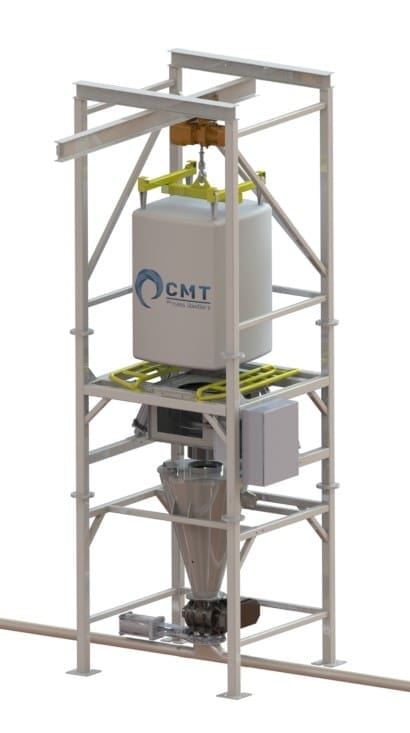
Controlled discharge from super sacks
Rotary valves are often installed below bulk bag unloaders to meter material into downstream conveyors or pneumatic conveying systems while maintaining an airlock.

Feeding pressure and vacuum conveying lines
Blow-thru or drop-thru rotary valves are used to introduce material into conveying lines while maintaining pressure or vacuum integrity.

Feeding mixers, packaging, and downstream equipment
Rotary valves are commonly used to feed mixers, weigh hoppers, packaging systems, and other downstream process equipment in complete engineered systems.
Need help selecting the right rotary valve?
Tell us your material, throughput, and application. We’ll recommend the right valve style, rotor, and configuration for your system.